

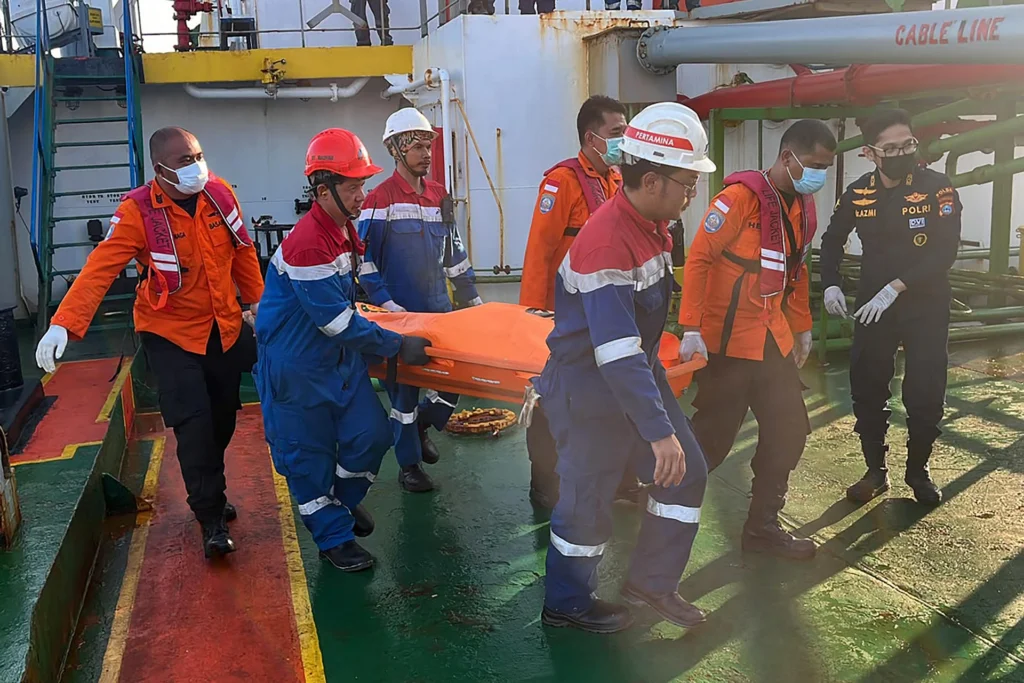
Indonesia’s authorities are intensifying search and rescue operations to locate 130 people missing after the sinking of the ferry Virgo Transport 8 in the Java Sea on Sunday.
The disaster occurred on Sunday, September 13, between the islands of Java and Borneo, when the vessel was affected by extreme weather conditions and strong waves up to three meters high.
The search operation continues and it involves more than 1,900 personnel, five aircraft, and 17 vessels operated by the National Search and Rescue Agency (Basarnas), the Navy, and the Police.
RELATED: Monsoon Rains and Cyclones Kill More Than 50 Across Asia
So far, emergency teams have rescued 108 people alive and recovered six bodies. Initial aerial surveillance indicates that the ship capsized due to rough seas before sinking in the coordinates recorded south of Borneo.
The director of Basarnas in Banjarmasin, I Putu Sudayana, warned of the high risks for rescue operations due to the ongoing bad weather in the incident area. The disaster highlights the fragile maritime safety conditions in the Indonesian archipelago, where inter-island transportation frequently faces issues such as overloading, poor infrastructure, and weak safety controls.
Six people have been killed and 130 remain missing after a passenger ship capsized in the Java Sea off Indonesia.
The vessel was carrying 243 people, with 107 rescued as rough seas and waves of up to 2.5 metres hamper search efforts. pic.twitter.com/YukoGhCQ7D
— Al Jazeera English (@AJEnglish) September 13, 2026
Survivors rescued by tugboats and Navy ships were transferred to medical care centers and ports in East Java, reporting moments of extreme tension as the vessel capsized at sea.
Extreme Weather Blamed
The ferry Virgo Transport 8 was on its way from Surabaya to Banjarmasin, carrying 243 people and 89 vehicles. The extreme weather conditions and strong waves up to three meters high caused the vessel to tilt and eventually sink. The captain’s distress signals and the loss of operational communication added to the urgency of the situation.
The disaster underscores the persistent challenges in maritime safety in Indonesia. Inter-island transportation often faces issues such as overloading, poor infrastructure, and weak safety controls. The disaster has prompted calls for improved safety measures and better infrastructure to prevent such tragedies in the future.
The Minister of Transportation of Indonesia, Dudy Purwagandhi, confirmed that the causes of the disaster are under official investigation, prioritizing the deployment of rescue operations across the maritime perimeter.
From teleSUR English via This RSS Feed.