

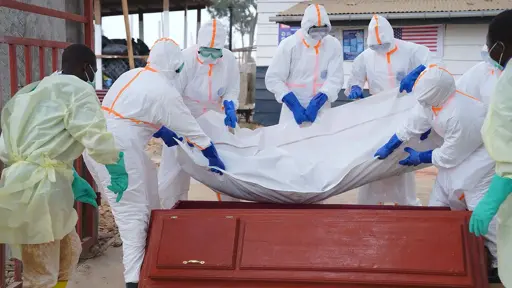
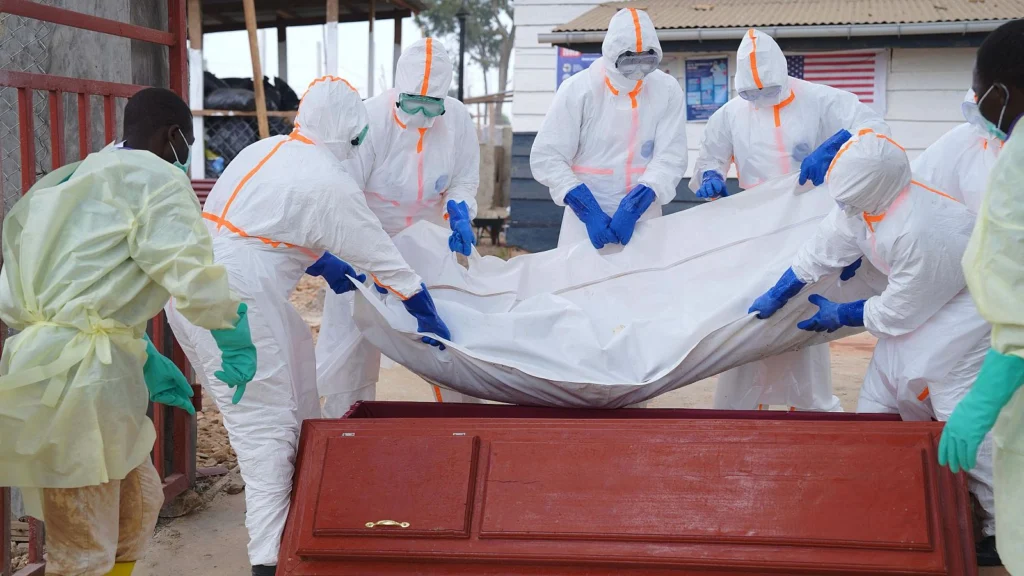
The Ebola outbreak in the Democratic Republic of Congo (DRC) has reached a grim milestone, with over 3,500 deaths recorded in just four months.
The Democratic Republic of Congo (DRC) is grappling with a severe Ebola outbreak that has now claimed over 3,500 lives. The epidemic, which was officially declared on May 15, 2026, continues to ravage the eastern provinces of the country, affecting 62 health zones across seven provinces.
In an official statement, the Ministry of Communication and Media said the epidemic has caused 3,510 deaths and 7,258 confirmed cases so far, according to official data compiled through September 13. Of those affected, 1,726 patients have recovered, while 905 remain in isolation or hospitalized. Health authorities put the overall case fatality rate at 48.4 percent, with a contact-tracing rate of 78.6 percent.
RELATED: Ebola Crisis in DR Congo: W.H.O. Warns of Critical Resource Shortage
The provinces most affected include Ituri, Tshopo, Bas-Uélé, Haut-Uélé, North Kivu, South Kivu, and South Ubangi. Ituri remains the epicenter of the epidemic, accounting for 78% of confirmed cases and 75.9% of new cases reported in the last 24 hours. The overall fatality rate stands at 48.4%, with 1,726 patients successfully recovering from the disease. Currently, 905 individuals are in isolation or hospitalized, highlighting the ongoing struggle to contain the virus.
The Director-General of the Africa Centers for Disease Control and Prevention (CDC AFrica), Jean Kaseya, marked the four-month anniversary of the outbreak being declared a continental health emergency. He emphasized the need for a clear and objective analysis of the progress made and the challenges that lie ahead. “It is crucial to evaluate the advancements and the obstacles we still face,” Kaseya stated.
Today, 15 September 2026, four months after Africa CDC declared the Bundibugyo Ebola outbreak a Public Health Emergency of Continental Security, it is time to take a clear and objective look at the progress made and the challenges that remain. I have therefore convened, this… pic.twitter.com/v5HJ3jAbcF
— Dr Jean Kaseya (@Dr_JeanKaseya) September 15, 2026
The Congolese health authorities reported a gradual decline in the number of confirmed cases and fatalities in August, suggesting that the peak of the outbreak may have been reached. However, the World Health Organization (W.H.O.) cautioned that the epidemic remains out of control and is becoming increasingly heterogeneous. While some areas show signs of improvement, others continue to experience active transmission and the emergence of new infection hotspots.
Continental Alarm, Mixed Signals
This outbreak is the second most deadly and contagious in global history, surpassing the previous epidemic in the same region between 2018 and 2020. Although it pales in comparison to the devastating outbreak in West Africa from 2014 to 2016, the current crisis underscores the urgent need for effective containment measures.
The Bundibugyo strain of Ebola, which is causing the current outbreak, lacks specific treatments. However, the W.H.O. is developing two vaccines in phase 1 trials that have shown promise. Concurrently, the DRC has launched a vaccination campaign using the Ervebo vaccine, which has demonstrated positive results in cross-immunization against this strain in animals.
“It remains a deadly, massive epidemic. The humanitarian response is less than half funded.”
– Julien Harneis, Senior #Ebola Coordinator, provides an update on the ongoing epidemic in the Democratic Republic of the Congo
pic.twitter.com/Fnu82XGKcn
— United Nations Geneva (@UNGeneva) September 15, 2026
The epidemic has also spread to neighboring Uganda, where the W.H.O. declared the end of the outbreak on August 26, 2026, after 20 confirmed cases, including 15 imported from the DRC, with two fatalities.
With the outbreak now stretching past four months and continuing to evolve unevenly across affected provinces, health officials face a narrowing window to bring transmission fully under control before the situation risks entrenching further or spreading to new areas.
From teleSUR English via This RSS Feed.