

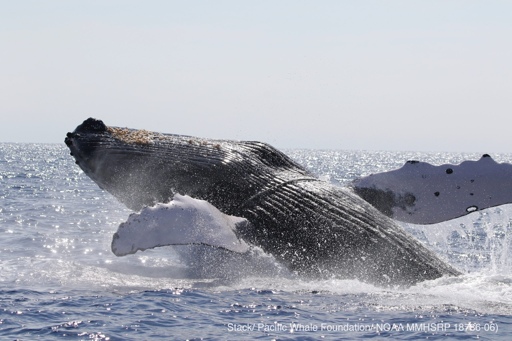
Roughly a decade ago, a marine heatwave in the northeastern Pacific Ocean caused a dramatic decline in populations of forage fish and krill, the base of the marine food chain. A recent study found that the Hawaiian humpback whale population, which feeds on krill and small fish, also declined sharply during the 2013-16 heatwave and has not yet recovered. Humpback whales (Megaptera novaeangliae) in the North Pacific feed in cold Alaskan and Canadian waters during the summer months before traveling roughly 4,800 kilometers (3,000 miles) to Hawaii to breed and give birth over the winter. To understand the impact of the 2013-2016 marine heatwave, researchers analyzed more than 27,000 photos of whale sightings between 2002 and 2023 across the main Hawaiian islands. The photos came from Happywhale, a citizen science platform where anyone can upload images of whale flukes (tail fins) that scientists use to identify individuals. “Their flukes are a bit like a fingerprint for each individual humpback whale,” study co-author Shannon Barber-Meyer, formerly with Pacific Whale Foundation, told Mongabay in a video call. The researchers found the Hawaiian humpback whale population declined by 37% between the 2014-2015 breeding season and the 2021-2022 season. Adult survival rates also fell sharply. Before the heatwave, roughly 99% of adult whales survived year over year, but during the heatwave, adult survival was estimated at just 68%. “It’s a very precipitous drop, and that’s not something you normally see in adult survival of long-lived mammals,” Barber-Meyer said. During the heatwave, researchers documented an unusual mortality event…This article was originally published on Mongabay
From Conservation news via This RSS Feed.