

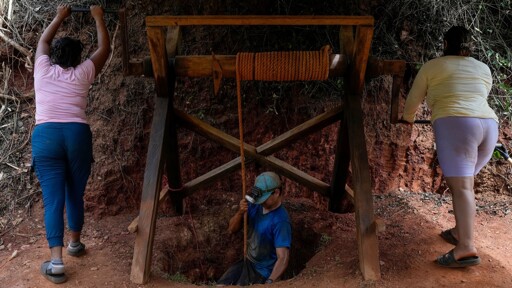
U.S. Secretary of the Interior Doug Burgum traveled to Venezuela in March with over a dozen mining company executives, holding a meeting in Caracas with local officials to discuss creating a “legitimate mining sector” and removing the criminal groups that currently operate at many mine sites. The economic potential of Venezuela’s mining sector, he said, could be worth billions. Burgum’s trip came just a few months after a U.S. military operation removed then-President Nicolás Maduro and transported him to a detention center in the U.S. state of New York. Since then, officials have heralded a new era for Venezuela, and tried to make the mining sector more attractive to foreign investment: Passing mining reform laws, taking down leaders of criminal groups involved in mining, and raiding illegal mining sites. The U.S. is also considering an executive order aimed at improving access to critical minerals, Reuters reported. Yet at the same time, observers say the illegal mining crisis is getting worse, not better. Illegal mining has expanded this year, in some cases in protected areas, and criminal groups involved in mining have tightened their hold in many parts of the country, according to sources contacted by Mongabay. “[Since Maduro’s capture], nothing has changed in the criminal and legal ecosystem,” Cristina Burelli, founder of SOSOrinoco, an advocacy group studying the social and environmental impacts of mining in Venezuela, told Mongabay. “If anything, we have seen an increase in certain areas.” Vendors weigh and trade gold at gold-buying shops in El Callao, Venezuela.…This article was originally published on Mongabay
From Conservation news via This RSS Feed.