

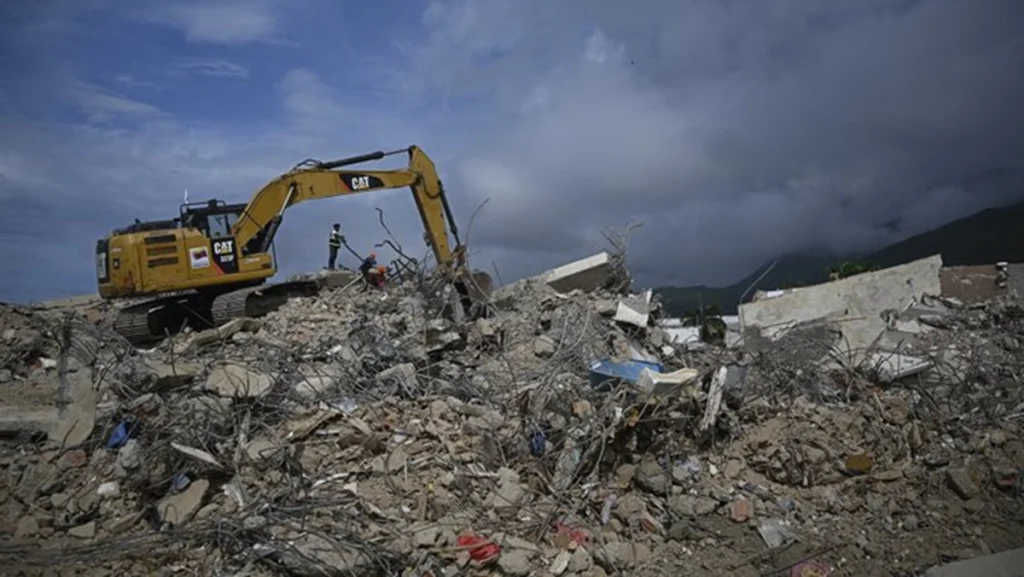
The ‘Dignified and Safe Clearing’ Plan has processed nearly 792,000 tons of debris.
More than two months after the June 24 earthquakes, the Venezuelan government is accelerating comprehensive recovery efforts in the state of La Guaira through the Dignified and Safe Clearing Plan.
RELATED:
U.S. Treasury Issues New License Easing Venezuelan Oil Operations
Thanks to coordination between state institutions and citizens, the main streets and avenues in the state have been completely cleared, ensuring the safety and mobility of families affected by the emergency. Cleanup and sanitation efforts in areas where structures collapsed have made significant progress in the total volume of waste processed.
Public Works Minister Juan Ramirez confirmed that work teams have removed about 792,000 tons of the 2.1 million tons of material generated by the natural disaster. That figure represents 37.72% progress on the total amount of debris recorded.
The Venezuelan state is designing plans and initiatives to classify, recycle and transform the recovered rubble into input material for infrastructure and housing reconstruction projects.
gobernador del estado La Guaira informó que:
Las clases iniciaron en La Guaira con una asistencia superior al 60% durante el primer día.
La incorporación estudiantil será progresiva a lo largo de esta primera semana de actividades escolares.
Fueron rehabilitadas… pic.twitter.com/cWDAf3S3Zw
— Madelein Garcia (@madeleintlSUR) September 14, 2026
The text reads, “La Guaira State Governor informed that: 1. Classes began in La Guaira with attendance exceeding 60% on the first day. 2. Student attendance will increase progressively throughout this first week of school activities. 3. 119 educational institutions were refurbished to ensure the return of children and adolescents to the classroom. 4. Structural assessments are ongoing at 34 schools as part of the post-earthquake evaluation. 5. The reconstruction plan is progressing to restore and improve affected educational infrastructure by June 24. 6. Schools subject to rezoning will operate on a double-shift schedule to ensure academic continuity for all students. 7. The return to classes aims to strengthen not only education but also community interaction, socialization, and the emotional recovery of the student body.”
Damage diagnosis and assessment efforts have been carried out in coordination with the United Nations Development Programme (UNDP).
UNDP Regional Director Michell Muschett highlighted the use of artificial intelligence and drones to assess the scale of the impact, applying the tripartite Post-Disaster Needs Assessment methodology developed together with the World Bank and the European Union.
The technical assessment process has facilitated the involvement of the Development Bank of Latin America and the Caribbean (CAF) and the Inter-American Development Bank (IDB) in the recovery phase.
The Venezuelan government maintains the conservation of La Guaira state’s marine ecosystems and water resources as its central focus. Inspection and biodiversity teams continuously monitor clearing operations to prevent waste from coming into contact with the sea.
Authorities maintain special surveillance over the Cerro Grande watershed, which supplies water to coastal ecosystems and communities such as Tanaguarena.
teleSUR/ JF
Source: MIPPCI
From teleSUR English via This RSS Feed.