

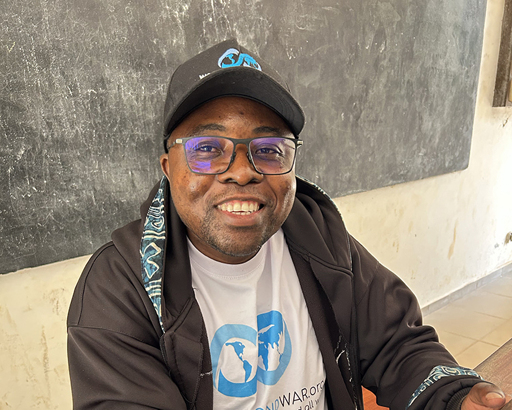
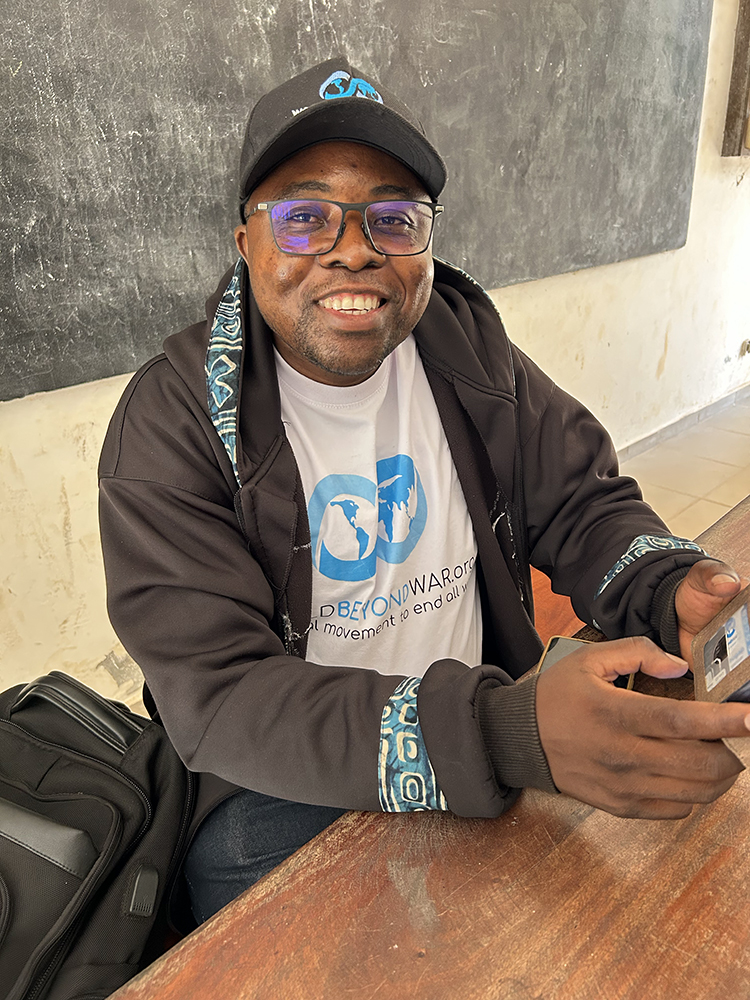
By Guy Feugap, World BEYOND War’s Africa Organize, September 15, 2026
Remarks on recent webinar.
I’m joining from Cameroon in Central Africa, where I work as World BEYOND War’s Africa Organizer. Before this position, I was the Director of programs at the national section of the Women’s International League for Peace and Freedom.
Working at these positions in our context has shaped my experience of nonviolence, that in Cameroon for instance is a bit different from the refusal to use force. In Cameroon, what we call “nonviolence” is when people do not use violence because they are afraid to speak, to protest, afraid of the consequences of expressing their grievances.
Gandhian nonviolence was neither passivity, nor weakness, nor submission. Satyagraha was therefore a conscious choice to resist injustice through the power of truth. But the kind of nonviolence we see in my country is a nonviolence that is imposed by fear. The political and social system of Cameroon gives the impression that citizens are free to express their opinions, that people can demonstrate, that there are institutions through which grievances can be voiced. But when people express certain opinions they face consequences. The right to protest exists in principle, but fear determines whether people will actually exercise that right or not.
Then silence is mistaken for peace or acceptance, as people do not protest because they are satisfied but because they are afraid. They do not confront injustice, not because they accept it, but because they know that confrontation is dangerous. And from the outside, this can create the image of a peaceful society, without demonstrations or widespread civil unrest and open confrontation. But the absence of visible violence does not actually mean that there is peace or that everything is okay. This is where I see a difference between Gandhian nonviolence and what I would call forced nonviolence: it keeps people silent in the face of injustices.
But the fact is that fear, frustration, humiliation and anger accumulated will explode some time and create inevitable violence. The experience of Cameroon should draw attention to the fact that a society peaceful in appearance can become increasingly fragile; while nonviolent action everyday allows people to avoid the explosion of big conflicts.
My work with World BEYOND War has taken this reflection a step further. It has made me understand that nonviolence cannot only be about how individuals behave. We also have to question the systems that organize our societies around the idea that violence is necessary for people’s security. At World BEYOND War, we challenge the institution of war itself. We work to promote disarmament, demilitarize security, challenge military bases and militarization, and build nonviolent alternatives for preventing and resolving conflicts. In Africa, as insecurity has become the justification for more weapons, more military spending and more militarization, people have ended up strengthening the logic that keeps conflicts alive, while nonviolence is another form of power worth exploring.
The post Celebrating the 120th Anniversary of “Satyagraha”: A Reflection on Nonviolence appeared first on World BEYOND War.
From World BEYOND War via This RSS Feed.