

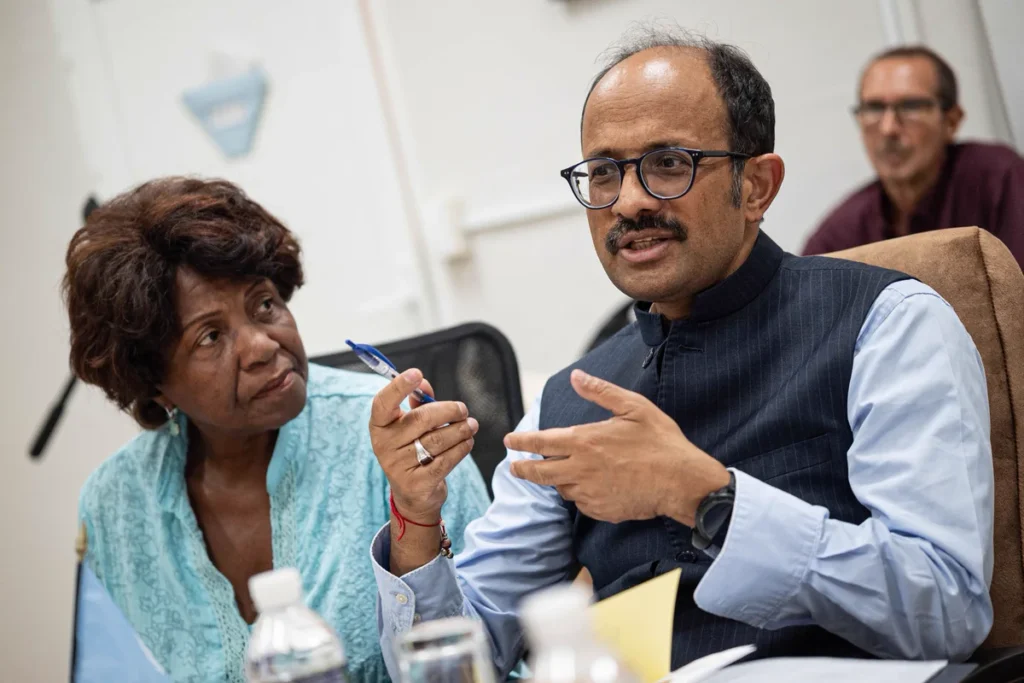
The United Nations Office for Disaster Risk Reduction (UNDRR) sent a delegation to Cuba to study the island’s disaster management strategies and climate change mitigation efforts.
The United Nations Office for Disaster Risk Reduction (UNDRR) sent a delegation to Cuba, led by Kamal Kishore, the Special Representative of the Secretary-General for Disaster Risk Reduction.
The visit aimed to understand Cuba’s disaster management model, assess how the island mitigates climate change impacts, and review joint projects within the framework of the UN’s work in the country.
RELATED: Cuba Inaugurates Solar Park in Guantanamo
The delegation, which included Nail Arenas, Chief of the Regional Office for the Americas and the Caribbean of the UNDRR, and Saskia Carusi, Deputy Chief, was received by General of Division Ramón Pardo Guerra and his team at the Defense Civil Headquarters in Cuba. This meeting underscored the shared commitment to prevention and resilience against disasters.
The discussions focused on implementing anticipatory actions to address extreme weather events, particularly droughts. The cooperation between Cuba and UN agencies was highlighted, with the UNDRR being one of the 23 organizations within the UN system actively involved in the Caribbean country.
Inicia en #Cuba visita de Kamal Kishore, @HeadUNDRR.
En @CubaCivil , conoce experiencia cubana en reducción del riesgo d desastres, alerta temprana y acción anticipatoria frente a la sequía y el cambio climático. @UNDRR es una de las 23 agencias #MarcoCooperacion @ONU_Cuba pic.twitter.com/dVi9wnD784
— ONU en Cuba (@ONU_Cuba) September 14, 2026
Text reads: “Kamal Kishore begins his visit in Cuba visit @HeadUNDRR knows Cuban experience in disaster risk reduction, early warning and anticipatory action against drought and climate change in @CubaCivil.”
Cuba, as a Caribbean island nation, faces significant risks from meteorological phenomena, including hurricanes, droughts, floods, and rising sea levels. These risks are exacerbated by underlying social vulnerabilities, affecting groups such as rural communities, persons with disabilities, those living in poverty, and coastal communities threatened by sea-level rise.
Cuban Defense Civil is a state system designed to protect the population and economic resources from external threats and natural disasters. Over more than half a century, the country has developed a robust culture of disaster risk reduction, demonstrated through its ability to handle diverse and challenging situations.
Recibimos al Sr. Kamal Kishore, Representante Especial del SG de la ONU para la Reducción del Riesgo de Desastres, junto a Nail Arenas y Saskia Carusi, de UNDRR ALC, en la sede del @InsmetC pic.twitter.com/yhnAl5hBMU
— INSMET Cuba (METEOROLOGÍA) (@InsmetC) September 14, 2026
Text reads: “We received Mr. Kamal Kishore, UN Secretary-General Special Representative for Disaster Risk Reduction, together with Nail Arenas and Saskia Carusi…”
The visit by the UNDRR delegation to Cuba underscores the global recognition of Cuba’s disaster management model. The island’s experience in mitigating the impacts of climate change and natural disasters offers valuable lessons for other nations facing similar challenges.
From teleSUR English via This RSS Feed.