

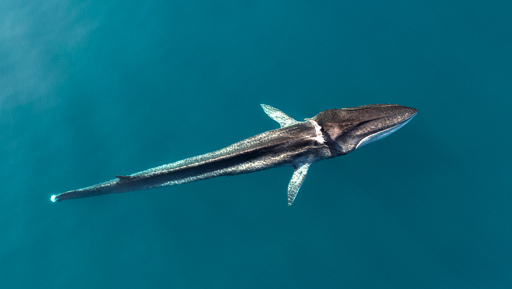
Collisions with ships are a leading anthropogenic killer of the Mediterranean’s two endangered large-bodied cetacean species, sperm and fin whales. In 2025, thousands of vessels traveled through the Mediterranean’s key whale habitats at speeds above 15 knots (28 km/h), the threshold at which vessel strikes are almost always fatal, according to an analysis by Magma Magazine and Mongabay. Using vessel and whale telemetry data, Mongabay created a visualization that illustrates how dense maritime traffic poses a continuous threat to whales in the Mediterranean. Nascent solutions include vessel speed restrictions, rerouting ship traffic to avoid whale habitats, and systems that alert ships to the presence of whales. OSTIA, Italy — Standing before the carcass of a sperm whale on a beach in Ostia, near Rome, in 2023, Lisa Stanzani had no doubts about the animal’s cause of death. The marine biologist could see clear signs that this one had been killed by a vessel’s propeller. She recognized it from the wound on its head: a colleague had sent her a video of the injured animal near the island of Ponza, some 100 kilometers (60 miles) away, a couple of weeks earlier. “This means it died slowly, in agony. As with many collision cases, death isn’t instantaneous,” Stanzani, the founder of Sotto al Mare, an Italian cetacean research and conservation association, told Mongabay during an interview in Ostia. It was a young whale with a wound about a meter (3 feet) long. “For such a deep and clean cut to penetrate the…This article was originally published on Mongabay
From Conservation news via This RSS Feed.