

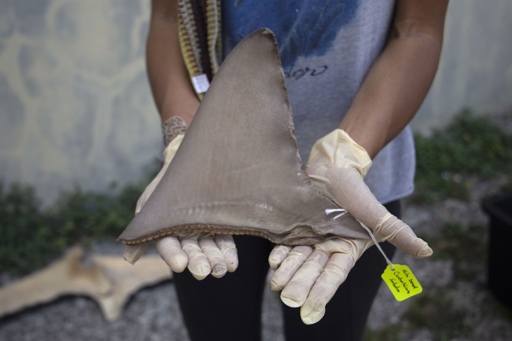
PUERTO CAIMITO, Panama — It’s a late April morning and the Tabor, an industrial fishing boat, is sailing around Chepillo Island in Panama Bay. Under the eyes of the crew, Yehudi Rodríguez, a marine biologist specializing in sharks, and sailor Joel Cordoba free a large black devil ray from a purse seine net and launch it back into the water. As they work with the biologist, the sailors, around a dozen of them, joke among themselves. Tabor is part of the Promarina S.A. fleet, a Panamanian company that produces fish oil and fish meal, authorized to catch only small open-ocean fish, or pelagics, such as sardines and herrings. Every two weeks, Rodríguez, a professor of biology at the University of Panama and director of the Shark Defenders NGO, analyzes bycatch — marine species not targeted but accidentally caught by fishers — freeing sharks, rays, and other animals entangled in the purse seine nets of Promarina vessels. “It’s an emotion to see a huge Mobula for the first time and liberate it in the ocean,” Rodríguez, 49, tells Mongabay after freeing the devil ray, which weighed an estimated 100 kilograms (220 pounds). Just a few hours later, Hermes, 18, the youngest sailor on the crew and nicknamed Mbappé after the French football star, helps Rodríguez liberate another ray, both taking care to avoid being hit by the animal’s venomous barb. Before returning an animal into the water, Rodríguez follows a short protocol: she records the coordinates of the bycatch location, identifies…This article was originally published on Mongabay
From Conservation news via This RSS Feed.