

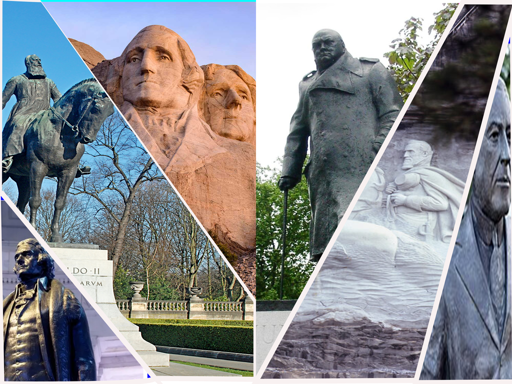
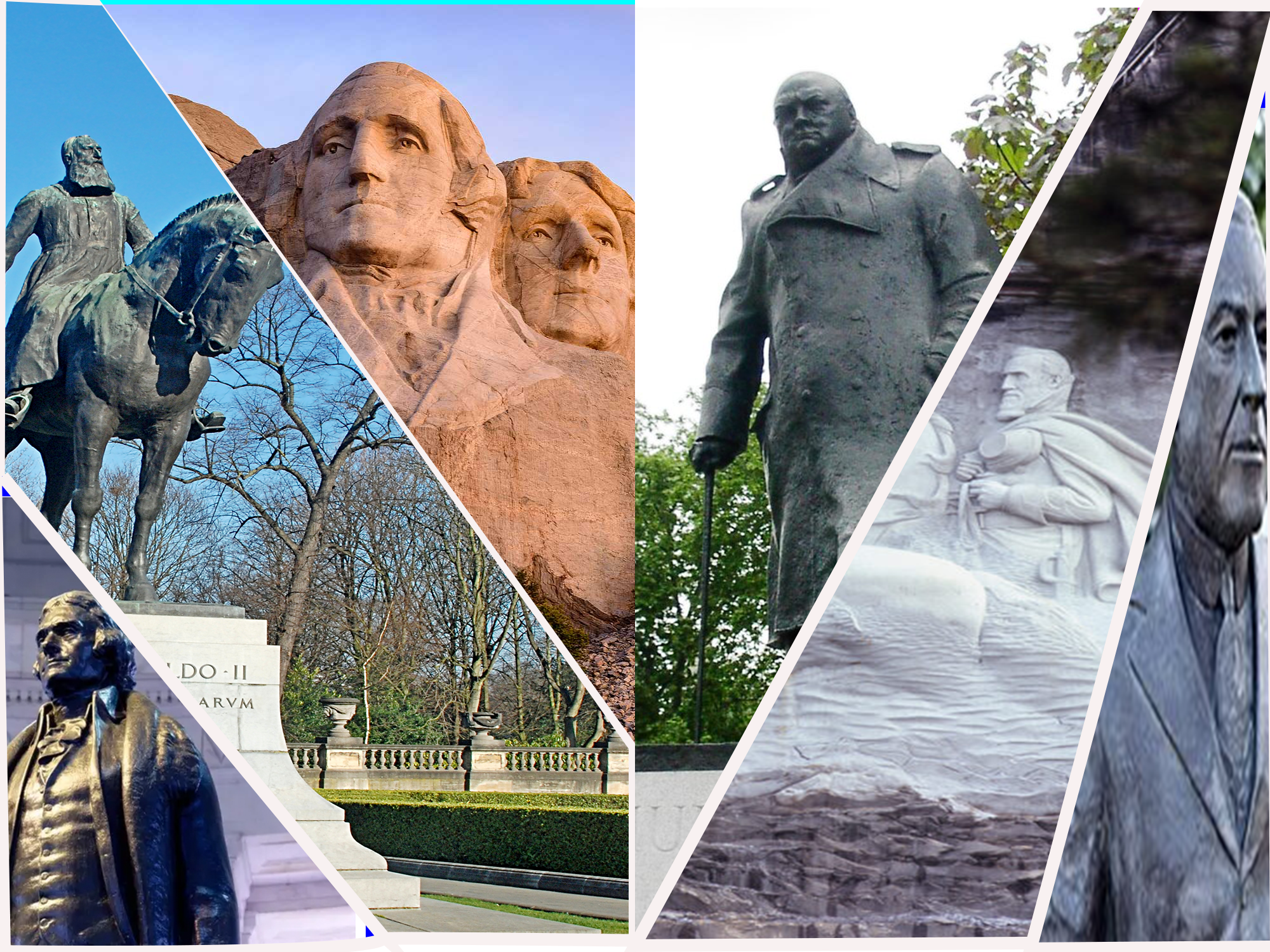
Historical Presentism, in the form that gets taught, is the habit of reading past people through present values — and the rule that you must not. EBSCO’s student brief calls it “making moral judgments based on present-day cultural norms,” a bias that “mischaracterizes the past.” Lynn Hunt, as president of the American Historical Association, named it “the tendency to interpret the past in presentist terms.” James Sweet, holding the same office in 2022, said such history “ignores the values and mores of people in their own times.”
Barbara Tuchman liked: "Nothing is more unfair than to judge the men of the past by the ideas of the present." Gordon Wood put the ban in one clause — “The present should not be the criterion for what we find in the past” — and that is what the school lesson is for. C-SPAN’s Jackson unit, the Teachers Pay Teachers “Presentism vs. Historicism” packet, Sam Wineburg’s claim that historical thinking is an “unnatural act,” PragerU’s warning against “pernicious presentism”: all of them install the same instruction. Do not use today’s word on the planter, the viceroy, or the admiral. Call it the times.
But watch where this rule actually gets invoked. It is almost never deployed in the seminar room. It surfaces in the public square — specifically, at the exact moment a city council votes to remove a Confederate general, a slave trader, or an imperial viceroy from a plinth. The defense arrives in the same armor every time: presentism. “Tearing down the statue”, we’re told, “is an act of vandalism against history itself, a hysterical modern impulse punishing dead men for failing to anticipate twenty-first-century etiquette.” After all, they were merely men of their time.
Starting with the class of statue that has the best claim to a fair hearing: figures memorialized close to their own lifetimes, by their own societies, not manufactured generations later for someone else’s political fight. Winston Churchill. The American founding fathers. If “men of their time” is going to work anywhere, it should work here — same era, same society, no manufactured retroactive outrage. This is the test case.
And it still fails. Not because we’re smuggling in twenty-first-century values, but because “their time” was never the unanimous chorus the defense requires. It only sounds unanimous if you stop listening the moment you leave the drawing room.
Winston Churchill
Andrew Roberts, defending Churchill’s place on the plinth, has called it illogical and ahistorical to judge the people of the past by today’s morals. Winston Churchill, oversaw brutal policies in India such as the Bengal Famine. As Legal Historian Varun Pathak said:
it was an act of government. Under Churchill’s leadership, India continued exporting rice while famine ravaged the countryside. His cabinet blocked every urgent request for grain, including the Viceroy’s plea for over a million tonnes of wheat. Ships remained available, but Churchill diverted them to imperial forces. India’s own sterling reserves could not be used to import food. Amartya Sen later showed that Bengal’s famine was not caused by a shortage of food, but by catastrophic failures in allocation and entitlement. The British “denial policy”, which confiscated thousands of boats containing rice in order to deny these supplies to the invading Japanese army, further crippled distribution networks. London received unmistakable warnings about mass death, but Churchill simply chose not to act.
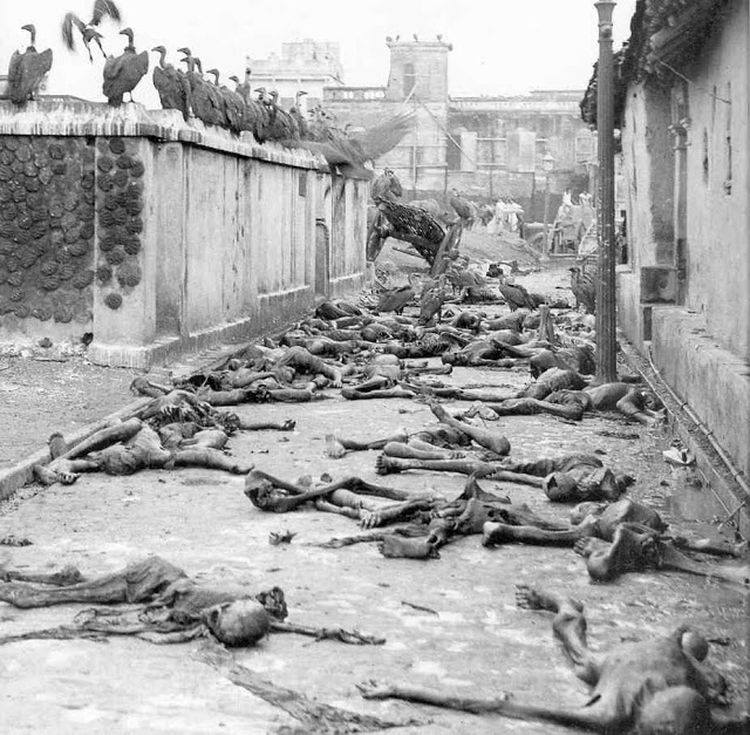
Vultures Waiting to Feast Upon the Dead Corpses in Calcutta
Churchill’s own inner circle did not need the benefit of hindsight to reach the opposite conclusion. In August 1944, Leo Amery — Churchill’s lifelong imperialist Secretary of State for India — confided to his diary that he was “by no means sure whether on this subject of India he is really quite sane,” and that he “didn’t see much difference between his outlook and Hitler’s.” The occasion was not an abstract quarrel about race. It followed years in which Churchill had told Amery he hated Indians (“a beastly people with a beastly religion”) and informed the War Cabinet that famine relief would be wasted because Indians “breed like rabbits.”1
Field Marshal Archibald Wavell, whom Churchill himself appointed Viceroy, recorded after a year in the post that he had found H.M.G.’s attitude to India “negligent, hostile and contemptuous to a degree I had not anticipated.” In a letter to Churchill on 24 October 1944 he repeated the charge — “neglect, even sometimes with hostility and contempt” — and said he had spent nine months fighting, “sometimes almost intemperate,” for food imports without which India would be in another famine.2
This was not a consensus of its day that modern historians are anachronistically fracturing. It was an active moral civil war inside Whitehall. Churchill was the extremist fringe: he horrified his own commanders and stood condemned by the men charged with running his empire.
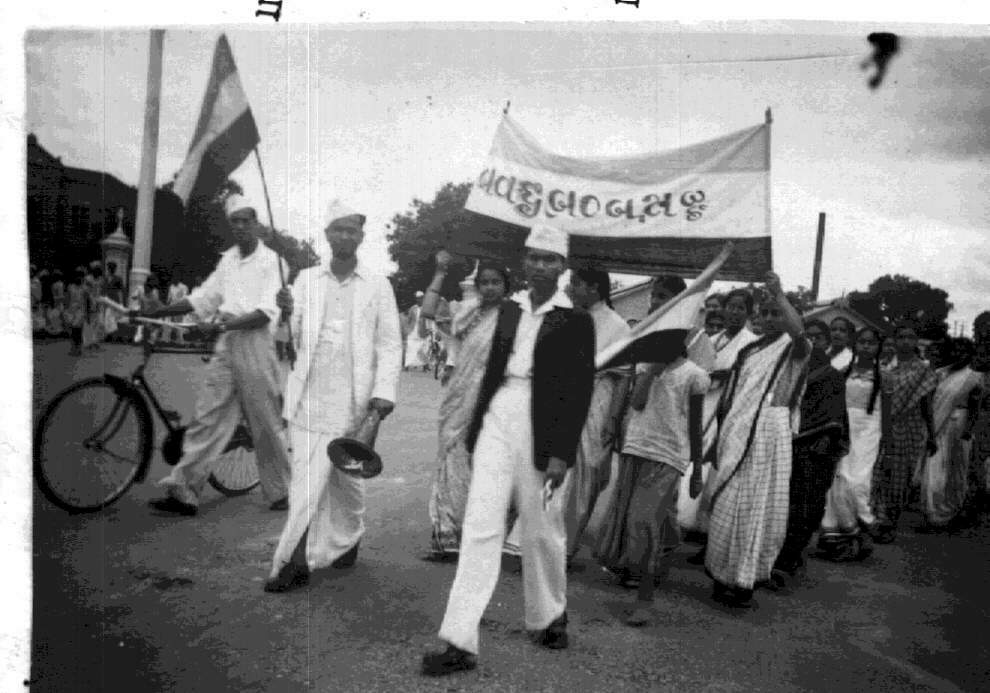
Gujrathi Flag saying “Leave India Now”
That says nothing of the 350 million people living under the policy. They were not waiting for the twenty-first century to object. In 1942 they launched Quit India — a mass rising for an immediate end to British rule, answered with tens of thousands of arrests and the killing of hundreds of protesters. In Bengal, while Amery and Wavell were filling those diaries, a famine was killing an estimated three million people.
To say that taking Churchill off a plinth violates “the standards of his era” requires a double lie: that those 350 million colonial subjects do not count as people of their time, and that the powerful white men across his own cabinet table did not spend 1943 and 1944 looking at him in revulsion.
The Founding Fathers
To defend the American Founders under the guise of “men of their times” requires pretending that 1776 existed in a moral void where nobody had yet thought to question chattel bondage or settler conquest.
The law itself had already spoken. In 1772, four years before Thomas Jefferson dipped his quill in Philadelphia, England’s highest common-law judge, Lord Mansfield, ruled in the Somerset case that slavery was an institution “so odious” that nothing could support it save positive municipal law. Enslaved people did not need Mansfield’s bench to teach them freedom. When Virginia’s royal governor offered emancipation to any enslaved person willing to fight the rebel planters, thousands fled across the lines. They included men and women from George Washington’s own plantation at Mount Vernon — like Harry Washington, who escaped to wear a uniform reading Liberty to Slaves. Washington spent the war demanding the return of his human property while leading a rebellion ostensibly waged against “enslavement” by the British Crown.
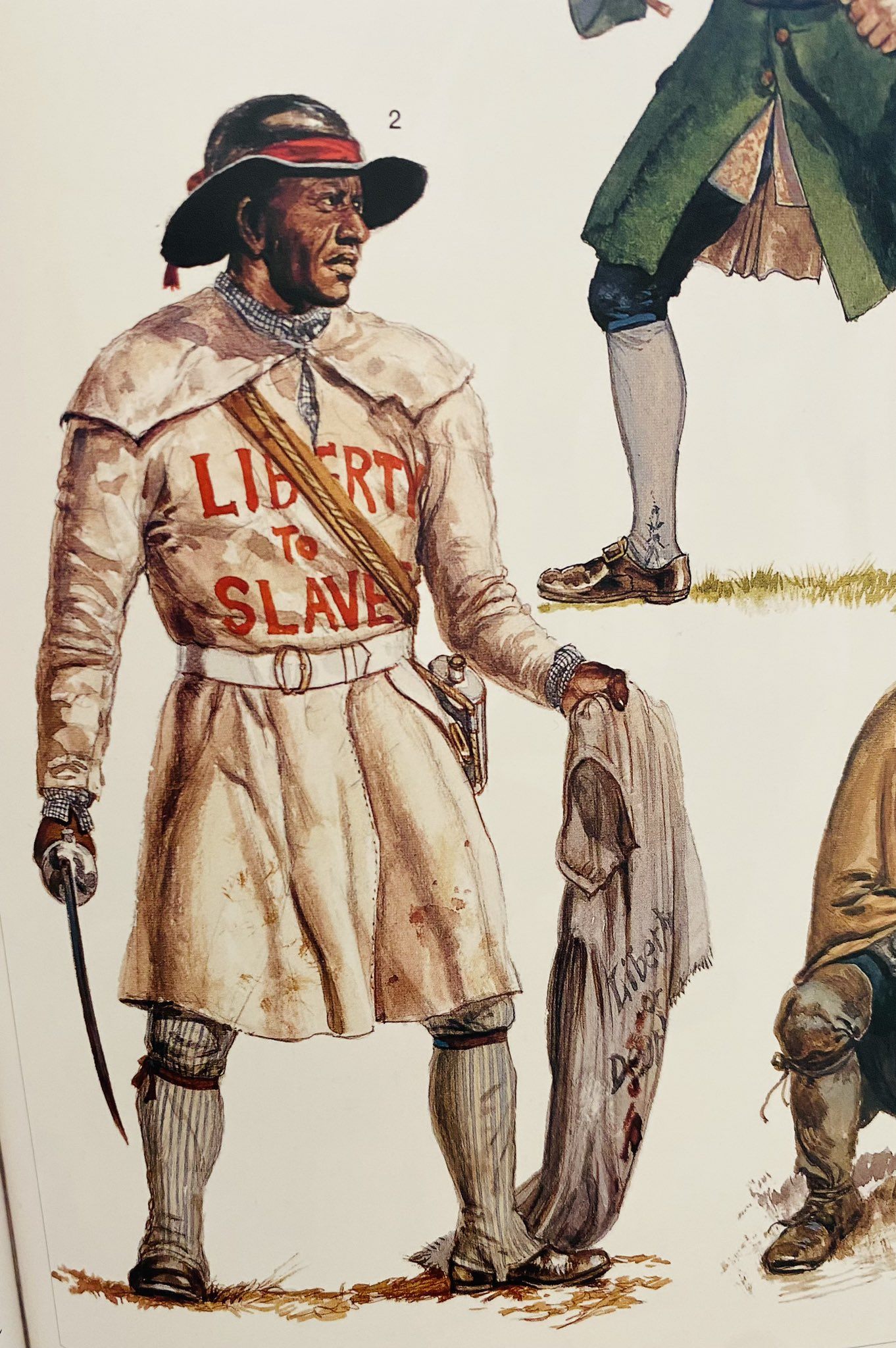
The Motto of Black British Loyalists
The excuse that eighteenth-century republican revolutions were structurally incapable of conceiving freedom for non-white populations collapses entirely when one looks south to Simón Bolívar.
Financed and armed by the Black republic of Haiti, Bolívar made an explicit pact with President Alexandre Pétion: the price of liberation was the abolition of slavery. Bolívar kept his word, granting emancipation across the territories he freed, while formerly enslaved soldiers formed the core of his liberation armies.3 When his forces marched into the high Andes, he did not demonize the Indigenous populations as “merciless savages” whose lands were ripe for speculative plunder. He abolished the colonial head tax on Indigenous communities, calling it a degrading levy that weighed on “the most miserable class of society,” and declared that they would no longer pay “the tax known by the degrading name of tribute.”4
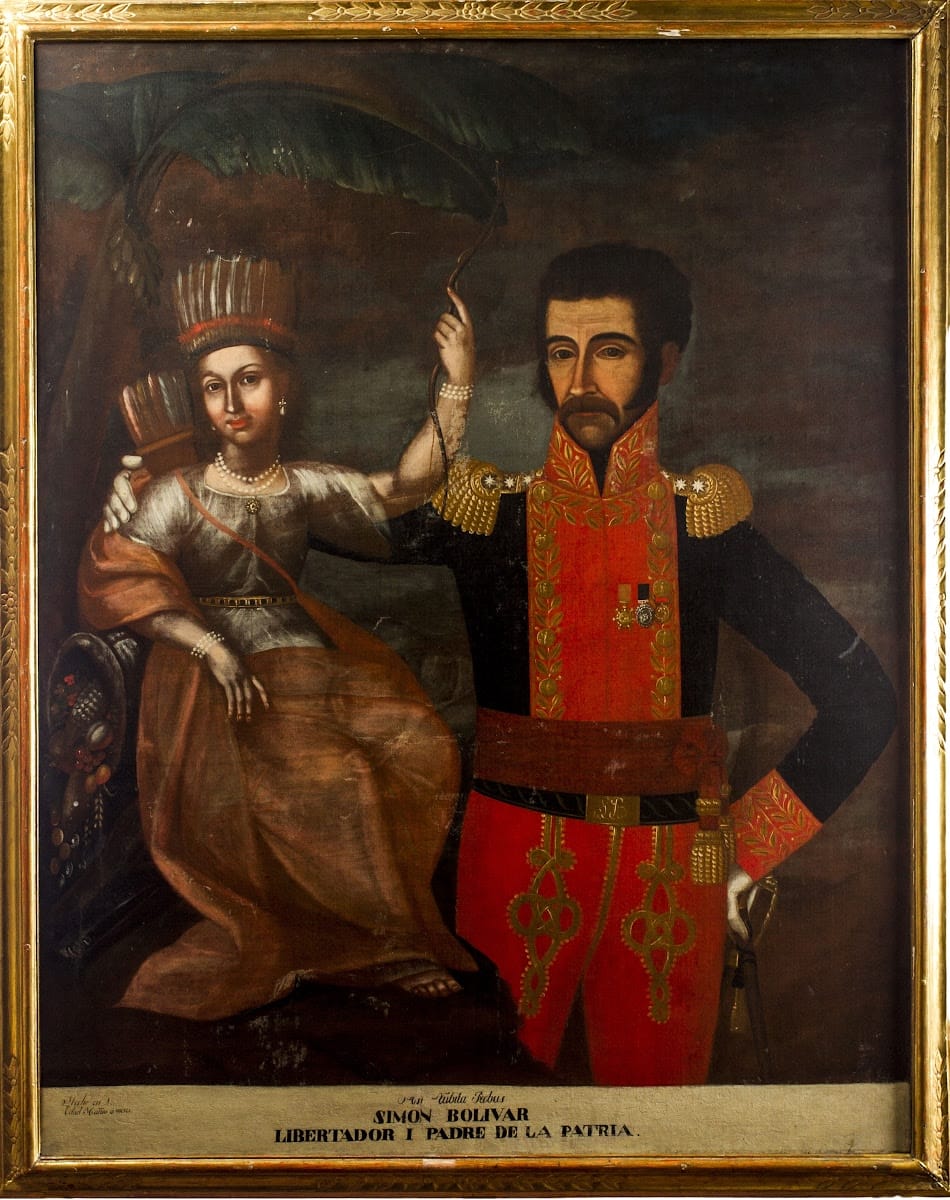
Pedro José Figueroa’s 1819 painting Bolívar Libertador y Padre de la Patria
Bolívar also saw through the grand rhetoric emanating from Washington. Watching the fledgling empire preach universal freedom while building an economic engine powered by human bondage and westward conquest, he wrote in 1829:
“The United States appear to be destined by Providence to plague America with misery in the name of liberty.”
This was not a retrospective condemnation cooked up by modern historians. It was delivered in real time, from within the same revolutionary hemisphere.
To defend Washington, Jefferson, or the Monroe administration as men merely floating along with the moral consensus of their era requires ignoring an entire continent to the south. Latin American revolutionaries were not waiting for the twenty-first century to discover that North American liberty was a hypocritical sham. They looked up at the young republic, counted the slaves, watched the land grabs, and diagnosed the disease while the founders were still drawing breath.
Woodrow Wilson
Defenders of Woodrow Wilson frequently retreat behind the presentism shield: Wilson was an academic, a progressive reformer, a man navigating the early twentieth-century Southern racial compact. But Wilson’s record was not merely passive adherence to his era — it was an aggressive, reactionary rollback.
Upon entering office in 1913, Wilson immediately oversaw the re-segregation of the federal civil service — the Treasury, the Post Office, the Bureau of Engraving and Printing — installing physical partitions and separate bathrooms, and firing or demoting Black clerks who had held integrated federal jobs for decades. In 1915 he hosted a White House screening of D. W. Griffith’s The Birth of a Nation, a film that glorified the Ku Klux Klan and depicted Reconstruction as a savage nightmare. The movie itself quoted Wilson’s own History of the American People in its intertitles.
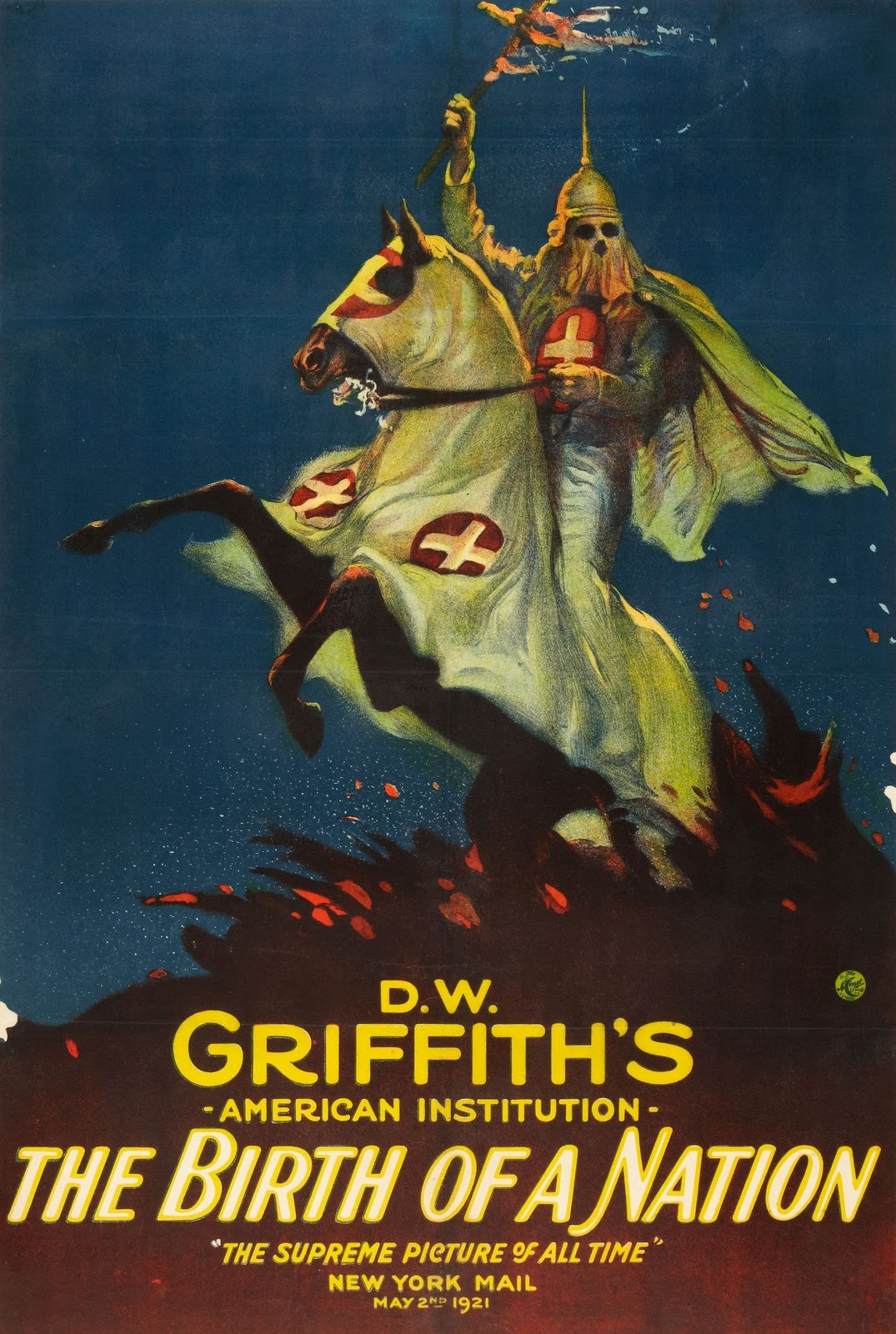
Poster for the second premiere, screened in the Whitehouse
Yet in February 1913, the exact moment Wilson was preparing to take office and purge Black workers from federal departments, Lenin was sitting in European exile writing “Russians and Negroes”:
“Everyone knows that the position of the Negroes in America in general is one unworthy of a civilised country — capitalism cannot give either complete emancipation or even complete equality… Shame on America for the plight of the Negroes!”
Lenin analyzed American census data to show how the legacy of slavery continued to crush Black Americans through deliberate under-education, disenfranchisement, and racial oppression, calling the survival of these conditions a disgraceful sham in a nation that boasted of modern civilization.
And you don’t even need to look to Russian Socialists to puncture the Wilson defense. The indictment was already delivered directly to his face in Washington.
William Monroe Trotter, the Black Harvard-educated journalist, led a delegation to the White House in November 1914 to confront Wilson about federal segregation. When Wilson patronizingly claimed that segregation was meant to “prevent friction” and was a benefit to Black clerks, Trotter refused to bow his head, retorting that two years earlier Wilson had been regarded as a second Abraham Lincoln — “Now we are having a conference with you, we find that you have segregated us.” Wilson lost his temper and threw Trotter out of the Oval Office for challenging him.
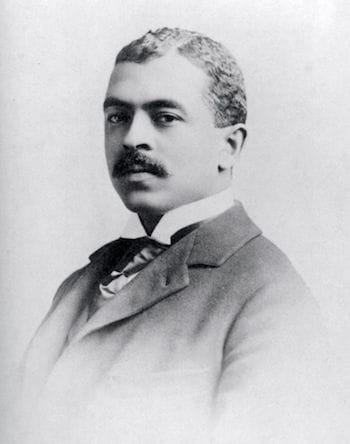
William Monroe Trotter that Woodrow Wilson Threw Out of His Office
The Black press, civil rights organizers, and the newly founded NAACP (organized in 1909) were running relentless campaigns against Jim Crow and Wilson’s policies in real time.
To portray Wilson’s virulent white supremacy as “just the way people thought in the 1910s” requires erasing both the global political observers who condemned it from abroad and the millions of Black Americans who looked at the President of the United States and told him to his face that his policies were reactionary and racist.
Confederate statues
Finally, Confederate statues are defended with the same excuse of historical presentism. Worse: most of them are not even contemporary.
Prior to the campaigns of the United Daughters of the Confederacy, Confederate markers were primarily headstones and funerary obelisks in private cemeteries. Between 1895 and the 1920s — the exact years Southern states were writing Jim Crow constitutions, stripping Black Americans of the ballot, and codifying racial terror into law — the UDC moved the bronze into civic space. A Confederate soldier or Robert E. Lee on the lawn of a county courthouse, where Black citizens were forced into segregated courtrooms, all-white juries, and poll taxes, was not an accident of geography. It was a physical totem announcing that white supremacist authority had been restored over the legal system.
A second wave followed in the 1950s and 1960s, erected not in memory of the Civil War but in direct retaliation against Brown v. Board of Education and the Civil Rights Movement.
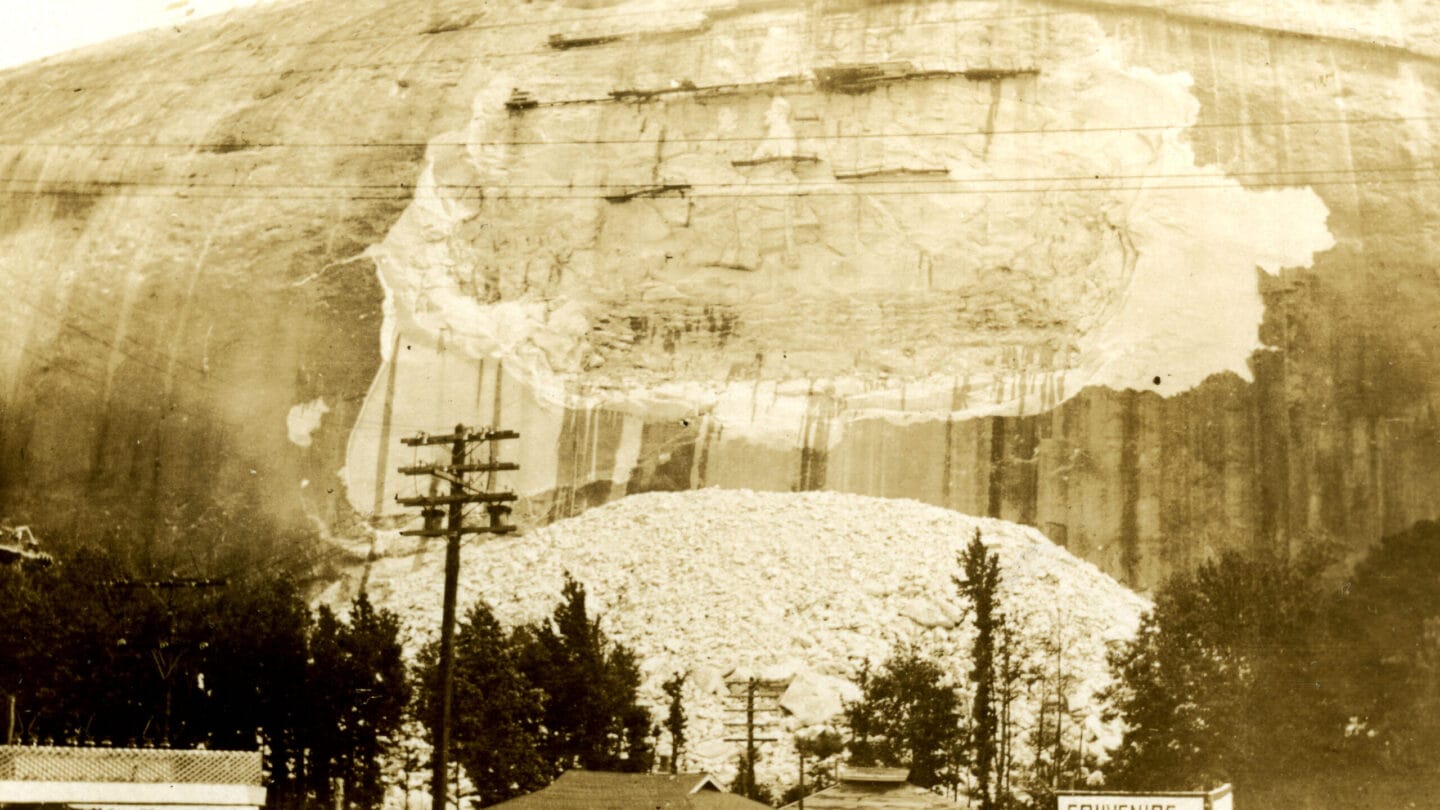
Scaffolding for sculpting Stone Mountain Monument, between 1963 and 1972
To defend a statue of Jefferson Davis or Robert E. Lee under the guise of “not judging the past” requires pretending that the bronze is a time capsule from 1865. It is not. The statue itself was an act of aggressive historical revisionism, manufactured a generation later as an offensive weapon against Black civil rights. Taking it down is not presentist. It is answering a political provocation that was never accepted by the people it was built to terrify.
The shield is not neutral
Curiously, this scrupulous panic over “historical presentism” evaporates the moment the gaze shifts away from Western statesmen. When Western historiography examines foot-binding in Qing China, or dowries and sati in pre-colonial India, no one hands out high-school lesson packets warning against the “unnatural act” of retrospective judgment. No one rushes to defend the Qing patriarch or the village elder as a mere “man of his times” operating within an innocent cultural paradigm. In those arenas, moral condemnation is not treated as a methodological sin; it is treated as civilized common sense — and, historically, as the moral justification for empire itself.
The rule, then, is not neutral. It is an asymmetric shield. Non-Western societies are judged by their victims’ suffering, while Western imperialists are judged only by their peers’ self-justifications.
When Gordon Wood, James Sweet, or Andrew Roberts warn against using today’s values on yesterday’s men, they claim to be defending historical rigor against retroactive self-righteousness. But look at what their rule actually demands. It demands that we treat the slave owner’s ledger as the only document in the room, while throwing out the runaway slave’s testimony as an anachronism. It demands that we accept Churchill’s racism as the spirit of 1943, while discounting three hundred and fifty million Indians starving and marching in the streets — and the members of his own War Cabinet who recoiled from him. It demands that we view a Jim Crow courthouse monument as a sacred relic of 1865, while ignoring the Black Americans it was erected to terrorize in 1915.
The command not to judge the past is never actually about preserving history. It is about deciding who counts as human in the record.
When people take ropes to a plinth, they are not committing the sin of presentism. They are refusing the selective amnesia that calls one man’s tyranny “the times,” while erasing the millions who fought it, bled under it, and judged it evil the very day it was done.
Sources
1. Leo Amery, diary, 9 September 1942 (“beastly people with a beastly religion”); diary record of Churchill at the War Cabinet, 1943 (“breed like rabbits”); diary, 4 August 1944 (Hitler comparison and “not quite sane”). In John Barnes and David Nicholson, eds., The Empire at Bay: The Leo Amery Diaries, 1929–1945 (London: Hutchinson, 1988).
2. Archibald Wavell, Wavell: The Viceroy’s Journal, ed. Penderel Moon (London: Oxford University Press, 1973), journal entry for 20 October 1944, and letter to Winston Churchill, 24 October 1944.
3. Alexandre Pétion’s condition for Haitian arms, money, and men, 1816; Simón Bolívar, decree of Carúpano, 2 June 1816. In Manuel Pérez Vila, ed., Doctrina del Libertador (Caracas: Biblioteca Ayacucho).
4. Law of the Congress of Cúcuta, 11 October 1821 (“el impuesto conocido con el degradante nombre de tributo”); decree of Chuquisaca, 22 December 1825 (“la clase más miserable de la sociedad”). See also the Cuzco decree of 4 July 1825, in Pérez Vila, Doctrina del Libertador.
From Historic.ly via This RSS Feed.