

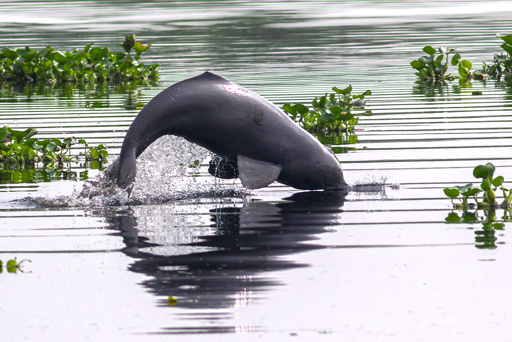
The Buriganga River, which flows by Dhaka city, is one of Bangladesh’s most polluted waterways and ranks among the most contaminated urban rivers in the world. Every day, the 29-kilometre- (18-mile-) long Buriganga River absorbs toxic industrial effluent from hundreds of factories, continuous tannery discharges, untreated sewage and solid waste, leaving much of the river virtually lifeless for fish. However, in the Buriganga, where native fish species have essentially vanished, endangered Ganges river dolphins (Platanista gangetica) continue to persist. A recent study published in the Journal of Asia-Pacific Biodiversity found that around 20 dolphins live in the river. Researchers conducted the study for 12 months, from September 2023 to August 2024, and systematically surveyed a 27-km (16.7-mi) stretch of this heavily polluted river that skirts the southern edge of Dhaka. “The Buriganga is not a usual place for dolphins, where native fishes have largely vanished. Leaving the river full of invasive suckermouth catfish [Hypostomus Plecostomus, locally called sakar fish],” one of the researchers, Md. Aminur Rahman, told Mongabay. “When we found [the dolphins], we were amazed at how it was possible. Because the river is not livable for fish. Around the year, we didn’t track any dolphins only during two of the months, but all the other 10 months we tracked them.” The highest number of dolphins were seen in December, and throughout the winter season, and none were seen in October 2023 or between July and August of 2024. The dolphin groups averaged 4.18 individuals, higher than in earlier…This article was originally published on Mongabay
From Conservation news via This RSS Feed.