

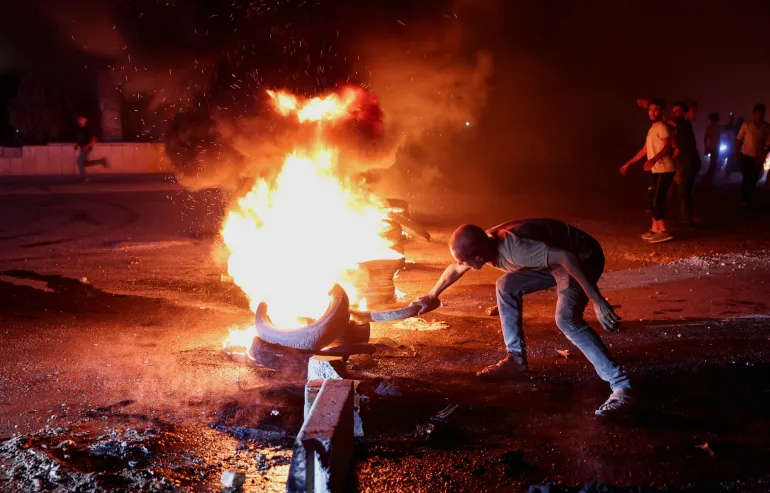
Demonstrations have spread across eight provinces after the government raised diesel prices by up to 40 percent and petrol prices by 28 percent.
Protests have spread across eight Syrian provinces after the government sharply increased fuel prices, with demonstrators burning tyres and blocking a main highway as authorities defended the measures as temporary responses to rising global supply costs and refinery maintenance.
RELATED: Israeli Actions in Syria May Amount to War Crimes, UN Warns
The government raised diesel prices by up to 40 percent and petrol prices by 28 percent on Sunday, citing an exceptional increase in the global cost of securing fuel supplies. The Energy Ministry said the measures were temporary and intended to ensure continued supplies and fuel availability on the domestic market.
Protests were reported in Hama, Khan Sheikhoun and Maarat al-Numan. Footage shows crowds gathering in the streets and burning tyres, while demonstrators blocked a main highway for several hours. The price increases also sparked fierce debate on social media.
The Energy Ministry said maintenance work at the Baniyas refinery had also contributed to the price adjustments. The overhaul is expected to increase the refinery’s capacity from 80,000 to 130,000 barrels per day.
Ver esta publicación en Instagram
Una publicación compartida por Al Jazeera English (@aljazeeraenglish)
The protests come as Syria faces a significant gap between domestic oil production and demand. Energy Minister Mohammed al-Bashir said on Saturday that the country produces about 102,000 barrels of oil per day, compared with domestic consumption needs of about 325,000 barrels per day. The shortfall is covered through imports.
The ministry separately put domestic demand for oil and petroleum products at around 300,000 barrels per day, while local crude oil production stands at about 100,000 barrels per day.
Authorities said they would continue to review fuel prices as global market conditions change and work over the long term to expand refining and storage capacity, according to the state-run Syrian Arab News Agency (SANA).
The government faces pressure over the potential economic impact of higher fuel costs, including on transportation, food and services. The Syrian Observatory for Human Rights said authorities could review the decision and provide direct support to groups most affected by the increases.
The Observatory also proposed a smart-card system to determine subsidized fuel allocations, targeted fuel subsidies for public transportation and a new fare structure. It said combining de-escalation measures, targeted support, regulated transport fares and direct dialogue could help contain public anger and prevent protests over worsening living conditions from spreading further.
Fuel supplies are critical to Syria’s economic recovery as the country seeks to rebuild after 14 years of war, while authorities contend with limited domestic production and reliance on imports to meet demand.
From teleSUR English via This RSS Feed.