

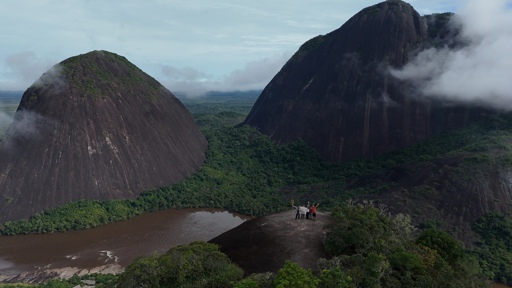
Founder’s Briefs: An occasional series where Mongabay founder Rhett Ayers Butler shares analysis, perspectives and story summaries. When researchers began cataloging dragonflies in Guainía, a remote region in eastern Colombia, the scientific record contained only about 10 species. By working with Indigenous communities, they’ve found nearly 120. “When we started, very little was known,” Yiselle Cano, biodiversity leader of the Dragones Guainía project, told contributor Manuel Fonseca for Mongabay. “I think we must be close to 120 species by now,” Cano said. “It’s a hugely diverse group, because it includes dragonflies native to the Orinoco, Amazonas, and dragonflies that are endemic to the Guiana Shield.” The diversity makes Guainía a hotspot for dragonflies and damselflies. It may also provide insights on what is happening to the region’s water. These insects depend on healthy freshwater ecosystems, and their aquatic habitats are coming under growing pressure from mining, deforestation, poorly managed waste, and rapidly expanding tourism. Cataloging the insects was only part of the work. Once the researchers had begun filling gaps in the scientific record, they held workshops to share their findings with local communities. There they encountered another gap: the language of biology meant little to people whose understanding of the landscape had been formed outside scientific taxonomies. Some participants didn’t speak Spanish at all. Community leaders invited everyone, from young children to elders who retained ancestral knowledge. As researchers displayed the dragonflies found around puddles, streams, and rivers, participants tried to identify them in their own languages. “This is…This article was originally published on Mongabay
From Conservation news via This RSS Feed.