

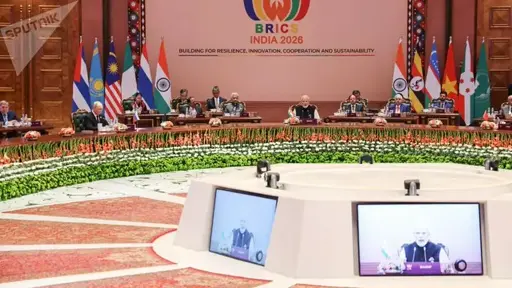
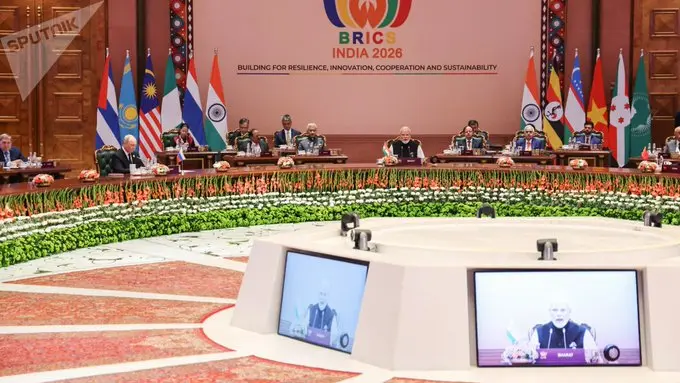
BRICS leaders voiced concern over the impact of U.S. measures on Cuba’s economy, energy supply and population.
BRICS leaders have called on the United States to end its economic, commercial and financial measures against Cuba, citing their effects on the island’s economy, energy supply and humanitarian situation.
RELATED: Cuba Updates Framework for Foreign Currency Management, Control, and Allocation
The appeal came in a 140-point declaration adopted Saturday by the 11-member bloc, which expressed “deep concern” over the tightening of unilateral measures against Cuba and their impact on the Cuban people.
The declaration called for the implementation of UN General Assembly Resolution A/RES/80/4 and an end to the U.S. blockade. BRICS also reaffirmed its opposition to unilateral coercive measures, including secondary sanctions, saying they run counter to international law.
The bloc said such measures affect people’s rights to development, health and food security, with disproportionate consequences for poor and vulnerable populations. It also said they widen the digital divide and exacerbate environmental problems.
***Text Reads:  During the 2026 BRICS Summit, member nations agreed to implement an innovative trade exchange system based on digital payments. This initiative aims to consolidate the use of local currencies for settling cross-border transactions, thereby reducing exposure to external exchange rate fluctuations.
  The consensus reached by the heads of state seeks to safeguard regional supply chains and boost food security levels across the Global South.***How will this measure impact the global economy?
According to the Cuban government, economic losses attributed to the U.S. measures reached $8.0833 billion between March 1, 2025, and Feb. 28, 2026. The cumulative damage attributed to the blockade was reported at $178.7005 billion.
The declaration said unilateral coercive measures undermine international law and the principles and purposes of the UN Charter, and described them as sanctions not authorized by the UN Security Council.
The statement also reaffirmed Latin America and the Caribbean as a zone of peace, based on mutual respect, the peaceful settlement of disputes and non-intervention.
During the discussions, Cuban Foreign Minister Bruno Rodríguez reaffirmed the island’s commitment to promoting and developing cooperation among countries of the Global South. He said such cooperation was the path toward building a fairer, more equitable and democratic international economic order.
The declaration marked BRICS’ two decades of existence and its expansion. The group reaffirmed its commitment to cooperation across three pillars: political and security affairs, economic and financial matters, and cultural and people-to-people ties.
BRICS also called for reform of the multilateral system, including the United Nations and its Security Council, to make it more democratic, representative and effective, with greater participation from developing countries in Africa, Asia and Latin America.
The 11 BRICS members are Brazil, India, China, Russia, South Africa, Ethiopia, Egypt, Iran, Indonesia, the United Arab Emirates and Saudi Arabia.
From teleSUR English via This RSS Feed.