

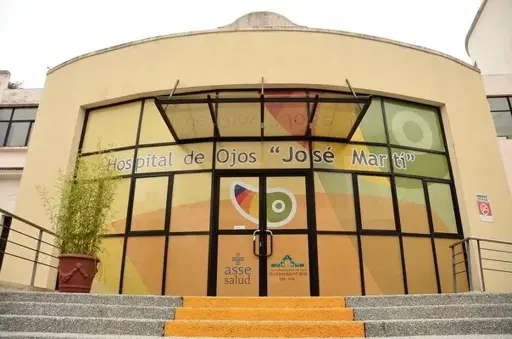
The United States has reportedly communicated to the Uruguayan government that it must end the presence of the Cuban Medical Brigade, particularly the Cuban Ophthalmology Brigade, which has operated in the country since 2005. The US pressure could include sanctions, including the possibility of placing Uruguay on an international blacklist, potentially affecting military cooperation and technical assistance between the two countries.
At the center of the controversy is the José Marti Ophthalmological Hospital in Montevideo, founded in 2007 under the Operation Miracle program through a cooperation agreement between Cuba and Uruguay. The hospital provides free eye care, including cataract surgeries, corneal transplants, and treatment for glaucoma and strabismus.
As of September 2026, the Cuban medical brigade has reportedly carried out more than 120,000 free procedures, primarily benefiting low-income Uruguayans.
Although Uruguay is a small country, it has not yielded to US geopolitical pressure in South America. Alongside Brazil, it represents a degree of resistance to US influence in the region, including by declining to join the US-led Shield of the Americas.
Uruguay has also declined to accept Cuban deportees, despite reported pressure from the United States to do so. Another point of contention is Uruguay and Brazil’s decision not to join the Western Hemisphere Joint Task Force, a US-led initiative ostensibly aimed at combating drug cartels across the Americas. Yet beyond its stated objectives, the coalition can also be understood as part of Washington’s broader effort to consolidate alliances and reinforce its influence in the region as it confronts what analysts describe as a process of imperial decline.
According to reports by Uruguayan journalist Gabriel Pereyra, Uruguay’s Ministry of Foreign Affairs and Ministry of Defense have allegedly received formal warnings from the United States demanding the withdrawal of the Cuban medical brigade.
If Uruguay fails to comply, it could reportedly be placed on a blacklist over alleged forced-labor practices, potentially jeopardizing US support for military training and equipment. Washington has continued its campaign to discredit Cuban healthcare professionals, using the medical mission as an instrument of geopolitical pressure.

Operation Milagro patient. Photo: Bill Hackwell.
However, Foreign Minister Mario Lubetkin has said that Uruguay has received no official communication to that effect, although he acknowledged that the issue is being discussed. Lubetkin described Uruguay’s experience with Cuban doctors as “extraordinary,” emphasizing its humanitarian and social value and stressing that it carries no political connotations.
Uruguay is not an isolated case. For more than six decades, Cuban doctors, nurses, and other healthcare professionals have provided medical assistance around the world. Between 1960 and 2023, approximately 600,000 Cuban healthcare professionals participated in medical missions across 165 countries. Yet several governments, including that of the Bahamas, Guatemala, Guyana, Honduras, Saint Vincent and the Grenadines, and Paraguay, have reduced, reviewed, or ended medical cooperation agreements with Cuba amid pressure from Washington.
“They are punishing the most disadvantaged peoples and communities in the region, who for decades have received Cuban medical care. In return, they promise resources that we know will never arrive or benefit those populations,” Cuban Foreign Minister Bruno Rodríguez has said.
The Cuban presence in Uruguay is another example of a decades-long tradition in which Cuba has sent “doctors, not bombs”, providing lifesaving assistance during health emergencies and natural disasters. It is a tradition that Cuba says it intends to maintain, continuing to extend a helping hand wherever vulnerable people are in need.
(Resumen Latinoamericano) by Alejandra Garcia Elizalde
From Orinoco Tribune via This RSS Feed.