

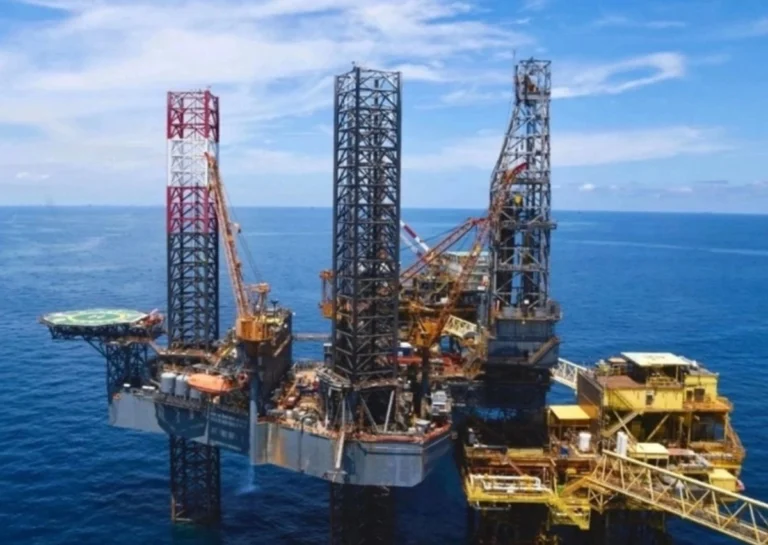
Gulf of Mexico oil spill prompts Mexico to deploy 255 naval personnel as Pemex repairs a subsea pipeline and monitors the slick’s movement offshore.
Related: Mexico Deploys Anti-drone Security Operation Along Northern Border
Gulf of Mexico Oil Spill Triggers Naval Response Off Campeche
The Gulf of Mexico oil spill detected on Thursday, September 10, 2026, has prompted Mexico to launch a large-scale maritime response north of Ciudad del Carmen, Campeche.
The leak occurred at Petróleos Mexicanos (Pemex) offshore facilities, approximately 46 nautical miles north of Ciudad del Carmen. Authorities have maintained continuous monitoring while specialized teams work to stop the release, recover crude, and repair the damaged subsea infrastructure.
The Mexican Navy, known as Semar, activated its Local Contingency Plan through the Regional Emergency Response and Management Group (GRAME). The operation includes 255 naval personnel, the ocean patrol vessel ARM Guanajuato, four additional boats, and two aircraft.
The units are carrying out containment, collection, surveillance, and oil-dispersion operations in the affected area. Authorities are also conducting technical inspections to determine the precise cause and scale of the incident.
Pemex said the leak was detected after a drop in pressure in a subsea crude-collection pipeline connected to the Ek-TA, Balam-TA, Balam-A, Balam-TB, and Balam-TA2 platforms.
The company immediately began depressurizing and isolating the pipeline. Safety valves were closed to stop the flow, and Pemex said the line has remained without pressure and without further crude emissions since the incident was detected.[infobae][infobae][telesurtv]
The company has not publicly disclosed the total volume of crude released, the exact duration of the leak, or the full size of the oil slick. Those figures will be important for determining the environmental impact and assessing whether additional recovery measures are necessary.
Pemex has stated that there have been no reported injuries among personnel and that no damage has been reported along nearby beaches. The company also said its monitoring indicates that the hydrocarbons are not expected to reach the coast of Campeche.
Gulf of Mexico Oil Spill Repair and Environmental Monitoring
See the latest Pemex update on the Campeche oil leak.
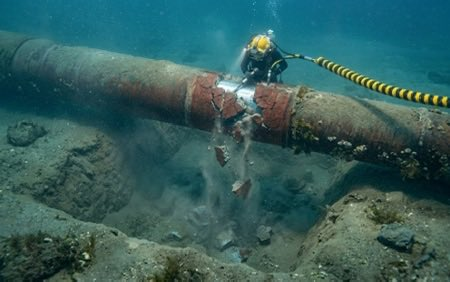
Specialized diving teams have located the point where the pipeline lost containment. After completing seabed dredging and removing a concrete ballast structure, crews began installing a metallic enclosure around the damaged section.
The enclosure is intended to seal the pipeline and prevent further leakage. Technicians must complete the repair under difficult offshore conditions, where visibility, currents, depth, and the presence of heavy subsea equipment can complicate the work.
Pemex’s Cantarell extraction teams are coordinating with naval personnel and other emergency-response units. The operation combines technical repair with aerial and maritime surveillance to track the oil slick and identify any changes in its direction.
The Agency for Safety, Energy and Environment (ASEA) has received formal notification of the incident. It conducted aerial observation flights to document the affected area and issued an ordinary inspection order covering installations within the Cantarell Extraction Asset.
The inspection will examine the condition of the pipeline, the response protocols activated by Pemex, and the measures taken to prevent additional environmental damage. It may also help determine whether maintenance, operational, or structural failures contributed to the leak.
The Permanent Observatory of the Gulf of Mexico is maintaining continuous observation of the affected waters. Its analysis included four radar and multispectral imaging reports, which are being used to monitor the size and movement of the slick.
According to the observatory, three mathematical forecasting models indicate a net westward movement over a five-day period. Current projections suggest that the probability of the oil reaching the coastline or environmentally sensitive areas during those first five days is very low.
However, scientists have kept the forecasting system active because a possible cold front during the next 10 days could change wind and current patterns. A shift in atmospheric conditions could alter the slick’s trajectory in open water and increase uncertainty around its eventual movement.[informador][eleconomista.com][politica.expansion]
The use of multiple monitoring tools is significant because oil slicks can change rapidly depending on wind direction, wave conditions, surface currents, and the physical properties of the crude.
Satellite radar can detect surface changes even when cloud cover limits conventional photography. Multispectral imagery can provide additional information about the slick’s spread and concentration. Mathematical models then combine these observations with meteorological and oceanographic data to forecast movement.
Environmental specialists will continue analyzing the waters around the incident. Their work will be necessary to determine whether hydrocarbons have affected marine organisms, fishing areas, seabirds, or other ecosystems connected to the Campeche region.
The area lies near important offshore production facilities and maritime routes. Campeche’s coastal communities also depend heavily on fishing, tourism, port activity, and services linked to the energy industry.
Even when a spill does not reach the shoreline, offshore contamination can affect marine life and fishing operations. Monitoring therefore needs to continue after visible oil disappears from the surface, since residues may remain in the water column or settle on the seabed.
Geopolitical Context: Mexico’s Offshore Energy and Environmental Responsibility
The Gulf of Mexico oil spill comes at a time when Mexico continues to rely heavily on offshore production for national energy revenues and fuel supplies. The Cantarell area has long been one of the country’s most important oil-producing zones, although production has declined from historic highs.
The incident highlights the tension between maintaining production and ensuring the safety of aging or heavily used offshore infrastructure. Subsea pipelines, platforms, storage systems, and transport facilities require constant inspection and investment, particularly in waters exposed to storms, corrosion, strong currents, and heavy industrial activity.
The Mexican Navy’s involvement reflects the strategic importance of the Gulf of Mexico. Semar is responsible not only for maritime security but also for supporting emergency operations, environmental protection, search and rescue, and the protection of national infrastructure.
Mexico’s response also has a regional dimension. The Gulf of Mexico is a shared and interconnected marine space bordered by Mexico, the United States, and Cuba. Currents and weather systems can transport pollutants across large distances, meaning that environmental incidents can create consequences beyond the immediate location of a leak.
For that reason, oil-spill prevention and response require coordination among national authorities, scientific institutions, energy companies, and coastal communities. Satellite monitoring and predictive models are increasingly important in establishing whether an incident could affect neighboring waters or sensitive ecosystems.
The spill also raises questions about corporate transparency and public disclosure. Pemex has confirmed the leak and described the response, but the lack of publicly available information about the volume released and the precise duration of the event has made it difficult to assess the incident independently.
Environmental groups and local fishing communities are likely to demand more detailed information as the investigation advances. They may seek access to water-quality data, marine-life assessments, repair reports, and evidence showing that the spill did not reach fishing grounds or coastal ecosystems.
Mexico’s energy policy faces a broader challenge. The country must maintain oil production while reducing the environmental risks associated with fossil-fuel infrastructure. Offshore accidents can generate economic losses, affect public confidence, and create long-term costs for coastal communities.
The latest Gulf of Mexico oil spill also follows other incidents involving Pemex facilities, increasing calls for stronger preventive maintenance and more rigorous oversight. The central issue is not only how quickly authorities respond after a leak, but whether better inspections can prevent failures before they occur.
For now, authorities say the slick is moving westward and is unlikely to reach Campeche’s coastline during the initial forecast period. Nevertheless, the possible arrival of a cold front means that conditions could change.
The naval operation will continue while workers complete the subsea repair, ASEA carries out its inspection, and scientists update their models. The final environmental assessment will depend on the volume of crude released, the duration of the leak, the behavior of the slick, and the results of ongoing marine monitoring.
Comunicado Nacional | Pemex realiza acciones oportunas para atender la presencia de aceite crudo en el mar.
https://t.co/tnC7Wu4bkf pic.twitter.com/qtY6CQaFp1
— Petróleos Mexicanos (@Pemex) September 12, 2026
From teleSUR English via This RSS Feed.