

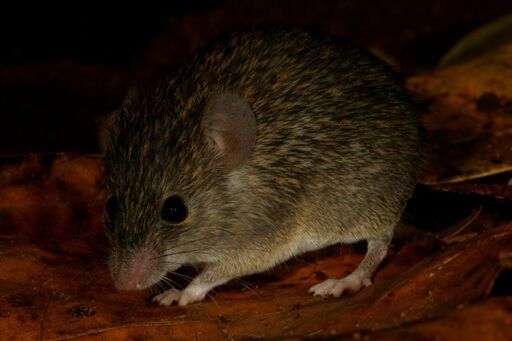
COLOMBO — As dusk settled over the paddy fields at Puwakpitiya, a village on the northern edge of Knuckles Mountain Range locally known as Dumbara mountains in Central Sri Lanka, researchers began laying traps along the uneasy boundary between farmland and forest. They were targeting small terrestrial mammals moving through the landscape. On the ground, drift fences were created to lead animals to pitfall traps, while box style Sherman live traps were baited with feed. But the usual rodent lure — peanut butter — failed to attract the mice in Sri Lanka, so the researchers instead turned to something more familiar to the local mice — pieces of burnt coconut. On March 11, 2004, one of the pitfall traps caught a small mouse that looked different. Six days later, a second specimen was caught in a baited trap. Both were females, not larger than a child’s palm, with fulvous-gray pelage broken by spiny guard hairs and a slender, naked tail longer than the head and body. Externally, the animal resembled Mayor’s mouse (Mus mayori), a species endemic to Sri Lanka’s highlands, but differed in tail length and head shape, offering initial clues about a new species. The species is so far known only from Sri Lanka’s Knuckles Mountain Range, and the image shows Puwakpitiya, the village from where researchers found the first specimens of Dumbara spiny mouse (Mus dumbara) after they set traps along the forest edge beside a sprawling paddy field. Image courtesy of Suyama Boyagoda. The two mice…This article was originally published on Mongabay
From Conservation news via This RSS Feed.