


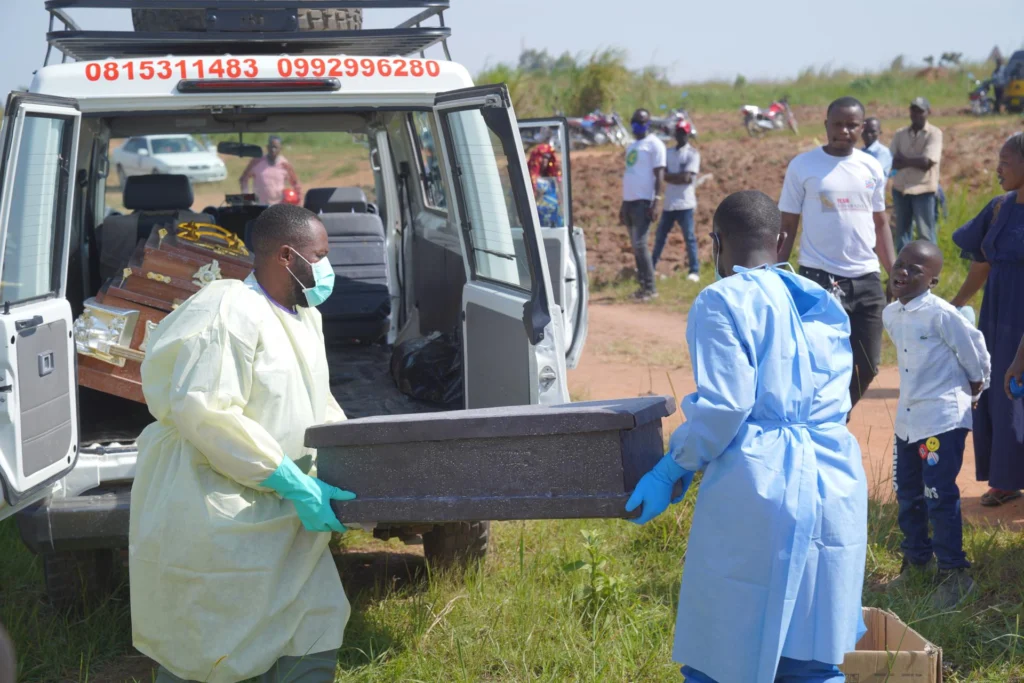
The World Health Organization has issued on Thursday an urgent warning about the critical need for material, financial, and human resources to prevent the collapse of the response plan against the Ebola epidemic in the Democratic Republic of Congo.
The alert comes at a critical juncture, with the virus’s geographic spread threatening to overwhelm health infrastructure already deployed on the ground. In a situational report issued on September 8, the W.H.O.’s Africa office detailed that the outbreak has caused 6,686 cases and 3,226 deaths, warning that it remains out of control.
Although the humanitarian response has managed to mobilize 4,000 health workers, 24 decentralized laboratories, 59 treatment centers and 1,300 hospital beds, most deaths continue to occur within communities through unidentified chains of transmission -a pattern officials say makes containment especially difficult.
RELATED: Cuba Reaffirms Support for DR Congo Amid Severe Ebola Epidemic
The outbreak’s rapid spread into new provinces, including Tshopo and North Kivu, is forcing health authorities and international organizations to seek a threefold increase in their current installed capacity.
The rapid dispersion of the outbreak into new provinces, such as Tshopo and North Kivu, necessitates a tripling of the current operational capacity. In this sense, the alert comes at a pivotal moment as the geographic spread of the virus threatens to overwhelm the healthcare infrastructure deployed on the ground.
As Ebola sweeps across the eastern Democratic Republic of the Congo, ensuring families have access to sufficient food is crucial to halting the spread of the deadly disease.@WFP is calling for urgent support to ensure aid reaches those most in need.https://t.co/sLRNDTwcBp pic.twitter.com/mQizF5TKJ0
— United Nations (@UN) September 10, 2026
Basic Supplies Lacking
The W.H.O.’s appeal coincides with severe structural shortcomings reported at schools and community centers in high-risk zones. In North Kivu province, limited access to basic services is making it difficult for residents to follow even minimal prevention and hygiene protocols.
While the Congolese government and the W.H.O. move forward with an initial distribution of 2,000 doses of the Ervebo vaccine in Kisangani -part of a larger shipment of 70,000 total units- health authorities reiterate that definitively containing the outbreak will depend on international funding arriving in time to prevent shortages from paralyzing medical care in affected areas.
#Ebola response in northeastern #DRC update:
@UNHAS delivered 1.2 metric tons of cargo, including PPE and tents, to NiaNia, Ituri, helping @WHO and the DRC Ministry of Health reach affected communities. pic.twitter.com/jE2natsfa9
— WFP Africa (@WFP_Africa) September 10, 2026
On Monday, the National Institute of Public Health (INSP) of Congo confirmed that Ituri province remains the epicenter of the crisis, accounting for more than 80% of cases nationwide. The institute also reported that the outbreak, caused by the Bundibugyo strain of the Ebola virus, carries a fatality rate of 48.1% -one of the deadliest recorded for this particular strain, underscoring the stakes of the W.H.O.’s call for immediate international support as the response effort races against both the virus’s spread and a mounting funding shortfall.
W.H.O. estimates that maintaining the logistics of a single treatment center with a capacity of 50 beds costs approximately half a million dollars per month. This financial burden, coupled with the operational challenges, underscores the urgent need for international support to combat the Ebola crisis in DRC.
From teleSUR English via This RSS Feed.