

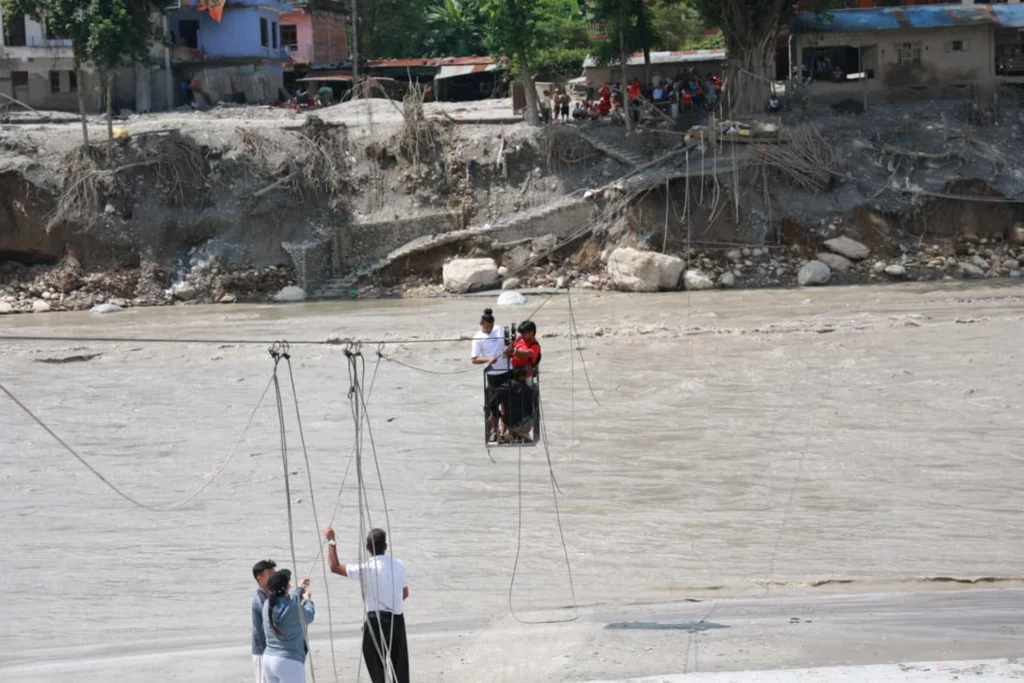
Nepal’s National Disaster Risk Reduction and Management Authority has updated the death toll from the late-August floods to 1,367 confirmed bodies, with 5,133 people missing and over 7,000 citizens requiring urgent medical attention.
Nepal’s National Disaster Risk Reduction and Management Authority (NDRRMA) raised the death toll from the devastating late-August floods to 1,367 confirmed bodies recovered across 15 municipalities under priority emergency status.
The disaster has left 5,133 people missing, including 587 foreign tourists, while more than 7,000 citizens have required urgent medical attention since the water, ice and sediment avalanche struck in late August.
RELATED: China Sends Third Batch of Aid To Nepal With Medical and Communications Equipment
Given the scale of the tragedy, more than 21,000 personnel from the Nepal Army, Police and Armed Police Force remain deployed in the hardest-hit regions of the Asian country, sustaining round-the-clock search, rescue and genetic forensic identification efforts.
Police have collected 2,698 DNA samples to date -1,286 from recovered remains and 1,412 from relatives searching for missing loved ones- in an effort to ensure victims are returned to their families with dignity. So far, only 102 bodies have been handed back to relatives, while the rest remain temporarily buried at sites such as Gokarna and Pokhara.
#Nepal | Rescue teams continue searching through mud and debris at Gyirong Port after a glacier collapse in Nepal triggered a massive debris flow that devastated the China-Nepal border crossing.
Hundreds remain missing on the Chinese side.#Himalayas #teleSUREnglish pic.twitter.com/st75yv6lW1— teleSUR English (@telesurenglish) September 10, 2026
Victim identification work is taking place at makeshift facilities in the mountainous regions, as well as in major morgues and hospital centers, with on-the-ground support from specialists sent by neighboring China, India and South Korea.
Rescue brigades are concentrating efforts on the underground tunnels of eight hydroelectric projects severely damaged by the Rasuwa-Bhotekoshi flooding and the swollen Trishuli River, including key facilities such as Upper Trishuli-1, Rasuwagadhi, Chilime, Langtang, Trishuli 3A, Trishuli 3B, Devighat and a solar power plant. After successfully rescuing three workers alive from inside one tunnel gallery, troops transported heavy machinery by helicopter to strategic points to help clear entrances buried under sediment.
Humanitarian Response Underway
The widespread destruction of bridges and roads has left dozens of mountain communities cut off, stranding tons of humanitarian aid at logistical hubs such as Bidur and Dhunche.
More than 3,600 people remain evacuated across 37 temporary shelters in Nuwakot, Rasuwa and Dhading, where authorities have stepped up epidemiological surveillance amid concerns over possible cholera outbreaks linked to contaminated water sources. In response, the Monsoon Response Command Post approved an emergency allocation of 67.5 million Nepali rupees (more than 442,000 U.S. dollars) channeled to local disaster committees in the districts of Rasuwa, Nuwakot, Dhading, Gorkha and Tanahun, under the standard procedures of the Disaster Management Fund.
On the social front, Nepal’s government has begun gradually reopening schools in municipalities such as Bidur to restore a sense of stability for more than 7,000 students affected by the disaster, easing uniform requirements and administrative rules in the process.
As search operations continue and identification work proceeds slowly, officials have signaled that the full scale of the disaster’s toll may not be clear for some time, given the thousands still listed as missing.
From teleSUR English via This RSS Feed.