

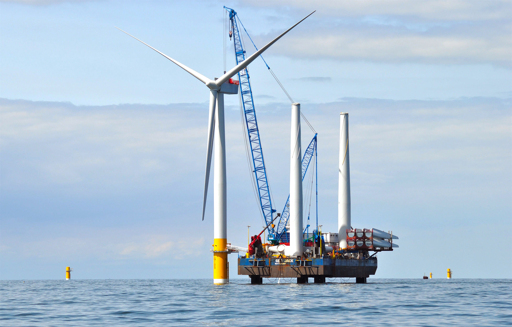
This is Part Three in a Mongabay series about trends in the offshore wind industry. Part One describes the sector’s untapped potential and gaps between installed energy generation capacity and climate goals. Part Two describes challenges the sector faces in scaling up to meet climate goals. Offshore wind farms are growing in number, with many experts saying this renewable source of energy is vital to tackling climate change. But many of the same experts caution that responsible construction is required to avoid potentially large impacts on marine ecosystems as farms proliferate in the coming years. On one hand, offshore wind farms can provide an ecological boon by acting as de facto marine reserves that limit fishing, including harmful practices like bottom trawling. They can also be refugia for fish like sharks and rays, crustaceans and other species, as their structures act as artificial reefs. But offshore wind farms also have a host of negative impacts across their life cycle, from construction to decommissioning. Birds and bats risk collision with offshore wind turbines and loss of habitat to farms, while some marine mammals avoid wind farms or change behavior due to their presence. Bass Rock, Scotland, is home to the world’s largest colony of northern gannets (Morus bassanus). The offshore Berwick Bank Wind Farm is expected to have a significant impact on populations of seabirds like the gannets, as well as guillemots, kittiwakes, razorbills and puffins. Image by Stephen Magee/RSPB. Over the past two decades, offshore wind farm numbers have increased, particularly…This article was originally published on Mongabay
From Conservation news via This RSS Feed.