

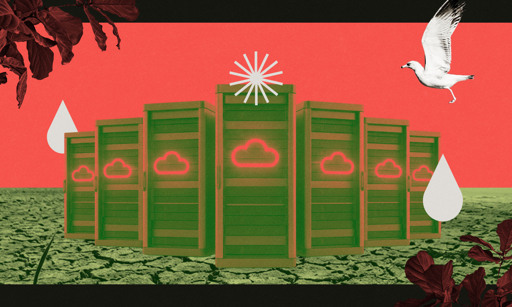
PARACATU, Brazil — As the president of Paracatu’s city council, Manoel Alves is used to being courted by companies and executives that want his blessing for new business. But on a Thursday afternoon in May 2026, he was upset talking on the phone about a data center planned for his city, about which he was informed by reporters. “I just heard the data center construction will start in two months. Don’t you guys know about this either?” Alves asked someone at the mayor’s office. The answer from the other side of the call was “no”, the same received from all interviewees: Local authorities, business owners, farmers, and citizens. “It is some new hotel concept?” a major restaurant owner in the city asked. “A dentist?” a citizen in Paracatu’s main square questioned. “Data center? What is this?” queried the guardian of an 18th-century church. The data center in Paracatu, a municipality located a three-hour drive from Brazil’s capital, Brasília, is not just any data center, but a 1-gigawatt data center, which will be larger than the combined total of all data centers currently installed in the country, which use around 800 megawatts. Or similar to one of the gigantic projects that are part of the Stargate initiative, one of the world’s largest artificial intelligence infrastructure networks, strongly supported by the U.S. President Donald Trump’s administration. Paracatu’s data center is being planned by Atlas Renewable Energy, owned by an arm of the global asset manager BlackRock, which already has solar energy farms…This article was originally published on Mongabay
From Conservation news via This RSS Feed.