

By William Serafino – Sep 4, 2026
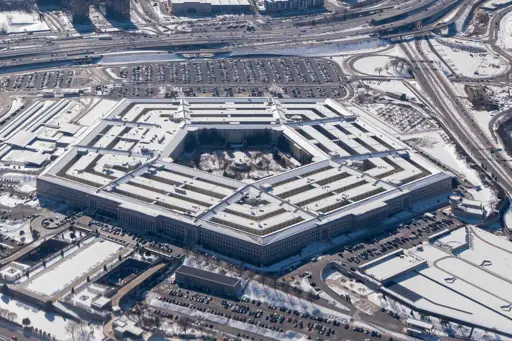
According to the fact sheet published by the White House on August 31, the Office of Strategic Capital of the Pentagon (renamed the Department of War) will own 35% of the shares of the company North American Blue Energy Partners (NABEP), selected by the Trump administration to lead oil extraction projects in Venezuelan fields with a proven potential of 65 billion barrels.
For the US government, the inclusion of the Department of War in the commercial operation represents “up to hundreds of billions of dollars in value and dividends for the United States.”
The document also outlines the managerial control and the additional benefits obtained with the equity stake deal. At the same time that “the U.S. government has a veto power over the appointment of any member of the board of directors, and a majority of NABEP’s board of directors must be U.S. citizens,” it would obtain “the right of first refusal to purchase the remaining 80% of its production, providing a guaranteed source of energy in our hemisphere in emergency situations,” states the fact sheet.
An exceptional deal and its risks
First of all, there is no immediate precedent for direct Pentagon involvement in the exploration of another country’s oil reserves. To find some kind of analogy, one would have to go back to the distant year of 1943. That year, in the midst of World War II and its high energy demands for the US, the Franklin D. Roosevelt government created the Petroleum Reserves Corporation (PRC) to acquire fields in Saudi Arabia, which at that time were controlled by large US corporations.
The main players in the operation were the Pentagon and the State Department, just as is the case today with the oil agreement between Washington and Caracas.
The objective was to lease concessions (through the purchase of the majority of the companies’ shares) and use the US government’s financial power to support investments and develop fields, which allowed the US to gain preferential access to extracontinental oil as a complementary support for the war effort.
The idea, however, never came to fruition for various reasons. The companies resisted the government’s purchase of shares, as they saw Roosevelt’s move as an attempt at covert nationalization. The fears that the deal would deteriorate relations with the Saudi crown and serve to consolidate British power in the area also generated friction within the State Department. Ultimately, and although an attempt was made to reduce the possibility of acquiring shares to one-third, the PRC stalled in its declared purpose.
More than 80 years later, the Trump administration has revived Roosevelt’s idea of state capitalism to apply it in Venezuela, trying to overcome the obstacle that his predecessor faced: using Big Oil companies as a vehicle for getting concessions in another country.
Understanding the lesson of 1943, Trump realizes that going after the shares of Chevron, an established corporation with extensive oil operations in Venezuela, would be a fruitless maneuver. But with NABEP, an intermediary company led by Venezuelan businessman Alejandro Betancourt, who is under suspicion of corruption in electricity sector contracts, the US president seemed to find an alternative on which to impose political and financial conditions.
What is not entirely resolved is the legal front, beyond what the White House fact sheet presents as truth.
Analyst Orlando Pérez correctly points out that oil is excluded from the categories covered by the Office of Strategic Capital to support loans and investments. Moreover, according to Pérez, “the proposed financial authorization to support the agreement could expire in 2028, unless Congress renews it,” a situation that puts the agreement at extreme legal risk, given the midterms that, as of today, Trump would very likely lose.
In addition, there are the political resistance and calls for transparency from the US Congress, according to a recent report by journalist Eleanor Mueller of Semafor. Mueller reported that various lawmakers are pressuring the White House for more information, arguing that the Pentagon office does not have legal authority to acquire equity stakes in any comppany.
The fine print, with significant political and geopolitical potential
It seems evident that Trump is trying to kick away the legal obstacles related to the operation of Pentagon buying NABEP shares in exchange for sending a double-edged political and geopolitical message urgently, given the Iranian quagmire that has put him against the wall economically and electorally.
The modern and eccentric version of Caligula is interested in achieving a quick symbolic and narrative victory, which would allow him to gain time on a geopolitical level and bolster his political capital as a successful low-cost intervener, even though this implies exposing himself to facing a legal defeat in the near future regarding the oil agreement made with the Venezuelan government.
Explicitly, the Pentagon’s equity stake indicates that the preferential and advantageous access achieved over Venezuelan reserves is seen by the White House as a power move that combines, in a single geo-strategic axis, economic and military security. In other words, the message that the White House is interested in sending is that this position of energy superiority achieved in Venezuela will be defended by the US armed forces.
In the White House’s own fact sheet, the explicit nature of the message becomes evident when it states, in its final sections, that “the majority of the incremental oil fields to be operated by NABEP were previously controlled or operated by Russian and Chinese firms.”
This is an open challenge to Beijing and Moscow wrapped in the framework of the Monroe Doctrine: “President Trump has re-established the Monroe Doctrine, purging foreign malign influence from our backyard and ensuring American dominance in our hemisphere is never again questioned.”
Thus, the declaration of Trump’s great geopolitical and economic victory is backed by the firepower of the Department of War, bringing a very probable scenario of conflict of interest to a raw power level. Following this perspective, what the Pentagon’s oil incursion exposes is a paradigm of militarization and denial of Venezuelan energy reserves, according to which the US would operate as the sole decision-making filter for the entry of companies and investors into the Venezuelan oil business.
Specifically for the US corporate oil and gas sector, Pentagon involvement represents an incentive that replaces legal guarantees with guarantees of brute force. What Washington wants companies to see is that their interests would be protected by an offensive military architecture that, through the US Southern Command, today patrols the entire region with a threatening tone, continuing lethal attacks against alleged “narco-boats” and directly involving itself in bombings on Latin American territory, as happened in Ecuador and in Venezuela itself.
That total US dominance that would “never again” be questioned is clearly framed with a militaristic language, where diplomacy and the contractual claims of other powers with energy interests in Venezuela are subordinated to a logic of direct confrontation, leaving a weakened Bolivarian Republic in the midst of the contradictory interests of great powers.
Like Russia and China, Venezuela is also subject to the gravity of what the White House has declared. Washington reaffirms to Venezuela that future negotiations on what was agreed today in terms of royalties and taxes can change (always in favor of the US), according to the unilateral geo-strategic and economic needs of the US empire, to the detriment of the projected material benefits for the Venezuelan nation.
Regarding this, the fact sheet states that “NABEP has also granted the U.S. Department of State the right of first refusal to purchase the remaining 80% of its production, providing a guaranteed source of energy in our hemisphere in emergency situations.”
This aspect is not minor. What Trump is trying to say, more or less, is that the agreed-upon clauses can be modified at Washington’s request, with the Pentagon’s not-so-friendly mediation.
Therefore, the margin for abusing concessions and forcing royalty arrangements through threats to increase the profitability of NABEP and other foreign companies is too high for alarms not to go off.
If a historical lesson from the US-Venezuela energy relationship should be taken into account in the current murky situation, it could be this: in 1917 and 1922 (during the petro-dictatorship of Juan Vicente Gómez) and several times more in the following decades, Washington used its power advantage over governments aligned with its interests in Caracas to introduce legislative changes favorable to its energy plundering machinery.
It is advisable, then, not to forget history, with its perennial tendency to repeat itself.
Translation: Orinoco Tribune
OT/SC/CD
From Orinoco Tribune via This RSS Feed.