

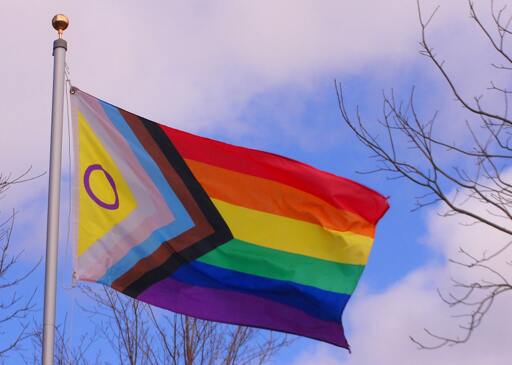

Photo by Ken Whytock on Unsplash
Erin In The Morning is a reader-supported publication. To receive new posts and support my work, consider becoming a subscriber.
Amy Acton, the Democratic nominee for governor of Ohio, called trans girls “boys” and embraced sports bans as a matter of safety, sending Ohio’s premier LGBTQ+ organization, Equality Ohio, flailing to find its next steps. The Human Rights Campaign released a list of dozens of candidates it endorsed, multiple of whom took anti-trans votes or made anti-trans statements before and after their endorsements. Meanwhile, local LGBTQ+ activists on the ground are fighting both their Democratic Party and their own LGBTQ+ organizations to hold these politicians accountable. One thing is certain: equality organizations were ill prepared for the advent of Democrats staking out anti-trans positions, and real fault lines are emerging in how they address them moving forward.
“I do not support boys playing in girls sports. This is already settled law in Ohio, and as governor I will enforce and uphold the law,” Acton said in a statement to the Toledo Blade after the Supreme Court decision allowing states to ban transgender girls from girls’ sports. “As a doctor, public servant, and a mom, I will always stand up for fairness and protect kids’ health and safety … While my opponent tries to divide us, I’m laser-focused on issues that matter most to Ohioans: lowering costs, cracking down on corruption, and cutting taxes for working families.”
The statement took Ohio by storm. Local LGBTQ+ activists protested loudly, the state Democratic Party’s Progressive and Pride caucuses openly rebuked Acton, and many called on her to retract her words, which she has not done. Equality Ohio pulled her A rating and changed it to “Pending,” stating, “Comments like the ones recently made by Dr. Amy Acton in the Toledo Blade about transgender Ohioans are extremely harmful… As a result, we have updated Dr. Acton’s status in our 2026 Candidate Scorecard from an ‘A’ to ‘Pending.’ This reflects our belief that accountability is still possible, and that the door remains open at this time. Should Dr. Acton choose to take meaningful steps forward, we will update the status accordingly.”
The state Democratic Party fought back. It forced the Progressive Caucus to remove its statement criticizing Acton and stonewalled the Pride Caucus. Acton then released a “pro-LGBTQ+” statement that conspicuously left out gender identity, and scheduled a meeting with transgender activists and LGBTQ+ leaders. She did not attend it, sending a campaign official in her place, and transgender leaders in the state were barred from entering. Now Equality Ohio itself has relented, giving Acton a “B,” a grade it defines as reflecting “insufficient record but supportive public statements.” She has still not retracted the statement.
Why Equality Orgs Are Struggling
Following Equality Ohio’s “B” designation for Amy Acton, EITM reached out to the organization to ask why Acton had been given such a high grade following her statements and lack of contrition. When asked how their B grade for Acton aligns with the grade’s requirement of “supportive public statements,” Dwayne Steward at Equality Ohio responded stating, “In the Equality Ohio Candidate Scorecard, a ‘B’ means ‘insufficient record but supportive public statements.’ The reduced score reflects our concern about support of trans Ohioans, alongside her broader record and positions, as stated above.” He then pointed to other statements Acton had made that the organization considers supportive, such as that she “will always stand up for Ohioans, including the LGBT community,” and that “as governor, she is committed to standing up to discrimination and ensuring all Ohioans receive equal protection under the law.” Neither statement mentions transgender people.
When asked if Equality Ohio requested Acton retract her statement calling trans girls “boys” and her support for a sports ban, Equality Ohio did not answer that portion of the question. And when asked about Acton barring the Pride Caucus vice chair from the call and failing to appear at her own meeting, Equality Ohio pointed elsewhere: “We recommend you speak to the Acton Campaign directly about any meetings their team conducted. Dr. Acton’s comments didn’t happen in a vacuum. They’re part of a broader pattern of politicians using trans people as a scapegoat, often based on data that’s simply false. These comments are harmful and a distraction from the issues most voters want addressed.”
The organization also conceded in a previous email that the meeting it had requested with Acton “has not happened yet,” and that it had “not been able to confirm meaningful engagement directly between their campaign and transgender communities.” The gap between the organization’s endorsement grade and Acton’s statements and actions appears to be very wide. Equality Ohio describes Acton’s conduct as harmful scapegoating built on data that is simply false, and then awards her a mark its scale reserves for candidates with supportive public statements.
The move incensed local transgender leaders, such as Ari Childrey, a transgender candidate running for the Ohio House, who stated in an interview with the Buckeye Flame, “This is a slap in the face to every candidate who actually respects our community – those who haven’t misgendered trans people or backed anti-trans policies… If you can misgender trans girls, support discrimination, and still get a ‘B,’ Equality Ohio is telling us transphobia isn’t a big deal, or they’re admitting their scorecard is completely meaningless.”
Equality Ohio is not the only organization struggling with Democratic pressure to endorse anti-trans candidates. The nation’s largest LGBTQ+ rights organization, the Human Rights Campaign, posted a slate of candidate endorsements on June 24, 2026. Among them are Shomari Figures, who voted for Nancy Mace’s amendments stripping gender-affirming care from transgender service members, retirees, and their families, one of only five Democrats to do so, and who cast that vote in July, three weeks after HRC endorsed him; Susie Lee and Tom Suozzi, who both voted for an amendment targeting trans people in sports, and who, in Suozzi’s case, blamed transgender people for Kamala Harris’s 2024 loss; and Sarah Trone Garriott, who is currently running an ad declaring that she opposes “letting men in women’s locker rooms” and that “politicians have become too extreme on these issues.” None of it was a barrier to their endorsement.
In an email asking HRC about the endorsements, they provided the following statement requesting it be published in full:
“HRC’s endorsements are made with the clear and overriding desire to win a pro-equality Congress so we can halt the assault on our community and push forward vital protections. History tells us that if we were to constrain ourselves to only endorsing candidates who never take a vote we oppose, we would likely never make progress.
Our theory of change is that we need to meet people where they are and move them towards support for our community. To that end, we do work with candidates and elected officials who have taken a vote contrary to HRC’s position — working to ensure they understand the impacts while moving them toward greater support of the LGBTQ+ community. This approach has helped pass bills like the Respect for Marriage Act and the Matthew Shepard and James Byrd Jr. Hate Crimes Prevention Act into law as well as stopping dozens of legislative attacks since Trump returned to the White House. That only happened because there were members of Congress willing to learn and to stand up for transgender people in the face of political divisions and bigotry. This does not mean that every person we endorse has a perfect record, but they have demonstrated support for transgender people and equality more broadly.”
Is This The Right Approach?
HRC’s statement is interesting in that it reveals a broader strategy choice by equality organizations in the face of what appears to be shifting ground in the Democratic Party. It is clear that some at these equality organizations believe granting these endorsements helps maintain a good relationship with the candidates and helps steer them in a positive direction when they take a bad vote or two, or make bad statements. But notably, the candidates named above have not recanted their anti-trans statements or their anti-trans votes. And in at least two cases, the endorsement came first. HRC endorsed Shomari Figures on June 24, and he voted for Mace’s amendments in July. HRC endorsed Sarah Trone Garriott on June 24, and her locker room ad began airing in the first week of August. Clearly, the most powerful tool an LGBTQ+ rights organization has at its disposal, an endorsement, did not steer either of them.
Equality organizations exist to promote equality positions, and candidates that receive endorsements gain the prestige (and sometimes the resources) that are going out to these organizations meant to protect LGBTQ+ rights. As a result, supporters of these organizations now have to contend with the fact that some of their support is going towards helping elect candidates that call trans girls “boys” and actively vote for anti-trans policies. That may be a hard pill to swallow for the millions of trans Americans who are concerned about recession of their rights.
An alternate path does exist: putting significant pressure on Democrats who have embraced anti-trans positions not to do so, and withholding or withdrawing endorsements when they do. If equality organizations are not willing to do this, they risk having their goals co-opted and becoming merely another branch of the Democratic Party, rather than independent organizations willing to advocate for the rights of transgender people and to award their endorsements and grades only to those who meet the mark. It is the path many reproductive rights organizations have taken in refusing to endorse anti-abortion Democrats.
The Democratic Party and Democratic officials are under heavy pressure from paid consultants to adopt more anti-transgender positions and policies. Should Democrats embrace those policies and win, the wins will be presented as evidence that abandoning transgender people is what it takes to win elections, and the contagion will spread through the party. And right now there is nothing to stop it. A Democrat can take an anti-trans vote or make an anti-trans statement before an endorsement and receive it anyway, or after an endorsement and keep it. The blessing of the organizations built to defend LGBTQ+ people has become something a candidate can simply take for granted. What remains unknown is how far one would have to go to lose it. Meanwhile, transgender people will keep being cut out of the calculus in favor of candidates who throw them under the bus, with the endorsements of their own movement in hand.
Erin In The Morning is a reader-supported publication. To receive new posts and support my work, consider becoming a subscriber.
From Erin In The Morning via This RSS Feed.