

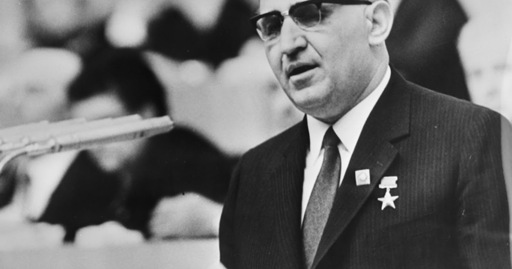

September 7 marked the 115th anniversary of the birth of Todor Zhivkov, the long-time leader of socialist Bulgaria.
More than three decades after the restoration of capitalism, Bulgarian public opinion continues to present an inconvenient problem for the official anti-communist narrative: large sections of the population still remember the socialist period positively, and repeated surveys since the 2000s show that nostalgia for the Zhivkov era is far from marginal.
A 2009 Pew Research Center survey found that 62% of Bulgarians believed the economic situation of most people was worse than under communism, while only 13% said it was better. A decade later, Pew found that the same basic judgment persisted: in 2019, 57% still said most people were economically worse off than under communism, compared with 24% who said they were better off.
The trend is equally clear in attitudes toward Zhivkov himself. A 2014 Alpha Research poll found that 55% of Bulgarians viewed him positively, a striking reversal from 1991, when 76% had viewed him negatively.
In 2017, a Trend survey found that 41% of Bulgarians would prefer to live in the period of Todor Zhivkov, exactly the same percentage as those who preferred the post-1989 era.
Two years later, a 2019 Gallup International Balkan poll found that 45% agreed that life had been better under Zhivkov, while only 22% disagreed. The same survey found that 74% agreed with the phrase that the country had been “ruined” after the changes.
And the nostalgia has not disappeared with time. In 2023, a survey by Bulgaria’s National Centre for Parliamentary Research found that 32.6% of respondents would prefer to live under Zhivkov’s government, compared with 28.1% who preferred the post-1989 period.
These figures do not mean that every Bulgarian nostalgic for the socialist era is a devoted communist. But they do expose an uncomfortable truth for the defenders of capitalist restoration and the European Union: decades of anti-communist propaganda have failed to erase the positive memory of socialism.
For many Bulgarians, the comparison is not theoretical. It is a comparison between two lived realities — between the social security, employment and public guarantees associated with the socialist period and the inequalities, insecurity and social decline that followed the restoration of capitalism.
Todor Zhivkov led socialist Bulgaria from the mid-1950s until 1989, becoming the longest-serving leader in the country’s modern history. His period in power was associated with industrialization, the expansion of public education and healthcare, and a degree of social security and stability that remains firmly embedded in popular memory. The fact that positive attitudes toward both Zhivkov and the socialist era have endured for decades is itself a verdict that capitalist Bulgaria has never managed to erase.
From In Defense of Communism via This RSS Feed.