

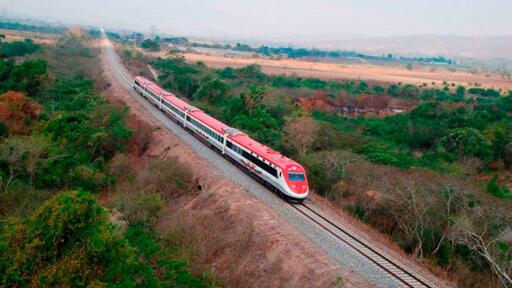
Caracas (OrinocoTribune.com)—Venezuela has reactivated the railway service connecting Chivacoa, in Yaracuy state, with Barquisimeto, the capital of neighboring Lara state, following several years of suspension and extensive rehabilitation work along the route.
The State Railways Institute (IFE) announced the reopening after completing repairs that included stabilizing 33 kilometers of track between Chivacoa and Yaritagua and restoring the original alignment of the railway over the Urachiche Bridge.
The train departs from Chivacoa station at 5:10 a.m., stopping at Sabana de Parra and Yaritagua in Yaracuy before reaching the San Jacinto and Zona Industrial stations in Barquisimeto. The return journey is scheduled for the afternoon.
View this post on Instagram
A post shared by Gobernación Bolivariana Del Estado Yaracuy (@gobernaciondeyaracuy)
Authorities said the service is expected to benefit more than 600 users daily. However, IFE President Claudio Farías placed the initial operational capacity at approximately 300 passengers per day, adding that additional departures could be introduced if demand warrants them.
The fare was set at 90 bolívars—approximately US $0.12 at the current official exchange rate—providing what regional and national authorities described as “an efficient, economical, and safe transportation alternative for the development of the central-western region.”
The reopening was coordinated by the Yaracuy state government, the IFE, and the Ministry for Transportation, headed by Francisco Garcés. The regional government also coordinated the train schedule with the Yaracuy public transportation system to facilitate passengers’ travel from the railway stations.
“We can run errands in Barquisimeto for a moderate, affordable price, and we can also take a trip,” one passenger said in a video published by the authorities.
“The facilities are great, the seats are very comfortable, we have air conditioning, and the staff is wonderful,” another user commented.
Farías reported that the train will travel at speeds of up to 70 kilometers per hour. The approximately 60-kilometer journey between Chivacoa and Barquisimeto takes around 90 minutes and covers five stations across Yaracuy and Lara.
“Yaracuy is being reborn with this new railway service for all the people of the country’s central-western region,” Farías stated.
The service was suspended in 2022 after heavy rains severely damaged parts of the railway infrastructure. According to the IFE, the rehabilitation included track stabilization, repairs to level crossings and station infrastructure, and the recovery of the original route over the Urachiche Bridge.
Possible expansion toward Puerto Cabello
Farías also reported that the Venezuelan government is evaluating the repair of the railway section connecting Yaracuy with Puerto Cabello, in Carabobo state, including the San Felipe substation.
Plans to repair sections of the Ezequiel Zamora railway system connecting Puerto Cabello, Valencia, Maracay, and La Encrucijada are likewise under evaluation.
If completed, these projects would advance the integration of the Simón Bolívar Central-Western Railway Network with the Ezequiel Zamora Central Railway System, strengthening passenger and freight connections between several of Venezuela’s principal agricultural, industrial, and port centers.
Restoring Chávez-era railway plan
The reopening represents a new step in reviving the National Railway Development Plan launched under President Hugo Chávez. Chávez’s government prioritized the reconstruction and expansion of Venezuela’s largely dismantled railway network as part of a broader strategy to provide affordable public transportation, reduce freight costs, relieve pressure on the highway system, and promote regional economic integration.
A central objective of the Chávez-era strategy was to create an industrial and logistics corridor linking Barquisimeto—one of Venezuela’s leading agricultural and distribution centers—with Valencia, the country’s principal manufacturing hub, through Puerto Cabello.
The project envisioned the large-scale movement of passengers, agricultural products, food supplies, and industrial cargo throughout the central-western region.
Progress on the national railway plan later slowed amid the Odebrecht construction firm scandal, the loss of political momentum following Chávez’s death in 2013, and the prolonged economic impact of US unilateral coercive measures (euphemistically referred to as “sanctions”). Venezuelan authorities and United Nations experts have repeatedly condemned Washington’s sanctions as illegal and highlighted their damaging effects on public infrastructure, government finances, and the country’s ability to acquire replacement parts and specialized equipment.
Special for Orinoco Tribune by staff
OT/JRE/SL
From Orinoco Tribune via This RSS Feed.