

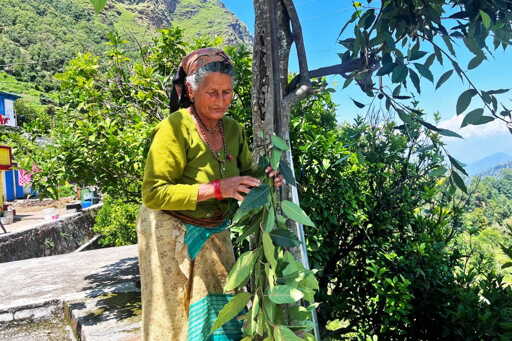
In the village forests of Uttarakhand, in the Himalayan region of northern India, a tree can be charred at its base while maintaining a green canopy at its peak. The distinct separation between burnt and unburnt wood is a physical marker of how high the flames reached. For the local women who rely on these woods for survival, the aftermath of wildfire means their daily chores take twice as long, forcing them deeper into the forest just to gather basic fodder and firewood when those closer to home are unusable. Uttarakhand is the most fire-prone state in the Indian Western Himalayas, with increased fire incidence in the region coinciding with high-altitude warming that exceeds the global rate. Beyond individual fire events, the fire season itself is expanding. While the season usually lasts for about 12 weeks starting in mid-March, Uttarakhand now experiences winter fires, an alarming shift from what was previously snow season, hinting at a deeper ecosystem-level impact. This trend has only escalated, with the state recording a sharp spike in forest fire activity during the first four months of 2026. This period is not just witnessed but experienced through each of the human senses. Trails of grey smoke engulf the bright blue sky. Along with the fog-like situation, the air carries soot, sometimes covering the roofs of houses with snow-like ash. “We are all coughing our lungs out; during that time, our eyes are bloodshot, irritated by all the smoke, and it’s hard to breathe in the thick…This article was originally published on Mongabay
From Conservation news via This RSS Feed.