

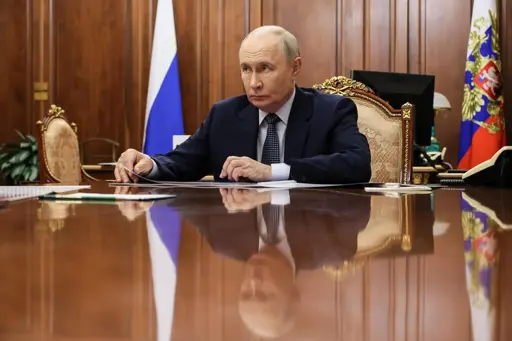
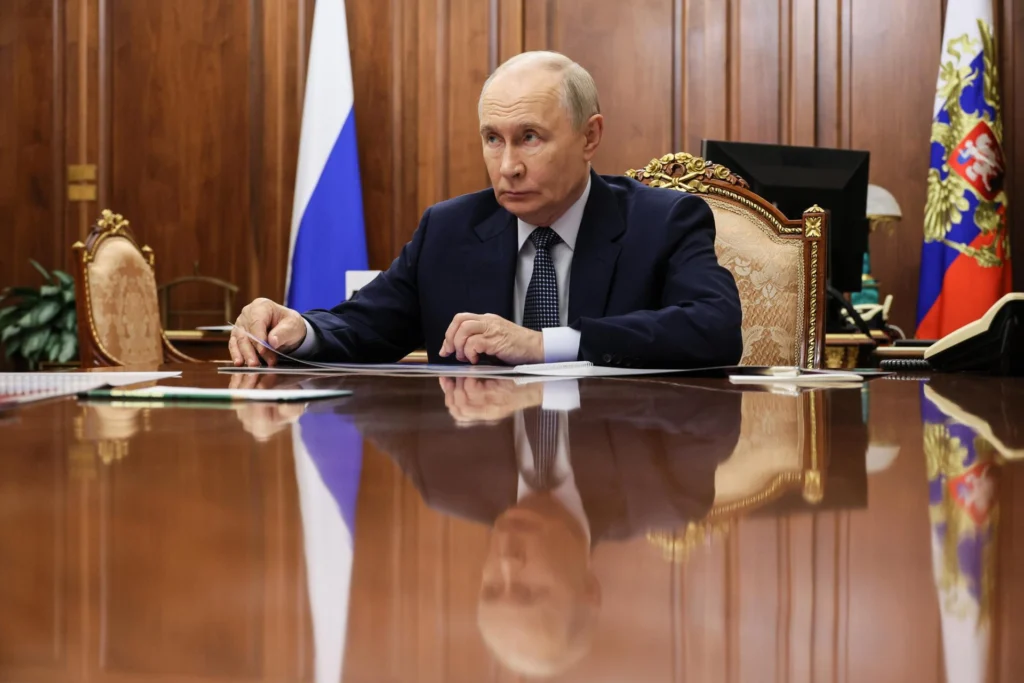
The presidents of Russia and the United States held this Tuesday a phone call to address the Ukraine crisis and explore ways to revive bilateral economic relations.
The presidents of Russia and the United States, Vladímir Putin and Donald Trump, engaged in a telephone conversation on Tuesday to discuss the resolution of the Ukraine crisis and the prospects for restoring bilateral relations between the two nations.
According to the Russian presidential aide, Yuri Ushakov, the dialogue was characterized as constructive and frank, with a strong emphasis on the U.S. interest in halting the military conflict to facilitate the full recovery of economic and commercial ties.
RELATED: Russia’s Victory Is Very Near: Peskov
During the one-hour call, the U.S. side underscored the importance of achieving a decisive breakthrough in diplomatic efforts. In response, Putin acknowledged Washington’s mediating role and provided a detailed analysis of the military operation’s progress on the ground. He outlined specific actions required to stop the hostilities and highlighted the role of Melania Trump in facilitating the return of children to their families.
Presidential Aide Ushakov on #Putin–#Trump call:
Both leaders positively assessed Witkoff & Kushner’s Moscow visit and agreed to continue this channel.
President Putin stressed Russia has no aggressive plans toward Europe. pic.twitter.com/ssEi5DIcsb
— Russian Embassy in South Africa
(@EmbassyofRussia) September 8, 2026
Diplomatic Groundwork
The call built on a diplomatic mission carried out on September 5 and 6 by U.S. envoys Steve Witkoff and Jared Kushner, who traveled to both Moscow and Kyiv; the trip also involved security advisers from European powers including the United Kingdom, Germany and France, underscoring the broadened scope of the negotiations.
After a meeting lasting more than three hours between the U.S. delegation and Putin, the Kremlin described the results as positive for the continuity of the dialogue process, and Moscow reaffirmed its standing willingness to pursue a diplomatic resolution -provided that any agreement addresses what it calls the root causes of the conflict. Moscow reiterated its commitment to finding a diplomatic solution, stressing that any agreement must address the fundamental causes of the conflict.
Russian authorities emphasized that regional security depends on halting NATO’s expansion towards its borders and ending aggression against the Russian-speaking population. They dismissed partial solutions that do not guarantee Russia’s strategic interests. The Kremlin spokesperson, Dmitri Peskov, described the meeting between Putin and the U.S. envoys as a significant step in diplomatic efforts, calling it a small step towards peace.
BREAKING. On a call with President Trump, President Putin specifically praised First Lady Melania Trump’s efforts to reunite both Russian and Ukrainian children with their families — an important humanitarian contribution that rises above politics.
https://t.co/aihVGpqmwy
— Kirill Dmitriev (@kadmitriev) September 8, 2026
A Tactical Pause
The conversation unfolded against the backdrop of a three-day tactical air pause that Moscow imposed over Kyiv’s airspace, a reciprocal measure tied to a corresponding reduction in strikes on critical Russian infrastructure during the mediating delegation’s visit. That temporary halt in aerial incursions over the Ukrainian capital took effect in the early hours of Saturday, September 5, providing the security guarantees needed for the subsequent movement of international representatives into Ukrainian territory.
This operational arrangement, in turn, allowed the preliminary talks to move forward and gave negotiators room to address the risk factors that continue to threaten stability across Eastern Europe. Taken together, the sequence of the envoys’ visit, the tactical pause and Tuesday’s call suggests that both sides are, for now, treating the diplomatic track as an active -if still fragile- channel toward de-escalation, even as fundamental disagreements over NATO expansion and territorial guarantees remain unresolved.
This operational measure facilitated preliminary talks and allowed for addressing the risk factors affecting regional stability in Eastern Europe.
From teleSUR English via This RSS Feed.