

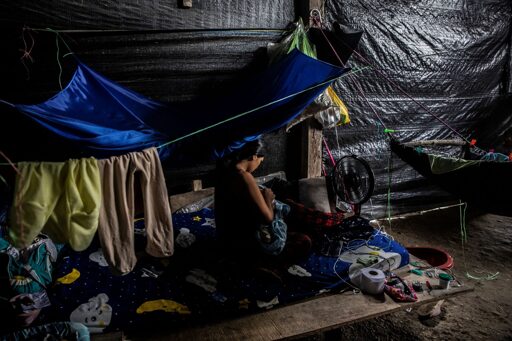
MADRE DE DIOS, Peru — “Bayolet, my little daughter, had some tests when she was five years old,” says Gladys Ordoñez, a mother from the Shintuya Indigenous community, located on the banks of the Madre de Dios River, in the Peruvian Amazon. “She had already fainted twice at school, and we didn’t know why … That’s where they found mercury.” Ordoñez still remembers the group of “outsiders” who arrived a decade ago to take blood and hair samples. Weeks later, they returned to warn that the fish the community was consuming — its main source of food — could be contaminated. “We said no, that it couldn’t be,” says María Santos, another mother from the community. “We don’t mine for gold here. There is no mining here”. But its source was not in the village: Upstream, illegal gold mining was pouring mercury into the rivers that flow through the Madre de Dios region. Fish came into contact with the heavy metal and traveled downstream before reaching the plates of dozens of local families. Eleven years later, the problem persists. Little Bayolet is now 16 years old. In her fourth year of secondary school, she says she still finds it difficult to concentrate when taking lessons. According to Bayolet, her greatest wish is to finish school so she can take nursing classes. She remembers feeling constant fatigue in the classroom, along with tiredness and weakness. After her diagnosis of mercury exposure, she says she only received treatment for anemia. Bayolet was…This article was originally published on Mongabay
From Conservation news via This RSS Feed.