

Sherry McIntyre lives an hour’s drive away from the nearest grocery store. Between gas prices, vehicle maintenance and rising grocery costs, the bills add up quickly.
“Bringing all that food back is also a challenge. You need coolers,” McIntyre told The Narwhal.
She’s an elected councillor from the Skuppah Indian Band, located two kilometres south of Lytton, B.C.
Forgetting your standard grocery bag will cost you a few dollars, while purchasing a cooler or thermal storage bag to properly store cold foods during long drives will cost you at least $20 during the summer months.
It’s one small way her remote community and others in the southern Interior experience inequities accessing food, while larger disasters have cut the community off from grocery store access completely.
But long before grocery stores existed in B.C., First Nations harvested and preserved salmon during summer fish camps, creating food security throughout the winter months.
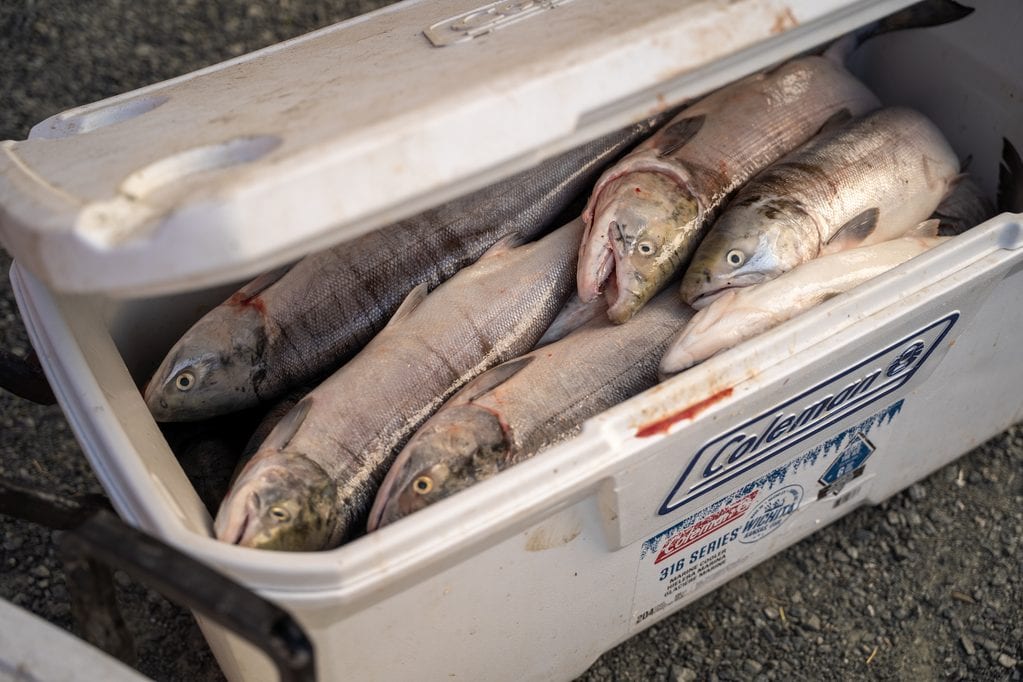
Multiple coolers of sockeye salmon were delivered to the local gymnasium in Cheam First Nation. Fish were harvested by the community to process during canning day.
Today, accessing wild salmon is more challenging, contributing to food insecurity and an overall disconnect from traditional food. But it’s also more important than ever.
McIntyre grew up fishing the country’s largest salmon run with her father and says that for younger generations today, including her children, “fishing has become so scarce.”
“When your harvest is not as big, you don’t get to fully process all of the salmon that you need. If you only end up with 20 fish a year, you’re just going to freeze it,” she said.
As of August 25th and according to the Pacific Salmon Commission, this year’s sockeye salmon run came in at 2.8 million. The organization estimated 7.7 million last winter.
As salmon are declining across the province, communities are stepping up to keep their access to traditional food strong.
A place to gather, process and store food
In August, Skuppah Indian Band members taught specialized fish preparations, including wind-dried fish, smoked fish and canned fish — all at the community’s food security centre.
The nation decided to build a food security centre back in 2019. Food access and affordability were already challenging at the time.
During the global COVID-19 pandemic in 2020, food became even harder to access amid lockdowns, staffing shortages and supply chain disruptions. Indigenous and remote communities were hit the hardest by food insecurity linked to the pandemic. Then came a year full of climate disasters in British Columbia.
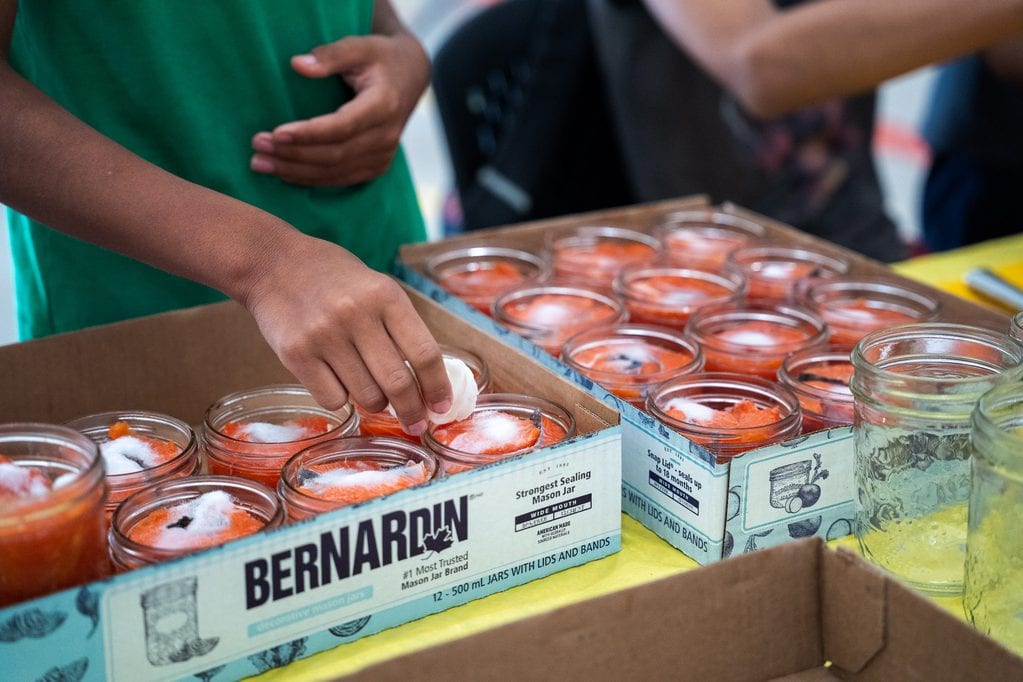
Drying the top of canning jars squeaky clean is an essential step in the process. It ensures the jars seal properly.
“In 2021, the Lytton fire took out all of the services in town and cut us off from travelling to get groceries,” McIntyre said. It was only the first record-breaking disaster of the year.
“The atmospheric river came in November and decimated any hope we had of feeding ourselves, because it blocked grocery trucks from coming.”
Those disasters informed the final stages of the Skuppah food security centre including adding private food storage for community members, with a generator installed in the event of a power outage.
“We really honed in on what the needs were for emergency response and climate change, building on the original concept of providing a place for community to gather and prepare food,” McIntyre said.
The space is equipped with a commercial kitchen, high-end pressure canners, freeze dryers to create shelf-stable food that lasts years and more, all designed to make community gatherings and food distributions as easy as possible.
Since opening in 2022, the food security centre has served as a place for the Skuppah Indian Band to process and store food, including huckleberries and salmon.
The centre has a stockpile of food, a disaster precaution learned in 2021 when roads were flooded out or closed due to fire.
“We’ve had so much positive feedback from our members. Having a space like this does something special when you can come and gather, because it’s a space for loving one another and for supporting one another,” McIntyre said.
At Nlaka’pamux fish camp, traditional fishing techniques are passed on to the next generation
Raymond Phillips, a member of Lytton First Nation, facilitated dip net tying at this year’s community fish camp in Incluckcheen. He says that fish camps are a place for the community to exchange knowledge and create food security within the nation.
“People leave the fish camp with food. This is survival food, but it’s also really good food. It’s high quality and very nutritious … it has sustained us for thousands of years,” he said.
Phillips grew up fishing the Fraser and Thompson rivers, learning how to tie dip nets back in the 1980s. Dip nets are a traditional way of harvesting salmon in B.C., only allowed for First Nations in the province.
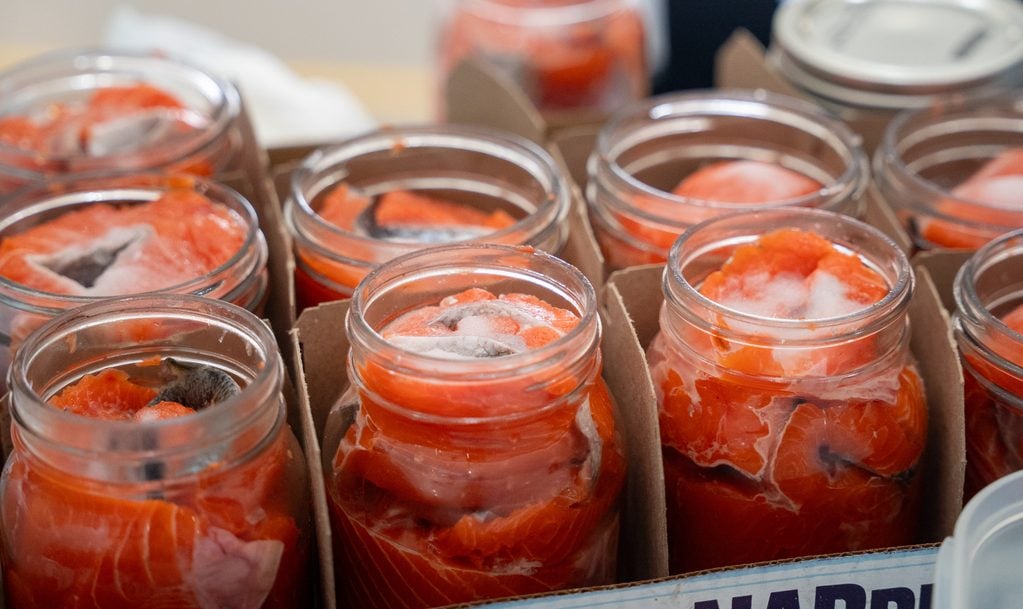
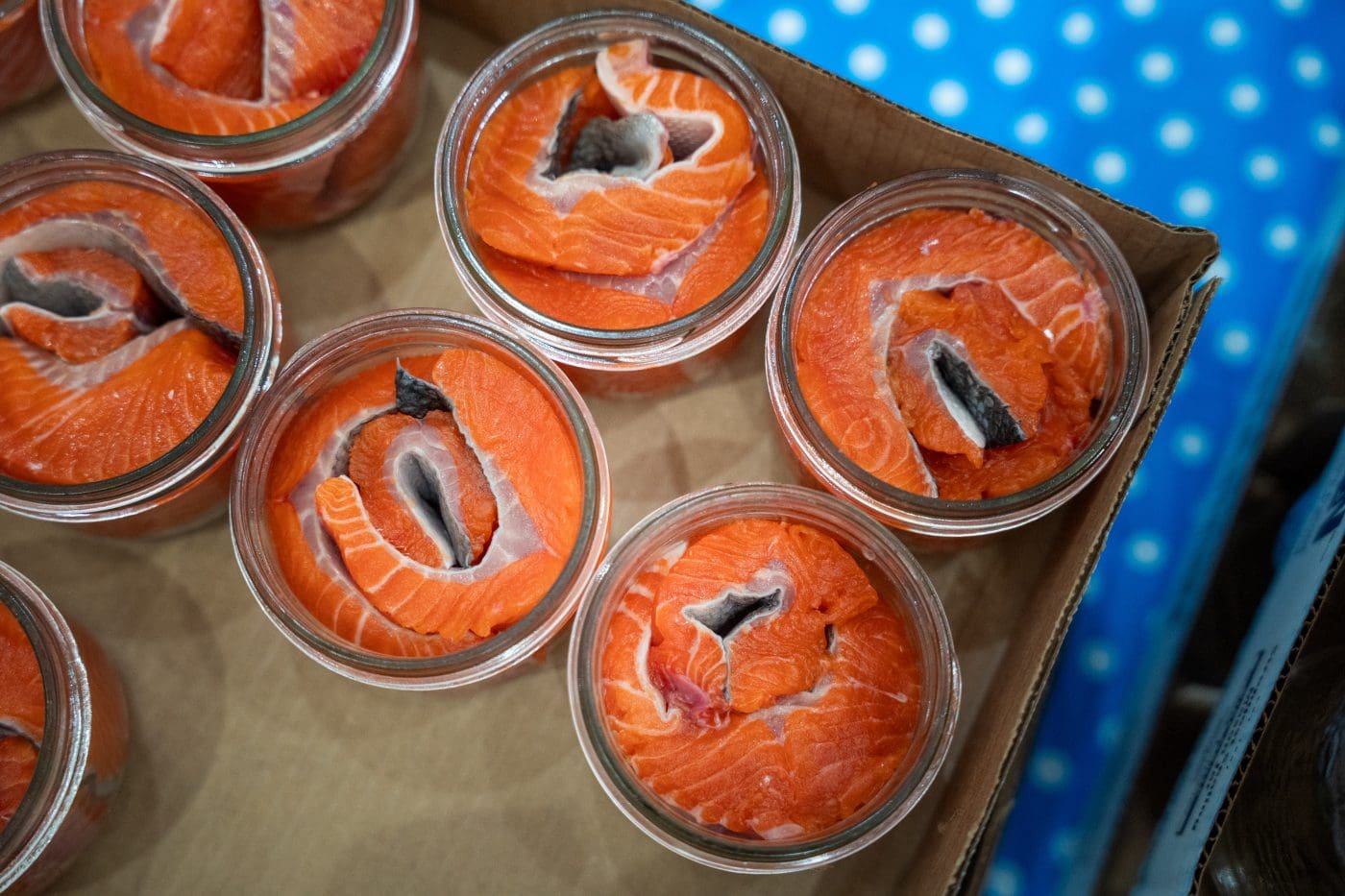
A brine of salt and vinegar is placed in each jar. The salt helps break down the bones while the vinegar helps preserve the fish.
Tying the dip net and making the hoop and pole requires technique, patience and practice, all of which Phillips has spent decades accumulating.
“There’s a complexity to it,” he said, but once people get the hang of tying a certain knot, it becomes repetitive and easier to teach others.
His station at fish camp had people of all ages in attendance, wanting to learn about traditional fishing tools and harvesting techniques. In the Interior, dip nets are passed down in families for generations, but handmade nets are harder to come by these days.
“It’s becoming a lost art, so many people are buying commercially made aluminum or nylon nets,” he said.
Traditionally, fir saplings were used to make the pole and hoop, with Spatsin used to make the net. Phillips and other Nlaka’pamux dip net makers hope to pass those skills on by sharing their knowledge at fish camps.
Phillips is a provincial judge based out of Kamloops. Before that, he worked as a lawyer and represented Indigenous people charged by the Department of Fisheries and Oceans Canada.
“As a lawyer I ended up helping quite a few people who were being charged with fishing at closed times, so it became a real challenge for the community to feed themselves in times of scarcity. That’s the cycle we’re in now, the salmon resources are becoming scarce,” he said.
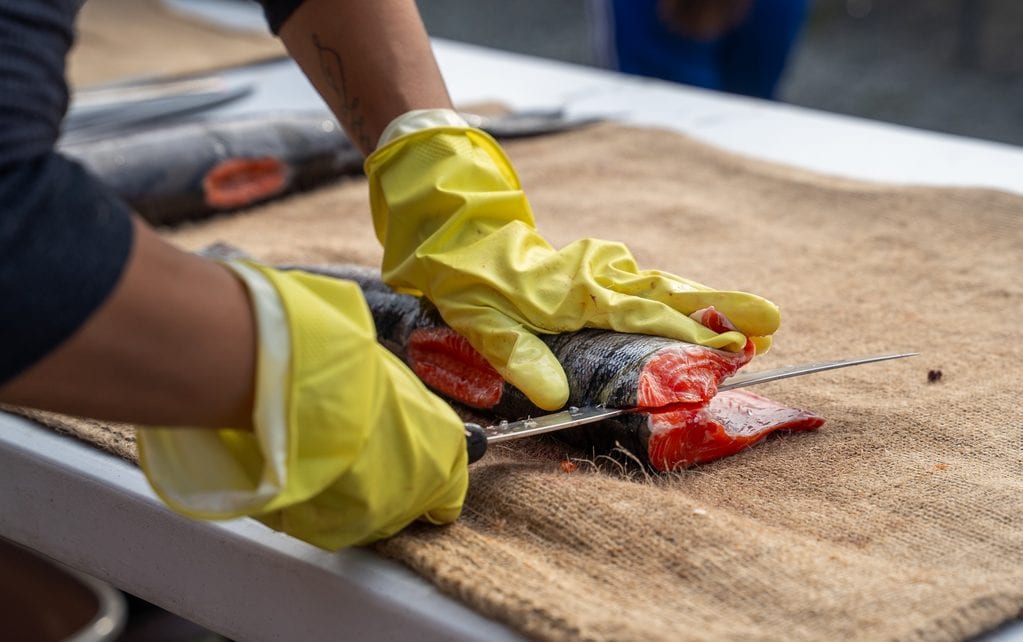
A salmon filleting station was busy in Cheam First Nation during their annual community canning day.
When he was younger, salmon were abundant, but as time went on fishery closures became more common.
“The salmon, it’s one of the largest migrations in the world. They go from the Pacific, go into the Fraser and travel all the way to their spawning grounds. Every community along the way waits for that salmon to get there. It’s disheartening to wait and be told you can’t fish. The populations are dwindling, so it is concerning,” Phillips said.
Despite those challenges, Indigenous communities work together each run to provide Elders, families and those experiencing food insecurity with salmon.
That holds true for Cheam First Nation, located near Chilliwack, which hosts an annual community canning day.
Cheam community canning day
Every year, Cheam members look forward to gathering at the local gymnasium, ready to gut, fillet and preserve the year’s salmon. It’s a tradition Stó:lō nations in the Fraser Valley have fought to continue for decades.
“The whole community is coming together on an assembly line to get our fish canned and vacuum packed,” Justin Pike said.
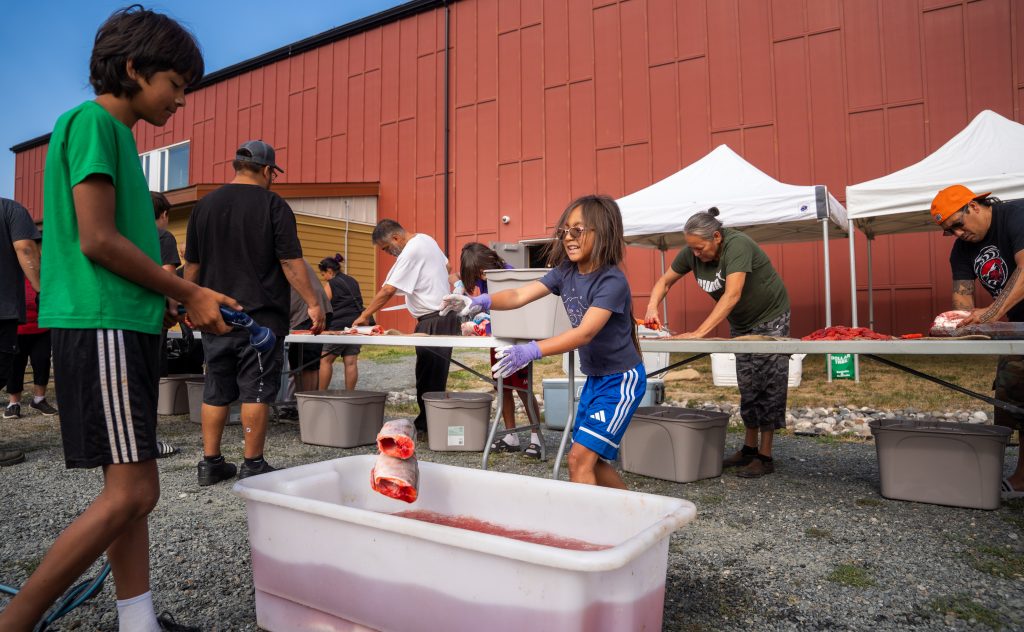
Youth, Elders and community members gather every year in Cheam First Nation, processing and preserving salmon for the winter months ahead.
“We get the community together to help try and get fish out to everybody, not everybody knows how to do it, so it really helps,” he said.
Pike is an elected councillor in Cheam, and one of many who harvested this year’s sockeye salmon haul to distribute among the community.
He was hands-on at the fish gutting station, with youth and community members watching closely, eager to learn and participate. Reflecting on the number of young people engaged, Pike is confident that his nation will continue its tradition of caring for salmon and harvesting and preserving salmon as a food source for the winter.
“We’re always super grateful to get some fish,” said Pike.
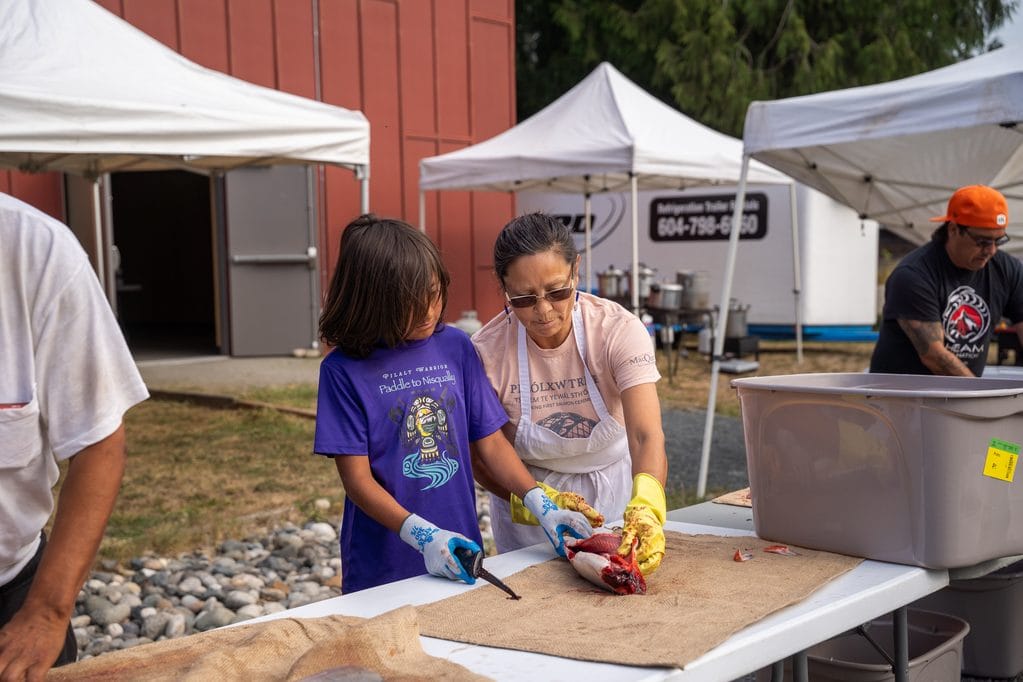
Wendy Kelly has helped facilitate salmon processing in Cheam for two years now, and has canned at home with her sons for decades.
While cultural knowledge remains strong in Cheam, wild salmon is becoming harder to access. Along with the dwindling salmon numbers and costly fishing gear, Cheam also has a history of facing off against the Department of Fisheries and Oceans Canada for their right to fish.
“Cheam is known for defending our right to be on that river, our inherent right to these fish,” Wendy Kelly, a salmon processing facilitator, told The Narwhal.
“Years and years ago, they were one of the only bands that battled to go out fishing when the Department of Fisheries and Oceans Canada said ‘no, you can’t go fishing,’” she said. The nation had numerous stand-offs with the department in the late 1990s and early 2000s over access to salmon in their traditional waters, led by the late Chief Siōliya June Quipp.
Cheam is located an hour-and-a-half from downtown Vancouver, home to some of the most lucrative seafood ports in the province and country. Communities located closer to the city are heavily monitored on the water, and with fisheries opening for a few days at a time, the struggle to access wild salmon persists.
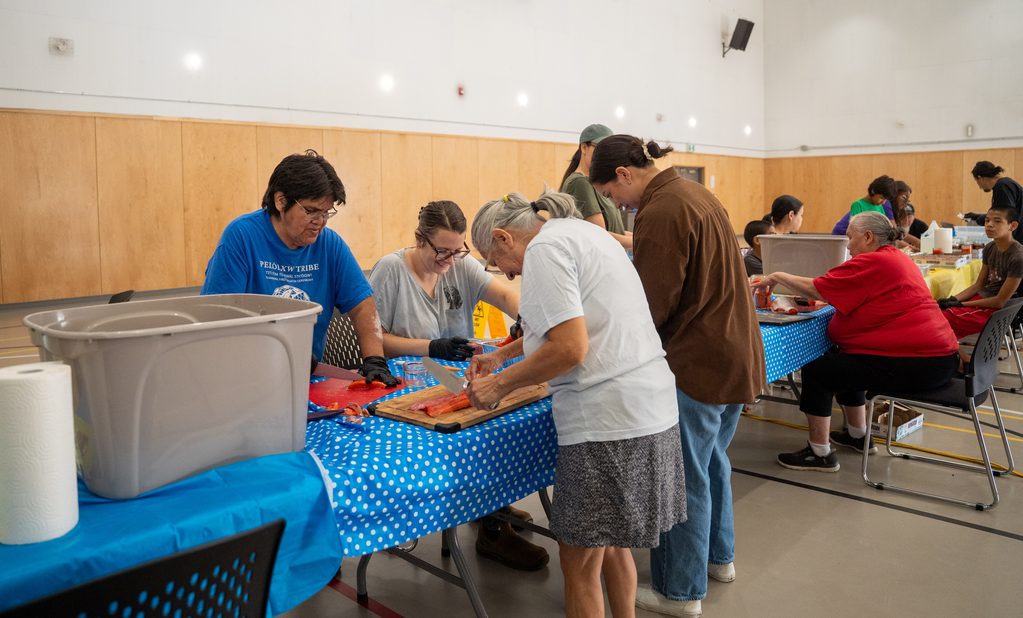
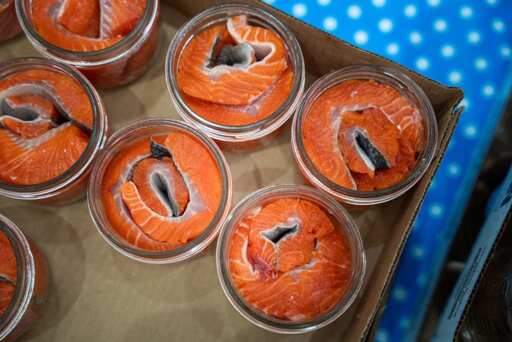
Community volunteers work together to ensure each jar is filled with sockeye salmon.
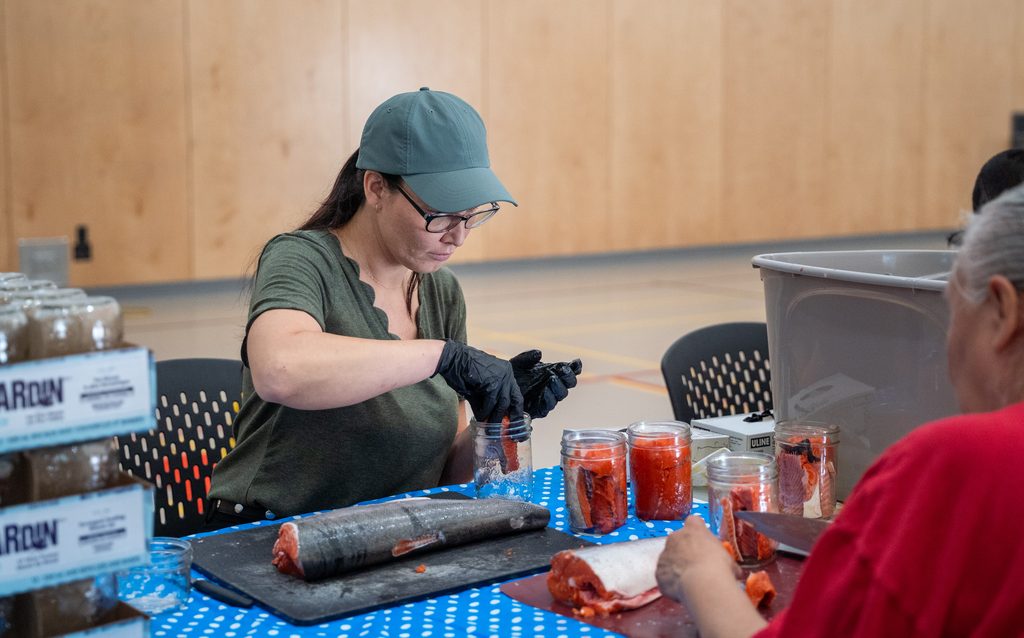
Some people remove the bones before canning, while others leave the bones in to disintegrate over time.
It makes Cheam’s annual canning day a powerful assertion of Indigenous Rights, following the footsteps of their ancestors.
Those rights are inherent to Cheam, but also affirmed in Section 35 of the Canadian Constitution, and by the renowned Sparrow and Marshall decisions made in the 1990s, which affirmed the rights of First Nations to fish, hunt and harvest without unjustified government interference.
“It’s really medicine when you’re handling those fish,” Kelly said.
In the Pacific Northwest, salmon is a sacred part of the culture, and has been a main food source for millennia. It’s a connection the Vancouver Aboriginal Health Society works to keep strong.
Urban access to culture and salmon
This month, the Vancouver Aboriginal Health Society is hosting salmon processing and jarring workshops, servicing cultural food and knowledge in the heart of the Downtown Eastside.
“This run came from Boston Bar, right from the river to the centre and processed within hours from the time it came out of the water,” Ruby Harry told The Narwhal.
They have access to salmon all year now,” she said, referring to workshop participants, who had the opportunity to clean, process and learn how to can salmon.
Harry is from Tl’etinqox t’in, located near Williams Lake, but like many Indigenous people, now resides in an urban setting. She grew up eating traditional foods, and after moving to the city, wanted to help create that access for others.
And with Vancouver being one of the most expensive cities in North America, access to nutritious food can be a challenge. Salmon distributions help to fill that gap.
“Vancouver Aboriginal Health Society is one of the only organizations I know that has given the Downtown Eastside this opportunity to process cultural food,” Harry said.
Harvesting traditional food must be done within your own territory, so for Indigenous people living away from theirs, wild salmon becomes harder to access.
Salmon workshops create that opportunity for urban Indigenous people, and support food security with rising grocery costs. The workshops hosted by Harry have no cost for participants and create openings for cultural knowledge to be shared.
“Salmon brings lots of good medicine,” said Harry.
The Narwhal’s reporters are telling environment stories you won’t read about anywhere else. Stay in the loop by signing up for our free weekly dose of independent journalism.
From The Narwhal | News on Climate Change, Environmental Issues in Canada via This RSS Feed.