

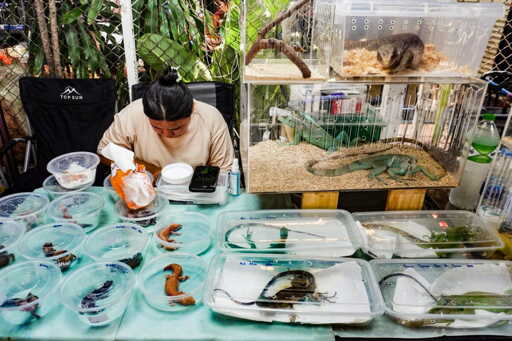
BANGKOK, Thailand — In the narrow alleys of Bangkok’s Chatuchak Market, the world’s wildlife is for sale. Ensnared in jungles, fished out of rivers and plucked from wetlands across the globe, hundreds of exotic species are packed onto transcontinental flights only to end up on display in what experts say ranks as one of the largest wildlife markets on Earth. Here, alongside Thai milk tea vendors and mango sticky rice stalls, visitors need only veer a few steps from the tourist path to end up in the market’s “Pets” zone — an arguably liberal use of the term. This section of the market hosts a menagerie of domestic and wild animals alike, often crammed into cages with little water and no respite from temperatures that soar beyond 32° Celsius (90° Fahrenheit). From Africa, there are spurred tortoises, fennec foxes, gray parrots, serval cats, and ball pythons. Giant bush babies retail for 48,000 baht (about $1,450), with signs advertising the nocturnal African primates as “newly arrived.” Miniscule meerkats dressed in tutus, sometimes presented in petting zoo sandboxes, are among the most plentiful animals at Chatuchak. Masked palm civets, sugar gliders, squirrels, rainbow lorikeets, and eclectus parrots are on offer from Asia and Oceania. As are baby raccoons, prairie dogs, iguanas, goats, cats, baby pigs, among others. Much of the planet is represented in this market; meerkats, like the one pictured here, hail from Southern Africa and are dressed up to be sold as an adorable pet. Image by Gloria Dickie. To…This article was originally published on Mongabay
From Conservation news via This RSS Feed.