

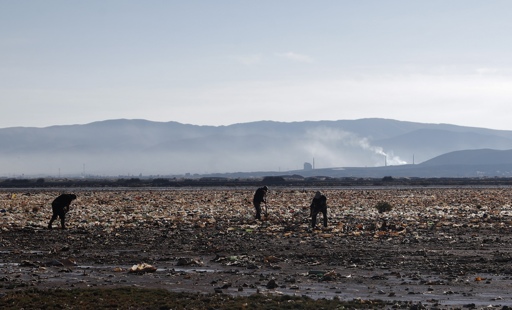
Since China banned the import of plastic waste in 2018, plastic pollution has been having a growing impact on the people and ecosystems of Latin America. As the region imports an increasing amount of the world’s used and discarded plastic, new research shows that waste infrastructure in many countries is already buckling under the strain of dealing with domestic trash. As a result, much of the imported plastic is leaking out into the environment, with experts and the U.N. warning of major consequences for human health. A study published in April found that seven countries in the region — the Dominican Republic, Guatemala, Honduras, Mexico, Nicaragua, Panama, and Paraguay — have become plastic pollution hotspots, or PPHs, where high imports of low-quality plastics meet high rates of mismanaged waste. Global plastic waste generation reached 353 million metric tons in 2019 alone, of which 72% ended up being landfilled or dumped and just 9% was recycled, according to an OECD report. Much of the world’s plastic waste was previously destined for China, but in 2018 the country banned those imports. While Malaysia and Thailand took up much of the slack, Latin America also started importing more plastic waste, although the region has historically been an importer of difficult-to-recycle plastics. “Certain countries in Latin America have started importing more waste but they haven’t actually got the capacity to deal with [it],” Veronica Herrera, lead author of April study and an associate professor at the Luskin School of Public Affairs at the University…This article was originally published on Mongabay
From Conservation news via This RSS Feed.