

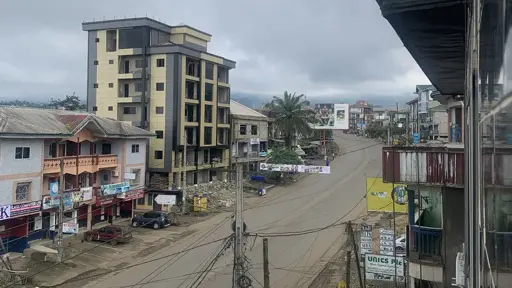
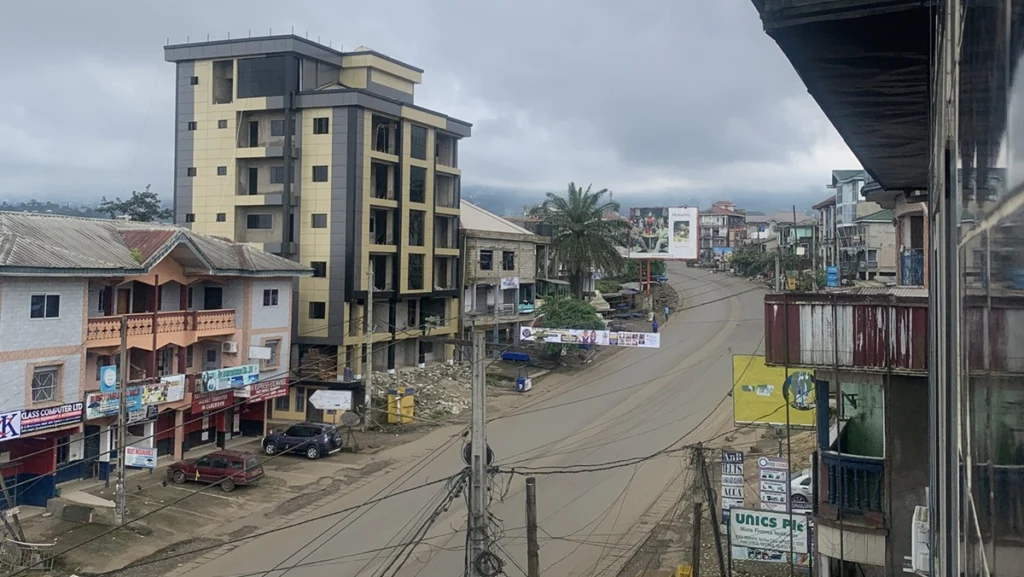
The Northwest and Southwest regions have seen armed conflict since 2017, when separatists began fighting government forces.
Ambazonian independence groups are imposing a week-long lockdown on Anglophone regions in the northwest and southwest of Cameroon, sparking renewed clashes and security problems.
RELATED:
Pope Leo XIV Calls for Peace During Visit to Cameroon
Separatist leaders announced on social media that the lockdown, which began Monday, aims to disrupt the start of the new school year.
In Bamenda, the capital of the Northwest Region, residents described a tense atmosphere, with schools closed and movement severely restricted.
“We heard gunshots. People are really afraid. The streets are deserted. Shops are closed, and almost all activities have stopped,” a resident, who requested anonymity, told Xinhua by phone.
In a video posted online Sunday, armed separatist fighters threatened to “kill anyone who attempts to step out” during the lockdown period.
Security officials said additional troops had been deployed to both regions to conduct day and night patrols. On Sunday, regional authorities assured residents that security had been tightened and urged them to continue their daily activities.
BREAKING NEWS:
As the conflict between Cameroun and Ambazonia intensifies following a #lockdown call by Ambazonia Liberation leadership scheduled for September 7–21, reports indicate that Ambazonia Liberation soldiers attacked a Cameroun illegal checkpoint today, reportedly… pic.twitter.com/IJyn9zSYd4— Amba News Line (@amba_newsline) September 3, 2026
The Roots of the Ambazonian Independence Movement
The Northwest and Southwest regions have seen armed conflict since 2017, when separatists began fighting government forces to establish an independent state. The Ambazonian independence movement is rooted in Cameroon’s colonial history and longstanding grievances among the country’s English-speaking minority.
The Northwest and Southwest regions were formerly part of British Southern Cameroons, while most of present-day Cameroon was administered by France. After British Southern Cameroons joined Cameroon in 1961, the country initially operated under a federal system, but a unitary state was established in 1972.
Many Anglophone Cameroonians subsequently complained of political, economic and cultural marginalization and of pressure on their English-language educational and common-law systems. These grievances fueled demands ranging from greater autonomy and a return to federalism to outright independence.
The current crisis began in late 2016, when lawyers, teachers and other demonstrators in the Northwest and Southwest protested what they viewed as the increasing marginalization of Anglophone institutions, including the appointment of French-speaking officials and the use of French in schools and courts.
Security forces responded with a crackdown that included arrests and reports of unlawful killings. As the unrest intensified, separatist movements gained support, and on Oct. 1, 2017, secessionist leaders proclaimed the independence of a self-declared state called the Federal Republic of Ambazonia, encompassing the two English-speaking regions.
Armed groups subsequently began fighting Cameroonian government forces, transforming the political crisis into a protracted armed conflict. Since then, the conflict has involved Cameroon’s military and numerous separatist militias, whose political and military structures are often fragmented.
Both government forces and armed separatist groups have been accused of serious abuses, while civilians have faced killings, kidnappings, attacks, destruction of property and major disruptions to education and economic activity.
The conflict has displaced hundreds of thousands of people and caused thousands of deaths, while efforts at dialogue and government measures such as decentralization and special status for the two regions have failed to end the violence.
teleSUR/ JF
Sources: EFE – CrisisGroup
From teleSUR English via This RSS Feed.