

Photo: Rajpreet Sahota / The Narwhal
When the temperature climbs in Toronto’s Oakwood Village neighbourhood, the bottom floor of a former school-turned-community-centre becomes a hive of activity.
Split between a child care centre and community space, it’s where people gather to play music, garden, eat together or simply sit and talk. That includes members of the Oakwood Vaughan Community Organization, which is made up of residents who live in the area, many of whom are seniors, who invited The Narwhal to sit down with them for a gathering in late August.
The seniors describe building their days around the temperature. Some avoid cooking full meals and use toaster ovens instead. They wear cotton and linen, even switching their bedsheets to lighter fabrics. They seek out areas with more trees, stay indoors on particularly hot days and sometimes get on the subway simply because it is air conditioned.
Sharon Wyatt doesn’t have air conditioning in her two-storey house. During extended stretches of heat, the upper floor can become almost unusable.
“It’s like an Easy Bake Oven in very, very hot extended periods,” she says.
Instead, Wyatt moves downstairs and uses fans.
Barbara Geiger has developed an even more precise routine: “I look at my weather app at least 20 times a day in the summer,” she says.
She checks a digital thermometer inside her bungalow nearly as often, deciding when to open the windows and when to close them before the outdoor temperature rises. When several hot days pile up and the house stops cooling overnight, she heads to the basement, where she has a guest bedroom and craft room. The temperature dictates where she sleeps, where she works and where she spends her day.
But not everyone has another floor to retreat to.

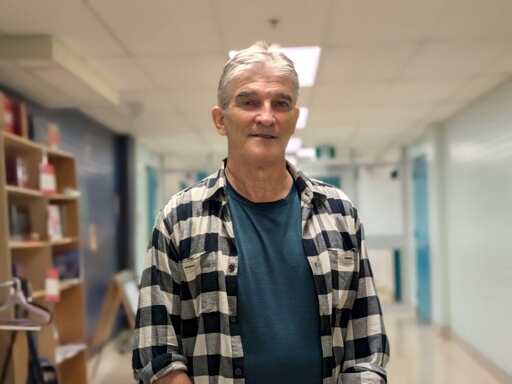
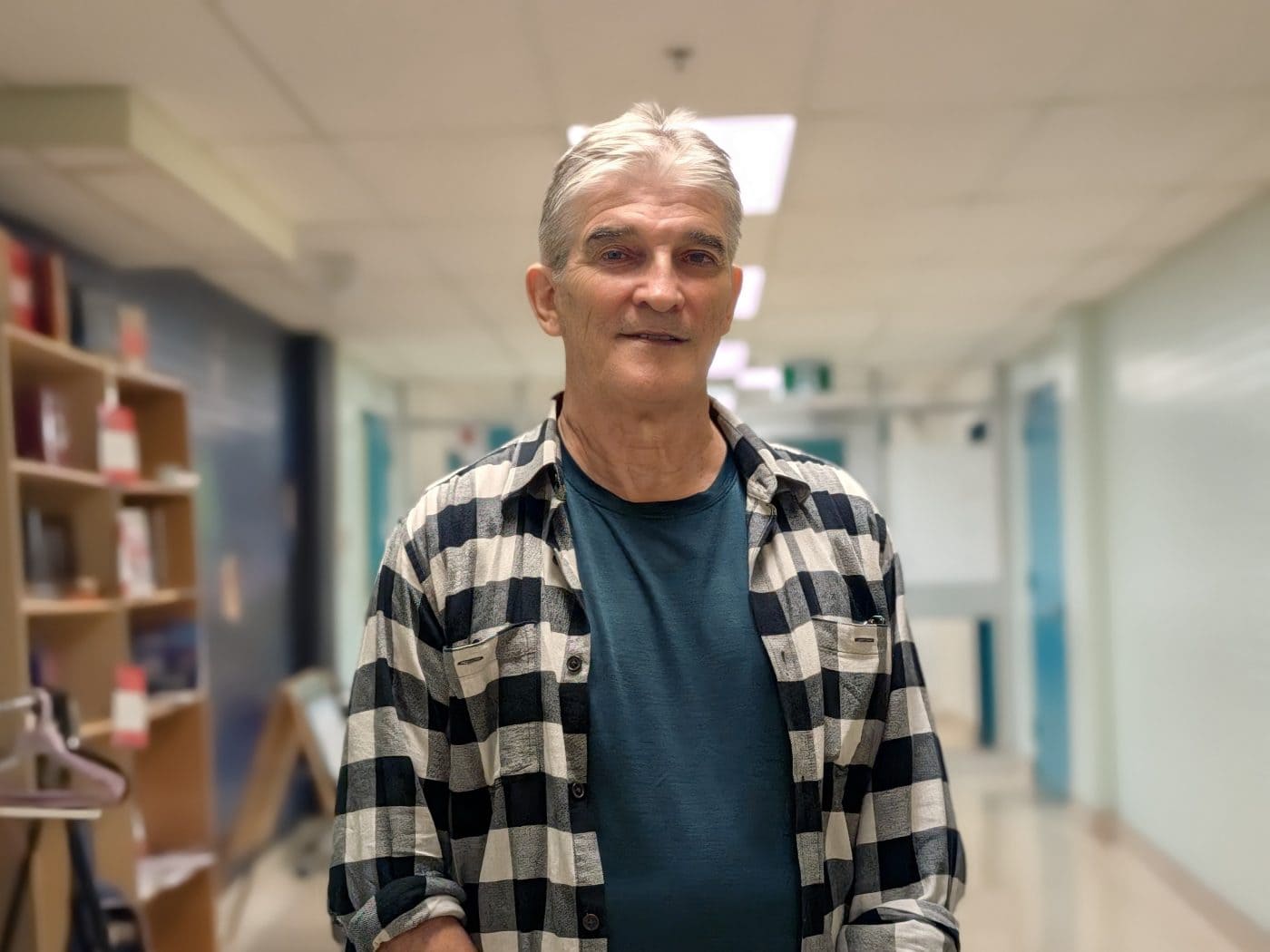
Khadije Houri, who lives near the former Vaughan Road Academy, points to the Oakwood Vaughan Community Organization’s agenda. For seniors in the neighbourhood, the air-conditioned community space inside the former school offers a place to gather, cool down and escape the heat at home. Photo: Rajpreet Sahota / The Narwhal
Angelo, another member of the group who asked to be identified only by his first name, says many people in the area live in apartments. The City of Toronto is working on a bylaw to limit maximum indoor temperatures in rentals, but it’s still a ways away from being enacted.
And the scale of the problem goes well beyond a handful of buildings. City staff estimate about 54 per cent of private-market rental units and 67 per cent of non-market rental units in Toronto do not have landlord-provided air conditioning.
Angelo recalled one member whose building posted a notice saying residents who wanted air conditioning would have to pay an additional $400 a year. After residents contacted their local councillor, he says, the amount dropped to $200.
The tenant still didn’t install one. Angelo says they feared doing anything that could affect their original lease. “It’s not just the cost of the air conditioning, it’s the fear about being unhoused,” he says.
For older adults without a cool place to retreat to, the consequences can go far beyond discomfort — with extreme weather events across the country showing us just how far.
A deadly warning from B.C.
In June 2021, British Columbia showed how deadly the combination of age, health, isolation and inadequate cooling can become. Over one week, a heat dome settled over the Pacific Northwest, pushing temperatures above 40 C in many parts of the province.
B.C.’s chief coroner later identified 619 heat-related deaths. Ninety-eight per cent occurred indoors. Sixty-seven per cent of those who died were 70 or older, while more than half lived alone.
The deaths demonstrated something experts and advocates in Toronto are now trying to prepare for: the danger isn’t determined by the temperature outside alone, but by what happens when someone closes their front door.
And Toronto is expected to face more dangerously hot days.
The city projects the number of days each year with temperatures above 30 C could rise from an average of 10 days between 1971 and 2000 to between 36 and 44 days by the 2050s. By the 2080s, Toronto could experience between 46 and 78 days above 30 C annually, depending on future greenhouse gas emissions.
Kimber-lee Wargalla, the centre’s community outreach coordinator, says another problem in Ontario is knowing the full toll extreme heat is currently taking. The Advocacy Centre for the Elderly has pushed for better tracking of heat-related deaths.
“Without those numbers, how do you prove how big the issue is, other than the anecdotal conversations with the people who are suffering,” Wargalla says.
Extreme heat can quickly move from uncomfortable to dangerous for an older adult, Stephanie Hatzifilalithis, an assistant professor at the University of Toronto’s Dalla Lana School of Public Health, says. Part of the reason is physiological.
As people age, the body’s ability to regulate its internal temperature can decline, Hatzifilalithis, whose work focuses on extreme heat’s impact on older adults, says. People may not sweat as effectively, blood flow to the skin can change and the body’s ability to recognize thirst and respond to heat may become weaker, she explains.
That means the same temperature can put greater strain on an older body than a younger one, causing dehydration, dizziness, fainting and heat stroke, Hatzifilalithis says. It can also worsen existing cardiovascular, respiratory and kidney problems.
A Toronto community thinking about heat
Oakwood Village sits just south of Eglinton Avenue West in midtown Toronto, next to Little Jamaica. It is a culturally diverse neighbourhood anchored by residential streets, independent businesses and community organizations that have long helped shape daily life in the area.
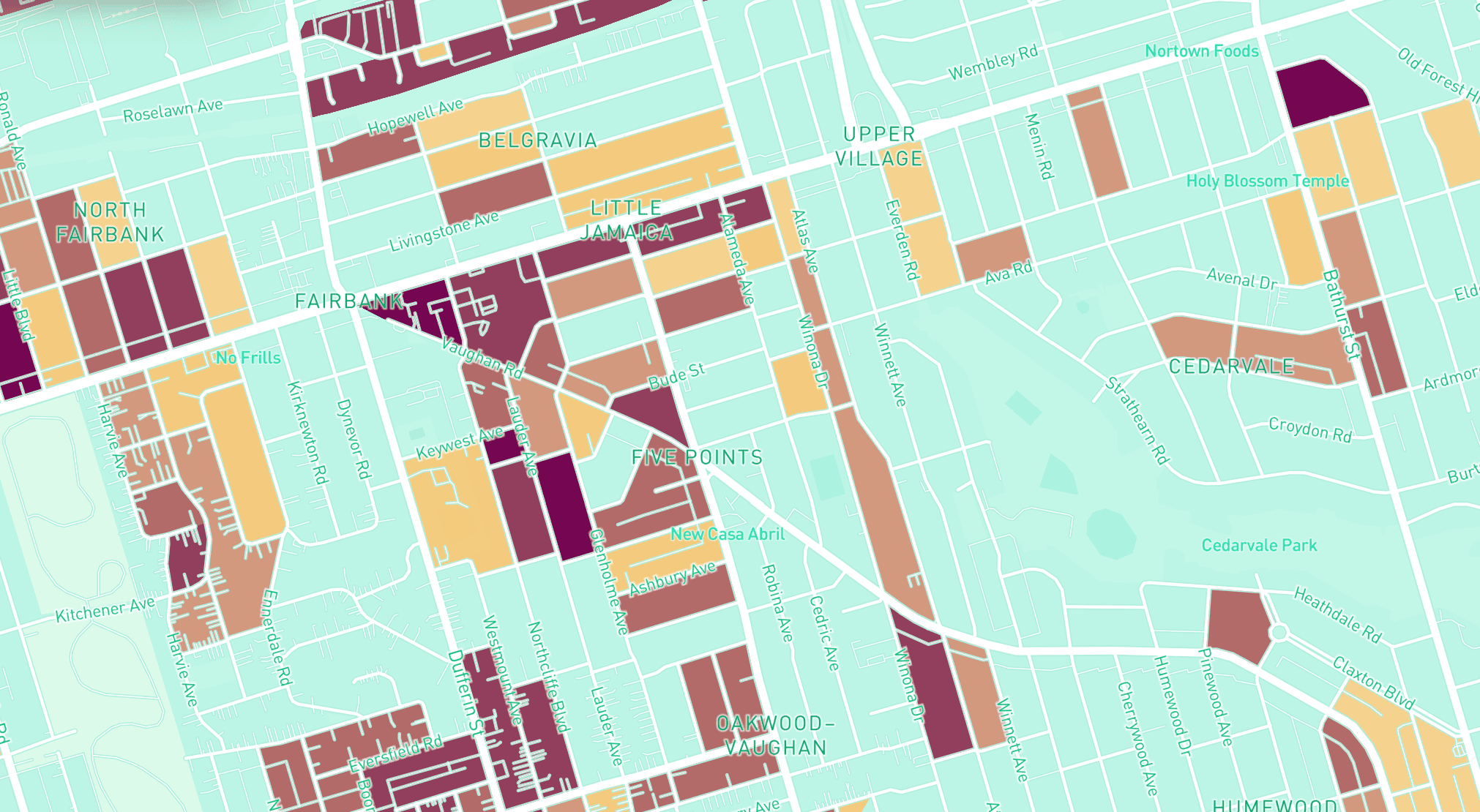
A heat vulnerability map shows where residents may face greater risks during extreme heat. Darker red areas indicate neighbourhoods with higher-than-median concentrations of vulnerable residents, while yellow areas indicate lower concentrations. The map considers factors including tree canopy and the share of low-income older adults. Map: The Canadian Urban Environmental Health Research Consortium
The city is now studying how the broader Little Jamaica and Oakwood-Vaughan area should grow. Residents consulted as part of the city’s draft planning framework have asked for more trees, public benches and seating, additional green space, greener schoolyards and better community access to school buildings outside school hours.
Eglinton Avenue West, a busy commercial corridor, runs through the Oakwood-Vaughan and Little Jamaica area. The street is lined with shops, restaurants and services, where long stretches of pavement and relatively sparse tree cover leave little relief from the heat. The Canadian Urban Environmental Health Research Consortium’s data shows trees cover less than one-fifth of the total area.
This creates what is known as the urban heat island effect.
For the seniors at Vaughan Road Academy, an air-conditioned school building, a patch of shade or a tree-lined street aren’t simply neighbourhood amenities. They can become part of an improved cooling network.
‘They’re stuck in these small boxes cooking’
For the Advocacy Centre for the Elderly, a legal clinic working with seniors in particular, those stories point to a much larger problem.
Wargalla says the people most likely to fall through the cracks include low-income seniors, newcomers living alone, renters, people in subsidized or seniors housing and those without family or community members checking in on them.
The Advocacy Centre for the Elderly was one of the groups pushing for a maximum indoor temperature standard that would require landlords to provide cooling when temperatures reach 26 C or higher.
While the City of Toronto’s bylaw is at least a year away, the Ontario government hasn’t committed to introducing one at all. The Ontario Ministry for Seniors and Accessibility did not respond to requests for comment by publication time.
Wargalla says people with mobility limitations or chronic health conditions may not be able to walk to a cooling space in extreme temperatures. “It makes people suffer in silence, and unfortunately, with extreme heat, the suffering in silence can mean death,” Wargalla says. “They’re stuck in these small boxes, cooking.”
Even someone who can access a cooling space eventually has to leave because they aren’t open 24 hours a day.
“Cooling rooms are not a substitute for safe housing,” Wargalla says. “People need cooling in their own homes, and vulnerable seniors cannot spend entire heat waves sitting in common areas or on public transit or at the library.”
Zamani Ra, executive director of CEED Canada, works on climate issues in social housing communities and sees some of those challenges where she works. For residents on higher floors, coming downstairs can itself be cumbersome. And when they arrive, she says, there may be little to do other than sit in the room. Often, the coolest area is the lobby, she says, but there is limited space for people to gather. So residents improvise.

Zamani Ra, founder and executive director of CEED Canada, with her mother, Violet Morrison. Ra says her mother has cooling in her apartment but finds the controls difficult to use and often goes without it. It’s one example, she says, of how access to air conditioning does not always mean older adults can easily use it. Photo: Supplied by Zamani Ra. Illustration: Shawn Parkinson / The Narwhal
“Some people actually get on the bus and go to the mall,” Ra says. Others go grocery shopping or visit family members with air conditioning. “But for the most part, people stay in place,” she says.
Ra says programs also need to recognize that receiving an air conditioner may not be enough. Some older adults may not be comfortable navigating online applications. Some don’t have family members who can help install or replace a unit. Even the size and type of windows in an apartment can determine what cooling equipment is usable. She says governments should consider providing quality air conditioners, professional installation and potentially vouchers that allow seniors or their families to choose a unit appropriate for their home.
The consequences of failing to address extreme heat have already been seen elsewhere in Canada.
“This is not a marginal problem,” Wargalla says. “This is a housing system problem.”
When heat becomes an emergency — financial and otherwise
Sarah Sanford, a researcher at the Wellesley Institute, recently led a study examining provincial emergency benefits in Ontario, British Columbia, Alberta and Quebec.
Residents eligible for the Ontario Works or Ontario Disability Support Program can receive up to $400 every four years to purchase a cooling device. Other programs in the province can provide electricity credits, emergency help with utility arrears or energy-saving upgrades for qualifying households.
But the study found emergency benefit programs were often fragmented, narrowly targeted or difficult to access.
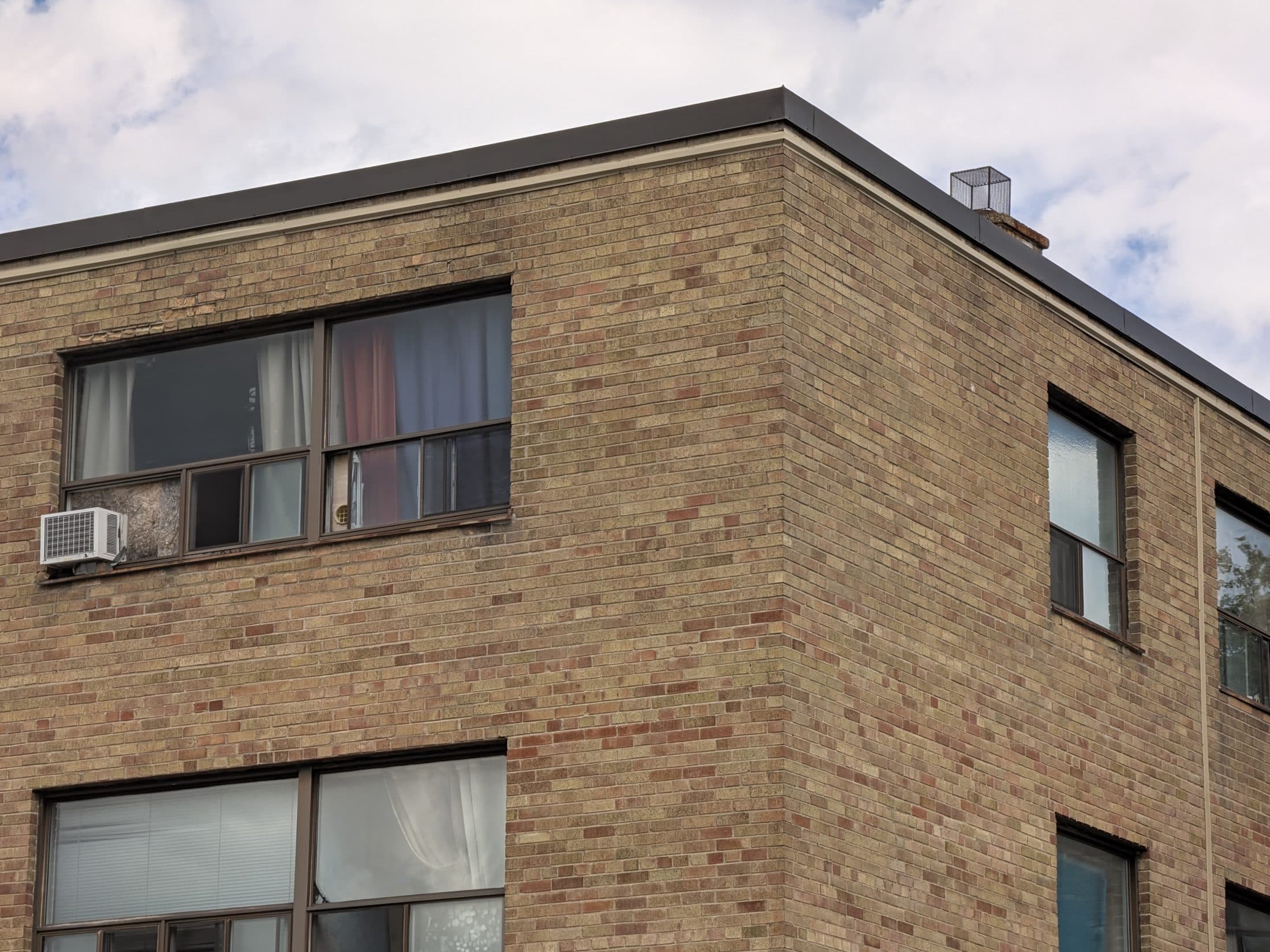
Across the Oakwood Village neighbourhood of Toronto, residents use a patchwork of strategies to keep cool, from portable air conditioning units mounted in windows, to drawing the blinds and keeping windows open only at night and during cool mornings. Photo: Rajpreet Sahota / The Narwhal
“Staying safe can mean paying for air conditioning. It can mean paying for higher electricity bills, transportation to a cool place, food, medical expenses and then any other costs that might be associated with an unanticipated climate-related emergency,” Sanford says. “A senior who’s living on a low income might have to make really difficult choices about whether or not they cool their space or if they’re able to afford to purchase other necessities.”
The City of Toronto has started expanding its response, piloting an Air Conditioner Assistance Program in 2025. The city distributed close to 500 free portable units to low-income seniors with health-related cooling needs living in multi-unit residential buildings.
In 2026, the program expanded to approximately 1,500 portable air conditioners and broadened eligibility to include pregnant people and families with infants, while continuing to serve eligible seniors.
Council voted in May this year to make the program permanent, increasing funding from $200,000 in 2025 to $1 million to expand the program as part of the 2026 budget. This funding covers all costs for the program including program administration, delivery and installation.
Another new effort in west Toronto is trying to identify vulnerable residents before a heat emergency happens.
The West Toronto Ontario Health Team, a network of 44 health and social service agencies, launched a voluntary heat wave registry this summer. Health team director Kashtin Fitzsimons says the idea traces back to the wildfire season of 2023.
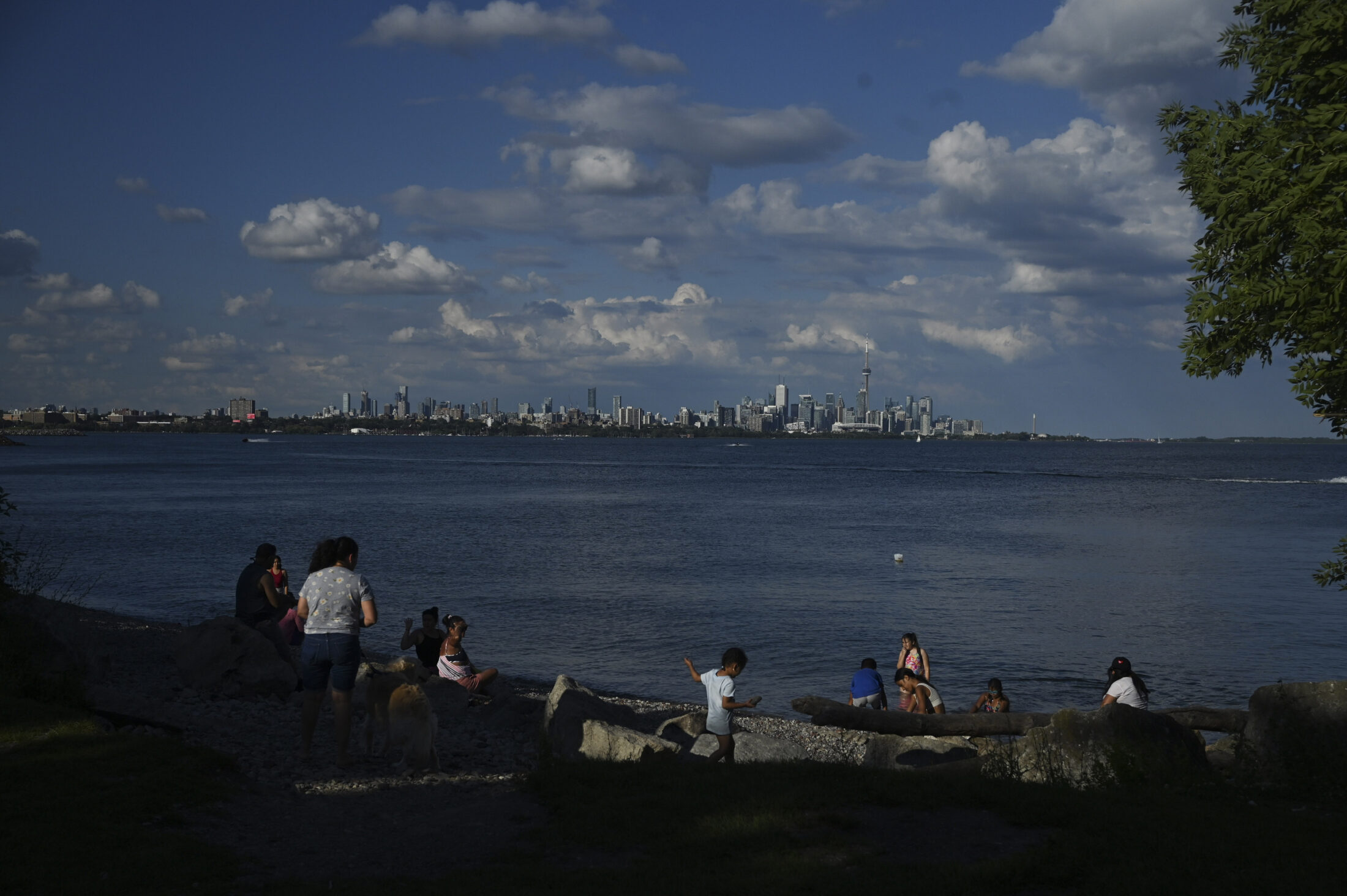
Toronto’s skyline rises above a city facing hotter, longer stretches of extreme heat. As temperatures climb, the risks are not shared equally. It is shaped by where people live and the cooling they can access. Photo: Christopher Katsarov Luna / The Narwhal
“We realized that we didn’t have a coordinated response as a health system for how to respond to wildfire smoke,” Fitzsimons says. “The more we thought about it, we didn’t have much of one on the topic of extreme heat either.”
That fall, the health team began asking people across west Toronto what the health system could do to help communities respond to climate change. Fitzsimons says Paris, France, helped inspire the registry through a similar, voluntary system that contacts residents during periods of extreme heat and other dangerous weather.
In west Toronto, people who register by themselves, or through a community group or primary care provider, receive a call from a volunteer when the city issues an extreme heat or air quality warning. Volunteers ask how they are doing, provide information about nearby cooling locations, answer heat safety questions and can connect people with health services. There are no restrictions on who can register, though organizations serving older adults, people living with chronic illness and others more vulnerable to extreme heat are encouraged to share the service.
Because the registry launched in 2026, full data on its impact has not yet been analyzed, but Fitzsimons says the calls are having a great impact and would like to see the approach grow beyond individual neighbourhood programs.
“The dream is to see a coordinated city response where no matter where you live in the city, you know what you can do,” he says.
The Narwhal’s reporters are telling environment stories you won’t read about anywhere else. Stay in the loop by signing up for our free weekly dose of independent journalism.
From The Narwhal | News on Climate Change, Environmental Issues in Canada via This RSS Feed.