

The artwork in this dossier was produced by Tricontinental: Institute for Social Research.
Socialism is the path that the Chinese people chose to enter modernity. As President Xi Jinping stated at the 20th National Congress of the Communist Party of China, ‘Chinese modernisation is socialist modernisation pursued under the leadership of the Communist Party of China’.1 In China, ‘modernisation’ (现代化) is understood in dialectical opposition to the ‘century of humiliation’ (百年国耻), the period of imperialist subjugation that extended from the First Opium War (1839–1842) until the victory of the Chinese Revolution in 1949. Chinese modernisation refers to a progressive historical process rooted in China’s particular conditions and directed towards socialism. The Chinese conception of modernisation therefore has a genealogy distinct from that of classical modernisation theory, which understands development as a linear transition from ‘traditional’ society towards the economic, political, and social institutions of the industrialised capitalist West.2 Xi’s formulation makes this socialist orientation explicit. It is this understanding of Chinese modernisation as a socialist historical process that lies at the heart of this dossier.
Capitalism came into China not in the form of modern industry but through opium, gunboats, and unequal treaties that heralded a century of humiliation. Capitalism – as imperialism – did not socialise production and labour across China on a national scale. Instead, it smashed and atomised Chinese society, propping up the landlord class, warlords, and comprador elites tied to foreign capital. The historical task of the Chinese Revolution was to overcome this humiliation and create a movement towards scientific reason and human dignity that rejected the political subordination and social polarisation associated with capitalism. We call that movement socialism. But how could socialism be built in a poor country?
At the time of the revolution, China was one of the poorest countries on the planet. Only ten countries had a lower per capita GDP.3 There was no way to build a classless society, short of socialising poverty. That was no solution at all when modern industry was needed to provide a dignified life and to build the material and technological capacity required to defend national sovereignty against war, blockade, and sanctions. The communists of China therefore had the dual task of transforming social relations and developing the productive forces – the two legs of China’s revolutionary path towards socialist modernisation. The Chinese Revolution had to advance on both legs, with the emphasis shifting between social transformation and technological development at different historical moments.
The Chinese Revolution is one of the great transformations of the modern era. In less than a century, China moved from the humiliation of semi-colonial domination and semi-feudal mass poverty to becoming one of the principal forces shaping the contemporary world. This transformation did not emerge from the spontaneous operations of the market, the benevolence of the capitalist class, or the guidance of foreign powers. It came from a protracted revolutionary process led by the Communist Party of China (CPC) and rooted in the struggles of workers and peasants.4 Chinese modernisation unfolded through distinct historical steps, each responding to the contradictions inherited from the previous stage and each attempting to advance the material and social conditions of the Chinese people.
There have been three major steps in China’s socialist modernisation since 1949. The first, the period of socialist revolution and construction from 1949 to 1978, focused on laying the foundations in an impoverished and unstable country so that the productive forces could develop and national sovereignty could be secured. The second, the period of reform and opening up from 1978 to 2013, concentrated on rapid industrialisation, technological advancement, and the creation of social wealth. The third, the new era inaugurated under President Xi Jinping’s leadership in 2013, has sought to place common prosperity and high-quality development at the centre of socialist construction. These steps are not isolated from one another – they form a continuous historical process shaped by the logic of socialist modernisation.5

Step 1: Revolution, Stability, and the Foundations of Development (1949–1978)
When the People’s Republic of China was founded in 1949, the country was among the poorest in the world. More than a century of upheaval had devastated China’s social and institutional fabric. This included imperialist intervention, the Opium Wars and widespread opium addiction, unequal treaties, warlordism, the Japanese invasion and occupation of China from 1931 to 1945, and civil war. Modern industry was underdeveloped, agriculture was backward, infrastructure was shattered, literacy rates were extremely low, and life expectancy hovered around thirty-five years.6 China faced not only economic underdevelopment but also political fragmentation and social chaos. The first task of the revolution was survival and stabilisation. The revolutionary government had to consolidate national sovereignty, dismantle feudal structures and the comprador networks that linked domestic elites to foreign capital, and create the institutional basis for long-term development. Without this initial step, no later modernisation would have been possible.
One of the earliest achievements of the new government was agrarian reform. By 1953, nearly 47 million hectares had been confiscated from the landlord class, with some land also requisitioned from rich peasants. Although they constituted distinct rural classes, landlords and rich peasants together accounted for less than 10% of the rural population but had previously controlled 70–80% of the arable land.7 The land was redistributed to approximately 300 million landless and land-poor peasants, amounting to a near-universal redistribution of land among the rural poor. This transformed the countryside and broke the power of feudal elites who had dominated rural China for centuries. Land reform was not merely an economic policy; it was a social revolution that gave peasants dignity and political agency. In the language of the revolution itself, it was a process of fanshen (翻身): ‘to turn over’ or ‘turn the body’. The revolution’s first great achievement was therefore measured not only in hectares redistributed but in the ‘turning over’ of hundreds of millions of peasants, who became active participants in national development. 8 This understanding of development as both material redistribution and human transformation has defined Chinese modernisation ever since.
Alongside land redistribution, the government moved to stabilise the economy on new foundations. Through the public control of essential commodities and the elimination of feudal rentiers, the government broke the speculative networks that had driven one of the most severe episodes of hyperinflation in the modern era. In April 1949, monthly inflation exceeded 5,000%. The renminbi, first issued in December 1948, gradually replaced the multiple currencies then in circulation. By the early 1950s, the government had established a stable, unified national monetary system.9 This action stabilised prices and facilitated exchange throughout the country, creating the conditions for productive economic life. The government also took the radical step of repudiating the illegitimate debts that previous regimes had accumulated through more than 700 foreign loans contracted between 1852 and 1949.10 All of these initiatives helped wipe the slate clean for Chinese society and unlocked the resources needed for future development.
The new Chinese state also launched mass literacy and public health campaigns. Before 1949, illiteracy was widespread and medical services were inaccessible to most people. Through mass mobilisation, reforms to the Chinese written language, and the rapid expansion of rural educational infrastructure – including 182,960 rural reading rooms by 1956 – literacy rates rose from under 20% at the time of the 1949 revolution to 57% by 1959.11 Meanwhile, the ‘barefoot doctor’ programme – which directly inspired the World Health Organisation’s 1978 Declaration of Alma-Ata on primary health care – extended basic healthcare to rural villages, greatly reducing infant mortality and the incidence of infectious diseases. Life expectancy rose, as the World Bank data shows, from roughly thirty-five years in 1949 to over sixty-three years by 1978. This rise in life expectancy alone represents one of the greatest improvements in human welfare in modern history. By 1978, China had a healthier and better-educated population than other countries at comparable income levels – an important foundation for the rapid development that followed.
Industrialisation was at the heart of the First Five-Year Plan (1953–1957). Supported in part by technical assistance from the Soviet Union, China began to establish a heavy industrial base through the programme known as the 156 Projects, which covered sectors including coal, steel, power, and machinery and was carried out by state-owned enterprises. Although China remained poor, these projects created the industrial foundation needed both for future development and for national defence by providing the materials, machinery, and energy needed to equip and sustain its armed forces. During this period, China expanded its iron and steel production capacity, with steel output quadrupling from 1.3 to 5.2 million tonnes over the course of the First Five-Year Plan. The country also built its first automobile and tractor factories and constructed major hydroelectric and thermal power facilities.12 Together, these efforts laid an integrated national industrial and infrastructural foundation, including bridges over the Yangtze River and the restoration and expansion of rail links into remote parts of northwest China. New industrial zones were deliberately built in the interior rather than in the coastal treaty ports of the colonial era. Socialist planning enabled the mobilisation of scarce resources towards national priorities rather than private profit.13
Critics often focus solely on the difficulties and errors of this period, including the consequences of the Great Leap Forward (1958–1962) and the turmoil associated with the Cultural Revolution (1966–1976). These events undoubtedly caused suffering and political instability. Yet it is historically incomplete to reduce the entire period to these tragedies. The broader significance of the first step lies in the fact that China emerged from decades of humiliation as a sovereign and unified state capable of independent development. What is remarkable is that many of these advances were achieved under severe external constraints and the constant threat of war. In 1951, the United Nations General Assembly imposed an embargo on strategic goods destined for China and the Democratic People’s Republic of Korea (DPRK). The United States reinforced these restrictions through the Mutual Defence Assistance Control Act of 1951, commonly known as the Battle Act. These restrictions and broader US sanctions, which were designed to wreak havoc on the economy, continued throughout the 1960s, limiting the supply of essential goods and machinery, constraining the pace of development, and imposing a high degree of autarky on the economy.14 Moreover, after US-led forces invaded the DPRK and advanced towards the Chinese border in October 1950, China intervened militarily in support of the DPRK and in defence of its own national security. As a consequence of these threats, China held its first nuclear test in 1964 to establish a shield against attack by its enemies.
The collective leadership of the first generation of the CPC, led by Mao Zedong, must be understood in this historical context. The revolution achieved what earlier reformers and nationalist governments could not: territorial unification, political independence, the liquidation of feudal relations, and the creation of a state committed to the welfare of the masses. The revolutionary ethos fostered a culture of collective sacrifice and national purpose. Even Western development economists later acknowledged that the foundations for China’s economic rise were laid during this socialist period through land reform, basic industrialisation, education, and public health.15 The emphasis on universal education produced a disciplined and increasingly skilled population. Rural industrialisation and grassroots governance helped create a decentralised and responsive administrative structure. When economic reforms began in 1978, China already possessed a cohesive state apparatus, a healthy labour force, and basic industrial capacity.
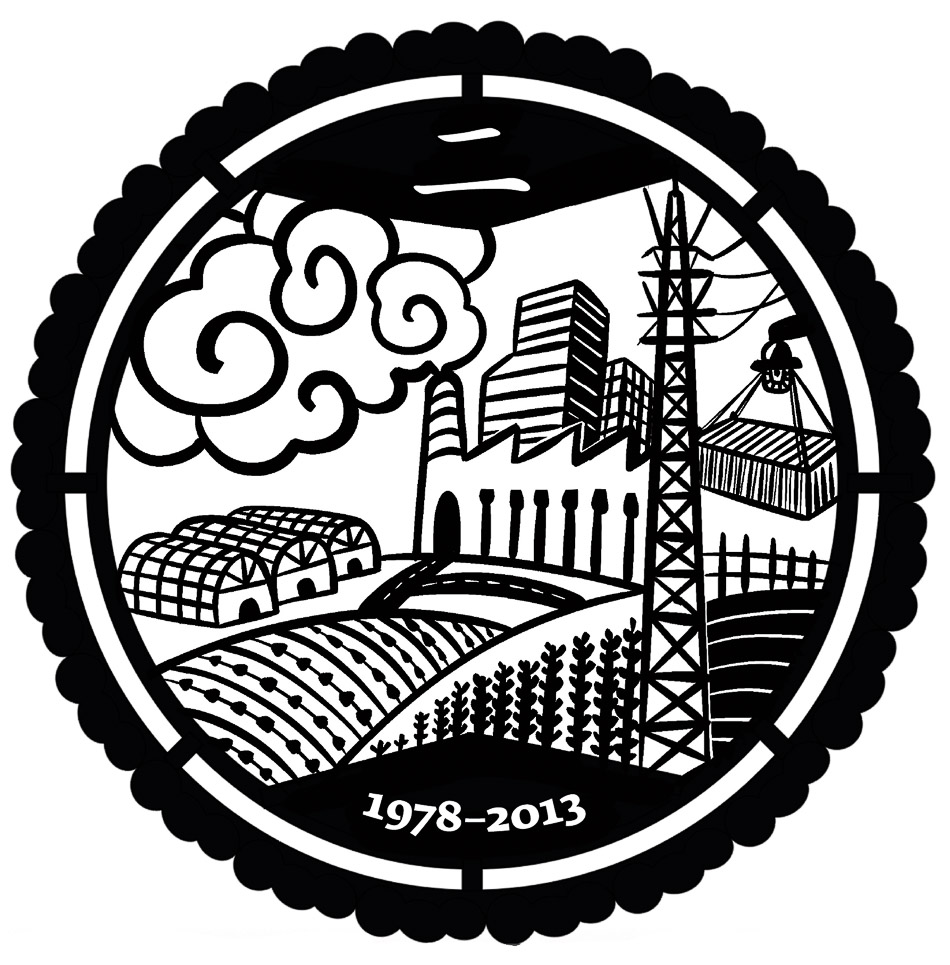
Step 2: Reform, Growth, and the Creation of Social Wealth (1978–2013)
By 1978, Chinese leaders recognised that although the country had achieved sovereignty and stability, it remained economically underdeveloped. The productive forces were still too weak to provide prosperity for the population. Moreover, because many resources were scarce in relation to the size of the population, China needed to trade with the world. During this period, Deng Xiaoping, the principal architect of reform and opening up, and other reform leaders initiated a new step of socialist development aimed at accelerating industrialisation, technological upgrading, and economic growth. This period is often misunderstood in Western accounts as a simple abandonment of socialism in favour of capitalism or, worse, as the adoption of neoliberalism.16 The reform era represented an adaptation of socialist strategy to concrete historical conditions. The CPC maintained political control while gradually allowing market mechanisms to operate and private capital to accumulate. This process was monitored and mediated through the structures and institutions of the state built in the first step. The objective was not private accumulation as an end in itself but the rapid expansion of the productive forces to enable the eradication of poverty.17
Deng Xiaoping famously argued that ‘poverty is not socialism’.18 The revolutionary state had secured national independence, but socialism also required material abundance. Without economic growth, China would remain vulnerable and incapable of improving the lives of its people. The results of this strategy were extraordinary. Between 1978 and 2019, China experienced one of the fastest economic transformations in human history. Over 765 million people were lifted out of poverty.19 Manufacturing expanded rapidly, cities modernised, and infrastructure projects transformed the physical landscape of the country. Special Economic Zones such as Shenzhen became laboratories for industrial experimentation. In 1980, Shenzhen was a small fishing town. Within decades, it had become a global technological centre with advanced manufacturing industries. Major firms such as Huawei and Tencent were founded there, and by 2018 its GDP had surpassed Hong Kong’s – an international hub of global capital.20 This transformation reflected the strategic use of foreign capital and technology under state guidance.
Throughout the reform period, the state retained a central role. Unlike in neoliberal economies, where private capital dominates the state and markets incentivise short-term speculative gains, China’s reforms preserved public ownership in strategic sectors such as banking, energy, telecommunications, and transport. This enabled long-term planning and prevented private capital from capturing natural monopolies and extracting rents from them. Instead, the state led a process of market construction in which private capital was directed towards politically determined goals and subjected to intense competitive pressure, forcing firms to upgrade production and expand industrial capacity. Control over the financial system, particularly the allocation of credit, gave the state a key mechanism for steering investment. The market was treated as an instrument rather than as an absolute principle.21
This period saw major investment and advances in science and technology. Jiang Zemin, who served as minister of the electronics industry from 1983 to 1985 and later as president from 1993 to 2003, oversaw strategic developments in electronics and information technology that helped lay the foundations for later advances in semiconductors, computing, and artificial intelligence.22 By the time China joined the World Trade Organisation in 2001, its domestic industrial base was dynamic enough to attract significant volumes of foreign capital and its goods were competitive enough to dominate the world market. China had already begun to move from labour-intensive production to increasingly advanced manufacturing and innovation. High-speed rail, renewable energy systems, telecommunications infrastructure, and digital platforms developed on a vast scale. China opened its first fully high-speed passenger line in 2007 and by 2012 had built more than 10,000 km of high-speed rail from virtually nothing – the longest network in the world.23 By the early twenty-first century, China was no longer simply ‘the factory of the world’ but an emerging technological power.
At the same time, this step generated new contradictions. Rapid growth produced significant regional inequalities, corruption, and disparities between urban and rural areas. Wages did not keep up with rising productivity. Coastal regions advanced more quickly than inland provinces. Private wealth expanded and social stratification became increasingly visible. Environmental degradation also became a serious concern. Yet these contradictions were increasingly recognised by Chinese leaders themselves. Under Hu Jintao, general secretary of the CPC from 2002 to 2012, the party began to respond more directly to the contradictions produced by rapid growth, including labour unrest, regional inequality, and environmental degradation. Minimum-wage standards were raised and labour protections strengthened in the 2000s, while the ecological costs of rapid industrialisation pushed environmental questions higher on the policy agenda. This shift was reflected in the Scientific Outlook on Development, introduced in 2003 and written into the CPC constitution in 2007, which called for people-centred, comprehensive, balanced, and sustainable development.24
The achievements of the second step are undeniable. China became the world’s largest industrial economy, dramatically improved living standards, and built the technological capabilities necessary for sovereign development. No other country has achieved development on such a scale in such a short period. Nor has any country managed to sustain double digit growth rates without eventually entering into a crippling recession. Importantly, China avoided the fate experienced by many post-socialist societies after the collapse of the Soviet Union. Rather than engaging in shock therapy, dismantling the state, and surrendering to oligarchic privatisation, China retained the leading role of the CPC and preserved public ownership of the commanding heights of the economy – banking, energy, telecommunications, and transport. This continuity allowed the country to maintain national coherence and long-term planning.25 Ultimately, the reform period was never presented as the final form of socialism. It was understood as a necessary stage in developing productive capacity.
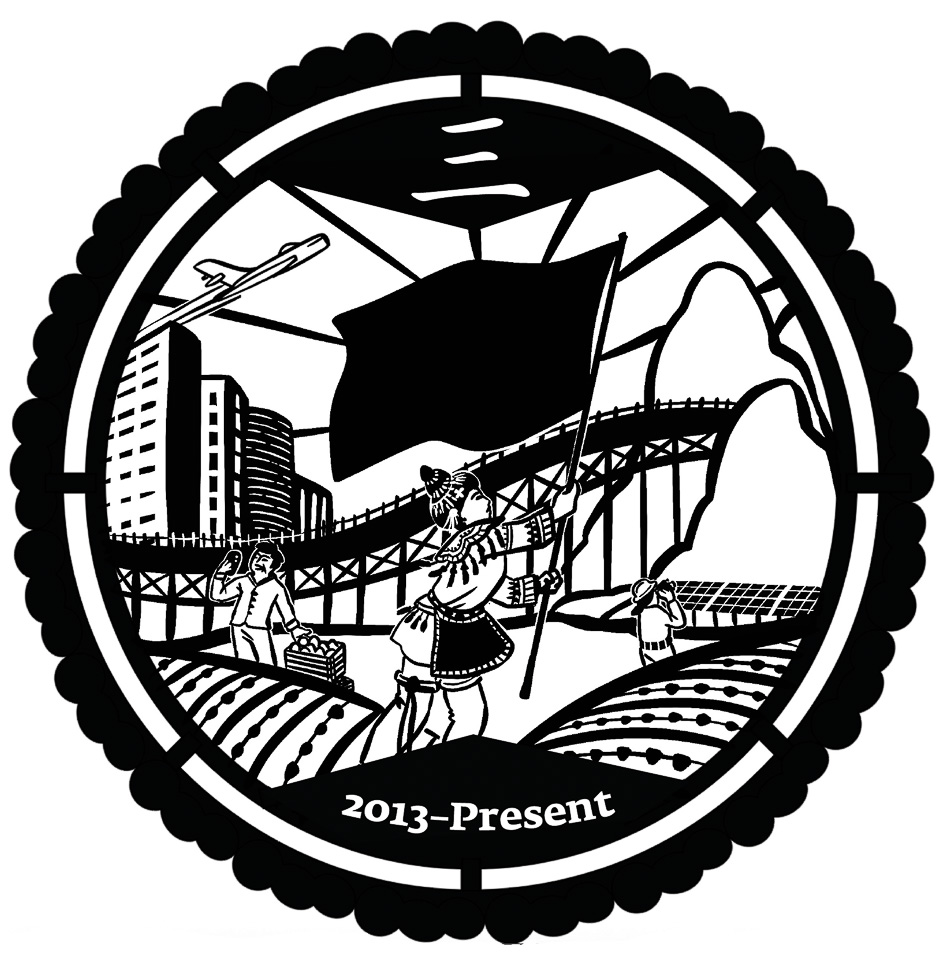
Step 3: Common Prosperity, Ecological Civilisation, and High-Quality Development (2013–Present)
By 2013, China had largely accomplished the historical tasks associated with developing the productive forces. The country possessed advanced infrastructure, technological sophistication, and substantial national wealth. New questions began to emerge. How should this wealth be distributed and what social purpose should development serve? How can the productive forces and the growth imperative be brought into harmony with ecological limits? What is the place and role of China’s traditional culture in a technologically advanced and atomised world? What is China’s place in a churning world order and what is its relationship to the Global South? These are not easy questions, and none has a clear-cut answer. The third step of Chinese modernisation has sought to address them.
Equality and common prosperity have re-emerged as central socialist principles under Xi Jinping’s leadership. First, the Chinese state has increasingly emphasised the social dimensions of development rather than growth alone. One of the most significant achievements of this step was the campaign to eliminate extreme poverty. Launched in 2013, the Targeted Poverty Alleviation (精准扶贫) campaign sought to identify and address the remaining pockets of extreme poverty that the previous stage of development had not been able to eliminate. Its objectives were summarised as ‘one income, two assurances, and three guarantees’: a minimum income, assurances of adequate food and clothing, and guarantees of compulsory education, basic healthcare, and safe housing. The campaign mobilised more than three million party cadres alongside state institutions and local governments and expanded infrastructure and public services in impoverished rural areas, including access to drinking water and electricity. More than 9.6 million people who lived in areas with harsh environmental conditions were provided with improved housing, infrastructure, public services and access to employment in resettlement communities. In February 2021, the Chinese government announced that it had eradicated absolute poverty in accordance with its multidimensional national standard.26 The campaign formed part of a broader effort to strengthen public services and social protection, including the pension system. Rather than relying solely on market outcomes, the state intervened directly to improve living conditions in the poorest communities, with party cadres playing a leading role and demonstrating the continuing capacity of socialist organisation. This is a reflection of China’s conception of development – one that is centred on collective welfare.
Second, the concept of common prosperity has also entailed measures to prevent extreme concentrations of wealth. Beginning in late 2020, the Chinese government intensified antitrust enforcement across the platform economy, targeting abuses of market dominance, exclusive arrangements, and mergers and acquisitions that had not undergone required government reviews. Alibaba, Tencent, and Bilibili were among the large technology companies investigated or penalised, with Alibaba receiving a record fine of 18.2 billion yuan (approximately US$2.8 billion).27 These measures sought to restrain market concentration and subject the power of large technology companies to greater public regulation.
The government has also imposed sweeping restrictions on private tutoring companies to reduce educational inequality and the financial burden such practices impose on families.28 In response to the emergence of a potential real estate bubble, President Xi Jinping’s slogan ‘houses are for living in, not for speculation’ signalled a shift towards greater regulation of the property market.29 The state has also used its control over the financial system to restrict lending to the property sector and channel credit towards strategic high-technology industries – something the capitalist systems in the Global North have been unable to do since the Third Great Depression (2007–2008). These policies signal the political will and ability to subordinate capital to broader social and developmental goals.
This evolution reflects an important theoretical understanding. Socialism cannot be measured solely by rates of economic growth or technological achievement, however impressive those achievements may be. The decisive indicator is the relationship between productive development and the social good embodied in the concept of common prosperity. Economic modernisation acquires socialist significance only insofar as it expands the material, cultural, and democratic capacities of the people themselves. The continued strengthening of public education, healthcare, infrastructure, scientific research, ecological planning, and cultural renewal therefore represents an effort to ensure that the extraordinary productive advances of previous decades increasingly serve broader social objectives.
Third, environmental sustainability has become a major priority. Earlier stages of industrialisation often relied on environmentally destructive practices. In fact, the offshoring of polluting industries to China meant that the country bore the brunt of the ecological costs associated with consumption in the Global North. In the current step, however, China has invested heavily in renewable energy and electric vehicles (EVs) and is now a global leader in solar and wind power as well as EV production. By mid-2024, China accounted for two-thirds of all utility-scale solar and wind capacity under construction globally. It also produced over 10 million EVs in 2024.30 The shift from the severe urban smog of a decade ago – widely described as an ‘airpocalypse’ – towards the goal of ‘ecological civilisation’ illustrates the scale of this policy change.31 The concept of ‘ecological civilisation’ and the slogan that ‘clear waters and green mountains are as valuable as mountains of gold and silver’ have been integrated into official planning discourse as part of socialist modernisation, signalling China’s intent to tackle pollution and climate change.32 This commitment has taken concrete form in large-scale efforts to rehabilitate environments devastated by industrial pollution. One example is the restoration of Erhai Lake in Yunnan Province through the coordination of residents, party cadres, and the local and central government.33
Fourth, China has sought to move beyond poverty alleviation and narrow the divide between town and country through its rural revitalisation project, such as by transferring technology and resources to rural areas.34 This represents a return to the longstanding Marxist and socialist imperative to abolish the distinction between town and country.35 It also reflects a return to the CPC’s revolutionary roots in the rural masses who provided the backbone of the Chinese Revolution. Rural revitalisation is therefore not only a poverty reduction strategy but an attempt to narrow the urban-rural divide and build forms of development that are less dependent on the consumerism and social atomisation associated with rapid urbanisation. By strengthening rural infrastructure, public services, local industries, and ecological restoration, the project seeks to make the countryside a site of modern socialist development rather than a reservoir of displaced labour for the cities.
During this third step, China’s role in the international community has also evolved. Projects such as the Belt and Road Initiative, which began in 2013, reflect efforts to reshape global development through infrastructure investment and South-South cooperation. The country’s mastery over the productive forces has also made it an essential partner in the industrialisation of Africa. For instance, the Addis Ababa-Djibouti Railway connects landlocked Ethiopia to the Port of Djibouti and supports regional trade, while the Kenya Standard Gauge Railway has significantly reduced transport costs. This stands in contrast to the record of the International Monetary Fund and World Bank, whose policies have perpetuated underdevelopment across the continent.36 While Western critics often interpret these initiatives through the lens of geopolitical rivalry, many governments in Asia, Africa, and Latin America see China as an alternative partner to the unequal structures historically dominated by Western powers. China has also proposed three broad frameworks for international cooperation: the Global Development Initiative, which supports development projects and capacity building; the Global Security Initiative, which sets out principles and areas for cooperative security; and the Global Civilisation Initiative, which promotes dialogue and exchange among civilisations. Together, they represent efforts to offer an alternative to the polarisation of neoliberal globalisation and the hypocrisy of the post-war liberal world order. Their success depends on participating countries of the Global South shaping their priorities and implementation according to their own needs and agendas.37
The significance of China’s experience for the Global South lies not in its replicability but in what it reveals about the structural preconditions for sovereign development.38 China’s model presupposes a unified state with the capacity to direct strategic sectors, plan across generations, and subordinate capital to long-term national priorities – capacities that are not technical but political, grounded in a revolutionary rupture that fundamentally reshaped the relationship between state, class, and market. Where other nations of the Global South have articulated comparable visions – such as Kwame Nkrumah’s argument for a continental African political union in 1963 – efforts to implement them have repeatedly been thwarted by conditions that China has largely overcome: fragmented sovereignty, external debt and conditionality, dependence on commodity exports, and strategic sectors owned and directed by foreign capital. China’s trajectory does not offer a ready-made blueprint. It poses a question: what political and institutional transformations would other countries need in order to exercise similar strategic control over their own development?
Equally significant has been China’s determination to achieve technological self-reliance at a moment when the United States and its allies have intensified attempts to contain its development through export controls, sanctions, restrictions on access to semiconductor technologies, and an expanding military presence across East Asia.39 These measures have only reinforced the party’s conviction that scientific and technological sovereignty has become inseparable from national sovereignty. Investment in advanced manufacturing, artificial intelligence, renewable energy, aerospace, biotechnology, and quantum technologies is therefore understood not simply as economic policy but as an essential component of socialist development under conditions of intensified hyper-imperialist pressure.40
The significance of this third step lies in its attempt to synthesise economic modernisation with socialist ethics. China now possesses a substantial productive base. The challenge is to ensure that it continues to transform social relations and serve collective welfare rather than private accumulation alone. This represents a return to foundational socialist concerns under new historical conditions.

The Road Ahead
The socialism of Chinese modernisation cannot be understood as a simple linear progression. It is a historical process shaped by changing material conditions and strategic adaptations. Yet across its different steps, a central continuity remains: the attempt to coordinate the transformation of social relations and the development of the productive forces in order to build a socialist society.
Karl Marx and Friedrich Engels understood socialism as a historical process rather than a ready-made template to be imposed from above.41 Progress from one stage of development to another requires confronting and resolving contradictions, but this is not a mechanical or economistic process. Nor is it necessarily linear: it may comprise a cycle of probing advances and tactical retreats. It is an experimental process that requires conscious direction guided by theory, tested in practice against concrete conditions, and rooted in the experiences and struggles of workers and peasants.42
Unlike conventional electoral parties, whose activity within bourgeois democracies is largely confined to contesting elections or administering existing institutions, the CPC has consistently understood itself as the organiser of a historical project whose horizon extends across generations. Its legitimacy has rested not only on its ideological commitments but also on its demonstrated capacity to identify changing historical contradictions and to formulate strategies capable of resolving them in ways that improve the lives of the majority of the population.
What steps come next remain to be seen. Within Chinese modernisation, substantive democracy has been pursued through both improvements in living standards and consultative and responsive governance – what the CPC calls ‘whole-process people’s democracy’. This system combines electoral and consultative democracy and extends participation through elections, consultation, decision-making, management, and oversight, including through people’s congresses, political consultative bodies, and grassroots self-governance. Together, these social and political developments form part of the process towards China’s centenary goal of becoming a modern socialist country by 2049.43
Yet the road ahead is not open-ended. At its 19th National Congress in 2017, the CPC set out a two-stage path: to achieve basic socialist modernisation by 2035 and to build China into a modern socialist country by the centenary of the People’s Republic in 2049. This path was reaffirmed at the 20th National Congress in 2022. The 2035 intermediate target is not a vague aspiration but a concrete programme: to substantially raise per capita GDP to that of a mid-level developed country (which would be roughly double the current figure); strengthen self-reliance and capacity in science and technology; guarantee equitable access to basic public services; and ensure that carbon emissions decline steadily.44
The 15th Five-Year Plan (2026–2030), adopted by the National People’s Congress on 12 March 2026, is the first of the two remaining five-year plans leading to the 2035 target. The CPC has described the 2026–2030 period as a ‘crucial link’ on the path to achieving basic socialist modernisation by 2035.45 The plan marks a dialectical shift from extensive to intensive development – from growth driven mainly by expanding inputs to growth driven increasingly by productivity, innovation, and efficiency. For much of the reform era, China’s extraordinary growth was driven by the accumulation of inputs: a large supply of relatively low-cost labour moving from the countryside into industry, large-scale fixed investment in infrastructure and manufacturing capacity, and deepening integration into global export markets. That model, which lifted hundreds of millions out of poverty and built the material foundation of contemporary China, has reached its historical limits. Labour costs have risen, many of the country’s major infrastructure networks are now substantially developed, and access to some technologies and markets has been deliberately restricted through US-led controls and supply-chain decoupling. The 15th Five-Year Plan registers this transition structurally. The headline growth target has been reduced to 4.5–5% annually – below 5% for the first time since 1991 – while research and development spending is mandated to grow at over 7% per year. The signal is explicit: the volume of output is no longer the sole measure of development; its quality and technological content are also crucial. The fact that this lower growth target represents a strategic choice rather than economic failure is itself historically significant. No major developing country has voluntarily subordinated GDP growth targets to quality metrics on this scale.
The central theoretical framework for this transition is the concept of ‘new quality productive forces’, first articulated by Xi Jinping during an inspection visit to Heilongjiang Province in September 2023. It was established as a major policy priority during China’s annual ‘two sessions’ in March 2024 (the meetings of the National People’s Congress, the national legislature, and the Chinese People’s Political Consultative Conference – the country’s highest political advisory body). Applying a qualitative emphasis to Marx’s category of the productive forces, the concept refers to advanced productivity freed from traditional growth patterns and characterised by high technology, high efficiency, and high quality. In practice, this means fostering a new generation of strategic industries – artificial intelligence, biotechnology, advanced manufacturing, new materials, quantum technology, hydrogen energy, and aerospace – while simultaneously upgrading traditional industries through digitalisation and green transformation. Under the 15th Five-Year Plan, the digital economy’s share of GDP is targeted to rise from 10.5% in 2025 to 12.5% by 2030, while grain production capacity is set to reach approximately 725 million tonnes, comprehensive energy production capacity is set to increase by 13%, and non-fossil energy’s share of consumption is set to rise from 21.7% to 25%.46
A crucial dialectical reversal is at work in China’s response to US-led technology containment. The export controls, semiconductor restrictions, and supply-chain pressures that Washington has imposed since 2018 and tightened in 2025 were designed to arrest China’s technological advance. Yet their effect has been the opposite: by closing off access to foreign technology at the frontier, the United States has compelled China to invest with extraordinary urgency in precisely the capabilities it sought to deny the country. The 15th Five-Year Plan’s target of at least 7% annual average growth in R&D spending and its emphasis on achieving breakthroughs in semiconductors, industrial software, and advanced materials can therefore be understood in part as a domestic productive response to external containment. External pressure has been internalised as a driver of self-reliance, transforming an obstacle into an accelerant.
At the same time, the plan attempts to resolve a structural contradiction that has accumulated across the reform era: the disproportion between China’s extraordinary productive capacity and the relative weakness of domestic consumption as a driver of growth. The ‘dual circulation’ strategy, first proposed in 2020 and incorporated into the 14th Five-Year Plan (2021–2025), takes the domestic market as the mainstay of the economy while seeking to ensure that domestic and international circulation reinforce one another. This is not merely a technical adjustment. It reorients the relationship between production and social reproduction – the conditions and services that sustain workers and households – as well as the relationship between the national economy and the world market. Where the export-led model of the second step required China to insert itself into the global division of labour on terms partly set externally, the dual circulation model seeks to make domestic demand the primary driver of economic growth. Rising wages, expanded public services, and a broader middle-income stratum are conditions both for stronger domestic demand and for common prosperity. In this way, the strategy links the distributional and macroeconomic dimensions of socialist development.
At a time when much of the Global South seeks new paths of industrialisation, technological development, and economic sovereignty, China’s experience has reopened questions that many believed had been settled forever after the destruction of the Soviet Union.47 It has shown that planning remains possible, public investment can transform societies, technological leadership need not remain the monopoly of the Global North, and the future need not belong exclusively to finance capital.48
Chinese modernisation represents a distinct path in world history. It rejects both colonial dependency and neoliberal orthodoxy. It is a socialist project that walks on two legs: transforming social relations and developing the productive forces. This project has progressed through different historical steps while maintaining the central objective of national sovereignty and human dignity. Whatever contradictions remain, the Chinese Revolution stands as one of the most consequential emancipatory processes of the modern age.
Notes
1 ‘Chinese Experiments in Socialist Modernisation’, Wenhua Zongheng 3, no. 1 (27 June 2025), https://thetricontinental.org/wenhua-zongheng-2025-1-chinese-experiments-socialist-modernisation/.
2 The classic text is W. W. Rostow, The Stages of Economic Growth. A Non-Communist Manifesto (Cambridge: Cambridge University Press, 1960). The best contemporary critique of the book is by Paul Baran and Eric Hobsbawm, ‘The Stages of Economic Growth’, Kyklos, vol. 14, no. 2 (1961).
3 Vijay Prashad and John Ross, ‘China Pulls Itself Out of Poverty 100 Years into Its Revolution’, Toward Freedom, 1 July 2021, https://towardfreedom.org/story/archives/asia-archives/china-pulls-itself-out-of-poverty-100-years-into-its-revolution/.
4 Tings Chak and Vijay Prashad, ‘Seventy-Five Years of the Chinese Revolution’, MRonline, 1 October 2024, https://mronline.org/2024/10/01/seventy-five-years-of-the-chinese-revolution/.
5 Longway Foundation, ‘Socialism 3.0: The Practice and Prospects of Socialism in China’, Wenhua Zongheng 1, no. 2 (27 June 2023), https://thetricontinental.org/asia/wenhua-zongheng-2023-2-socialism-3-in-china/.
6 World Bank, ‘Life Expectancy at Birth, Total (Years)’, World Development Indicators, indicator SP.DYN.LE00.IN (Washington, DC: World Bank, 2024), https://data.worldbank.org/indicator/SP.DYN.LE00.IN/, accessed 11 August 2026.
7 Tan Rong, Gao Huake, and Cui Jie, ‘Land Policy and Systematic Transformation in Chinese Rural Areas (1950–1978)’, Canadian Social Science 1, no. 1 (May 2005): 1–21.
8 William Hinton, Fanshen: A Documentary of Revolution in a Chinese Village (New York: Monthly Review Press, 1966).
9 Richard C.K. Burdekin and Hsin-hui I.H. Whited, ‘Exporting Hyperinflation: The Long Arm of Chiang Kai-shek’, China Economic Review 16, no. 1 (2005): 71–89, https://doi.org/10.1016/j.chieco.2004.09.001.
10 Mi Rucheng, Zhongguo waizhai shi, 1853–1949 (Beijing: China Social Sciences Press, 2024).
11 Tricontinental: Institute for Social Research, The Joy of Reading, dossier no. 85, 11 February 2025, https://thetricontinental.org/dossier-the-joy-of-reading/.
12 Michela Giorcelli and Bo Li, ‘Technology Transfer and Early Industrial Development: The Case of the Sino-Soviet Alliance’, CEPR, 9 January 2022, https://cepr.org/voxeu/columns/technology-transfer-and-early-industrial-development-case-sino-soviet-alliance.
13 Solomon Adler, The Chinese Economy (London: Routledge & Kegan Paul, 1957).
14 Shu Guang Zhang, Economic Cold War. America’s Embargo against China and the Sino-Soviet Alliance, 1949–1963 (Stanford: Woodrow Wilson Center Press & Stanford University Press, 2001).
15 World Bank, China: Socialist Economic Development, vol. 1, report no. 3391-CHA (Washington, DC: World Bank, East Asia and Pacific Regional Office, 1 June 1981; repr. 10 March 1982).
16 David Harvey, A Brief History of Neoliberalism (Oxford: Oxford University Press, 2005).
17 Deng Xiaoping, ‘To Uphold Socialism We Must Eliminate Poverty’, in Selected Works of Deng Xiaoping Vol. III (1982–1992) (Beijing: Foreign Language Press, 1987).
18 Deng Xiaoping, ‘To Uphold Socialism We Must Eliminate Poverty’, excerpt from conversation with Czechoslovak Premier Lubomír Štrougal, 26 April 1987, Marxists Internet Archive, https://www.marxists.org/reference/archive/deng-xiaoping/1987/133.htm.
19 World Bank, Ministry of Finance of the People’s Republic of China, Development Research Center of the State Council, and China Center for International Knowledge on Development, Four Decades of Poverty Reduction in China: Drivers, Insights for the World, and the Way Ahead (Washington, DC: World Bank, 2022), https://openknowledge.worldbank.org/server/api/core/bitstreams/e9a5bc3c-718d-57d8-9558-ce325407f737/content/, accessed 11 August 2026.
20 ‘Hong Kong Economy Surpassed by Neighbour Shenzhen for First Time in 2018 as China’s Hi-Tech Hub Soars’, South China Morning Post, 28 February 2019, https://www.scmp.com/economy/china-economy/article/2187949/hong-kong-economy-surpassed-neighbour-shenzhen-first-time-2018/.
21 Meng Jie and Zhang Zibin, ‘Industrial Policy with Chinese Characteristics: The Political Economy of China’s Intermediary Institutions’, Wenhua Zongheng 3, no. 1 (27 June 2025), https://thetricontinental.org/asia/wenhua-zongheng-2025-1-industrial-policy-chinese-characteristics/.
22 Jiang Zemin, On the Development of China’s Information Technology Industry (Amsterdam: Academic Press, 2010).
23 ‘The Insane Growth of China’s High-Speed Rail Network Between 2008 & 2024’, Brilliant Maps, 2 March 2026, https://brilliantmaps.com/high-speed-rail-china/.
24 Xueming Chen and Qian Luo, ‘The Scientific Outlook on Development and Changes in the Mode of Human Existence’, Social Sciences in China 30, no. 1 (2009): 54–67, https://doi.org/10.1080/02529200802703896.
25 Isabella Weber, How China Escaped Shock Therapy: The Market Reform Debate (London, New York: Routledge, 2021).
26 State Council Information Office of the People’s Republic of China, ‘III. The Strategy of Targeted Poverty Alleviation’, Poverty Alleviation: China’s Experience and Contribution (6 April 2021), http://english.scio.gov.cn/whitepapers/2021-04/06/content_77380652_5.htm; Tricontinental: Institute for Social Research, Serve the People: The Eradication of Extreme Poverty in China, Studies on Socialist Construction no. 1, 23 July 2021, thetricontinental.org/studies-1-socialist-construction/.
27 ‘China’s Antitrust Regulator Fines Tencent, Alibaba, Bilibili’, CGTN, 10 April 2021, https://news.cgtn.com/news/2021-04-10/Alibaba-Group-fined-for-abusing-dominant-market-position-Zl5n0MdXdm/index.html.
28 ‘After-School Tutoring Firms Face Business Remodelling Following Regulatory Storm’, CGTN, 7 August 2021, https://news.cgtn.com/news/2021-08-07/After-school-tutoring-firms-face-strategic-remodeling-amid-regulation-12wwWRCFkQw/index.html.
29 Xi Jinping, ‘Making Solid Progress Toward Common Prosperity’, Qiushi, 18 April 2022, https://en.qstheory.cn/2022-01/18/c_699346.htm.
30 Aiqun Yu, Sophie Lu, Kasandra O’Malia, and Shradhey Prasad, ‘China Continues to Lead the World in Wind and Solar, with Twice as Much Capacity Under Construction as the Rest of the World Combined’, Global Energy Monitor, July 2024, https://globalenergymonitor.org/research/china-continues-lead-world-wind-and-solar-twice-much-capacity-under-construction-rest/; International Energy Agency, Global EV Outlook 2025 (Paris: IEA, 2025), https://www.iea.org/reports/global-ev-outlook-2025.
31 Feng Kaidong and Chen Junting, ‘A New Machine to Change the World? The Rise of China’s New Energy Vehicle Industry and its Global Implications’, Wenhua Zongheng 2, no. 2 (17 December 2024), https://thetricontinental.org/asia/towards-an-ecological-civilisation/.
32 Ju Li, ‘The Chinese Path to an Ecological Civilization’, Qiushi, 25 April 2020, https://en.qstheory.cn/2020-05/25/c_494972_2.htm.
33 Xiong Jie and Tings Chak, ‘Reviving Erhai Lake: A Socialist Approach to Balancing Human and Ecological Development’, Wenhua Zopngheng 2, no. 2 (17 December 2024), <https://thetricontinental.org/asia/wenhua-zongheng-2024-2-reviving-erha