

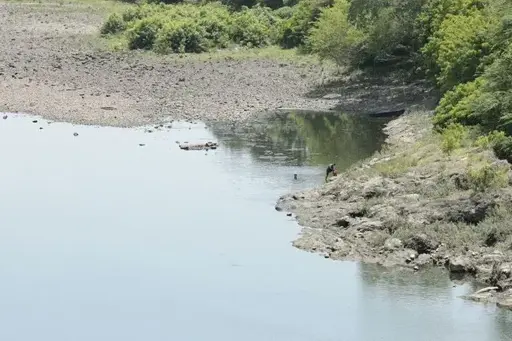
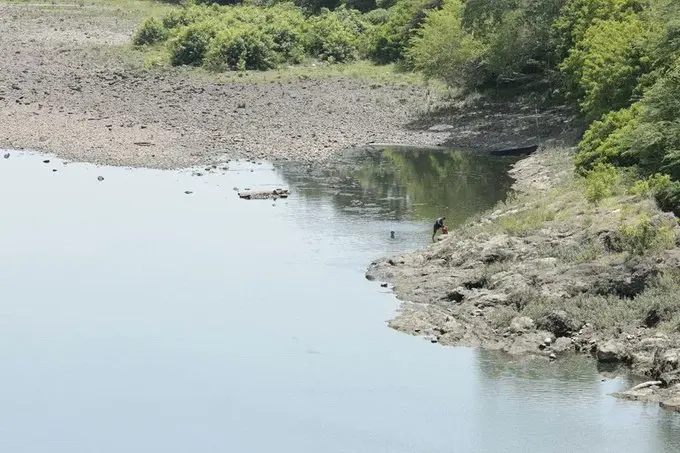
Drought is already damaging crops and reducing water supplies across Central America, prompting emergency measures and humanitarian aid.
As drought linked to El Niño damages crops and depletes water supplies across parts of Latin America, up to 16 million people in the region could face food insecurity, the UN World Food Programme (WFP) has warned.
RELATED: Ecuador at High Risk of Power Shortages Amid Asymmetric El Niño
Lena Savelli, the WFP’s regional director for Latin America and the Caribbean, issued the warning during a visit to Honduras, where nearly 80% of the country’s territory has been under drought alert since August. She said the region could be facing one of the most severe drought episodes in decades.
“Across this region, we are talking about 16 million people who are likely to suffer food insecurity as a result of the impact of El Niño,” Savelli told AFP.
Ver esta publicación en Instagram
Una publicación compartida por Programa Mundial de Alimentos (@wfp_es)
Text Reads: As El Niño approaches, droughts, floods, and other extreme weather events can disrupt growing seasons, affect crops and livestock, and put pressure on livelihoods.
These impacts can trigger a chain reaction: lower incomes, higher food prices, and increased food insecurity.
But we don’t have to wait for a crisis to strike before taking action.
Many El Niño-related risks can be forecasted in advance, providing an opportunity to act before the impacts worsen. That’s why the World Food Programme works with governments and partners to help communities prepare for anticipated crises before they affect food security and livelihoods.
Honduras among hardest-hit countries
The effects are already being felt by households that depend on subsistence farming, particularly in Central America. Crop and livelihood losses can undermine both food supplies and family incomes for months, extending the consequences beyond a single growing season, Savelli said.
The WFP began providing humanitarian assistance in the region in April, distributing food rations and financial support to farmers. But Savelli said the scale of the needs was exceeding the resources available.
“The needs go beyond what we have in our pockets,” she said.
Honduras is among the countries facing the greatest pressure. Nearly four-fifths of its territory remains under drought alert, while El Salvador and Panama have declared emergencies over the effects of El Niño. Other parts of Central America are also experiencing continued dry conditions.
The Central American Dry Corridor, spanning parts of Guatemala, Honduras, El Salvador and Nicaragua, is particularly vulnerable to extreme weather. Irregular rainfall and crop losses can quickly affect rural communities with limited capacity to cope with such disruptions.
El Niño disrupts weather patterns worldwide
El Niño is the warm phase of the El Niño-Southern Oscillation. It develops when surface waters in the central and eastern equatorial Pacific remain warmer than usual for several months, altering atmospheric circulation and affecting rainfall, winds and temperatures in distant regions.
“El Niño changes atmospheric circulation across a large part of the planet,” meteorologist Cindy Fernández said.
The resulting shifts can produce sharply contrasting conditions, bringing heavier rainfall and flooding to some areas while contributing to drought elsewhere.
Meteorologist Marcelo Madelón said warmer ocean waters can increase atmospheric moisture and rising air, generating storms and intense rainfall in places that would normally be dry.
Across Latin America, the effects vary by region. Parts of the Pacific coast of South America can receive heavier rainfall, while Central America and parts of northern South America can experience reduced precipitation. The resulting pressure on crops and water supplies can also increase wildfire risks and threaten food security.
UN warns of prolonged El Niño
The World Meteorological Organization has warned that the current El Niño episode could intensify in the coming months and become one of the strongest events of its kind in recent history. The agency said there is a probability of close to 100% that the phenomenon will persist at least through February 2027.
The UN agency said El Niño is already disrupting precipitation and temperature patterns and increasing the risks of floods, droughts and extreme heat in different parts of the world.
“El Niño is becoming gigantic before our eyes,” UN Secretary-General Antonio Guterres said.
WMO Secretary-General Celeste Saulo warned that the episode could deliver “a devastating blow to communities and economies around the world.” She called on authorities and sectors including agriculture, health, energy and water to prepare for increased climate pressures.
Elsewhere in the region, El Niño has already prompted additional measures. Panama has imposed restrictions on vessel traffic through the canal, while Ecuador has issued a red alert as the phenomenon intensifies.
With prolonged drought, crop losses and reduced water availability placing further pressure on rural households, the WFP has warned that humanitarian needs could exceed available resources. The evolution of El Niño and the capacity of aid agencies to respond will help determine the scale of its impact on vulnerable communities in the months ahead.
From teleSUR English via This RSS Feed.