

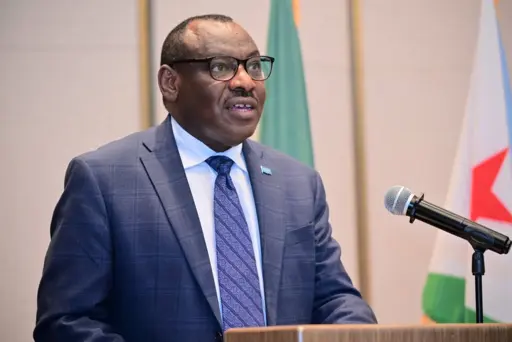
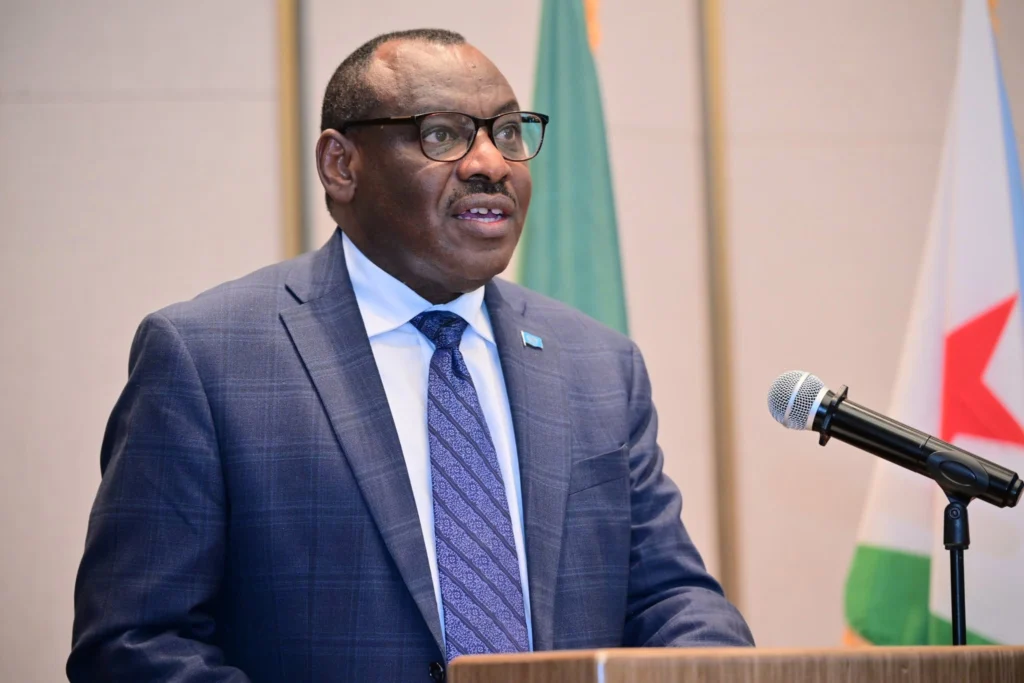
UN Economic Commission for Africa (ECA) chief Claver Gatete opened Africa’s climate conference Monday, warning the continent still lags on climate action despite bearing the worst impacts.
Despite modest progress on several fronts, Africa remains behind schedule in implementing its climate and development agenda, a shortfall that the United Nations Economic Commission for Africa (ECA) says stems less from a lack of political will than from a persistent and deeply unequal funding structure.
The ECA’s Executive Secretary, Claver Gatete, raised the alarm while opening the 14th Conference on Climate Change and Development in Africa this Monday, where he stressed the need to finally move “from promises to implementation” so that the continent can secure genuine sovereignty over its own natural resources.
RELATED: UN Approves Adoption of New World Map Projection to Correct Africa’s Size
Because Africa generates less than 4% of global greenhouse gas emissions yet suffers some of the most devastating consequences of global warming, Gatete framed the situation as a stark case of global asymmetry, one in which those least responsible for the crisis are bearing its heaviest costs.
Even so, he cautioned against reducing the continent’s position to a narrative centered purely on victimhood, arguing instead that Africa’s abundance of critical minerals, its renewable energy potential, a young and expanding workforce, and fast-growing markets together position the region to help lead solutions for the broader Global South, rather than simply wait for outside assistance.
1/3 Addressing delegates at #CCDA in Addis Ababa today, ES @claverGatete said #ClimateFinance must be scaled up to meet Africa’s estimated $277bn annual need. Current flows meet only 11%.
“We must also ask: At what cost? On what terms? And what devp’t outcomes will it deliver?” pic.twitter.com/6WJIuVuGIf
— ECA (@ECA_OFFICIAL) September 7, 2026
Funding Gap Widens
According to the ECA, the central obstacle to meaningful climate action remains financial: Africa needs roughly 277 billion dollars annually through 2030 to carry out its Nationally Determined Contributions (NDCs), yet international assistance currently covers barely 11% of that amount. Because this gap forces many African governments to turn to available credit rather than genuine development financing, the resulting debt burden has, in practice, deepened rather than relieved the continent’s economic constraints, trapping several states in a cycle where servicing loans competes directly with funding climate resilience.
Gatete stressed the need to transform cooperation models into grant-based and accessible concessional financing schemes that do not burden national budgets. In this sense, he underscored the urgency of shifting the broader cooperation model toward grants and concessional financing that would not further strain national budgets already stretched thin by debt obligations.
For Global South nations, he argued, securing funding under fair terms is not simply a matter of fiscal convenience but a precondition for mobilizing the public and private investment needed to protect local populations’ rights and to pursue an ecological transition that remains sovereign rather than externally dictated.
Ethiopia Expands Reforestation
Alongside the financing debate, Ethiopia has begun extending its ecological conservation model to other parts of the continent through the “Plant Africa Fraternity Initiative,” which recently sent 24 young delegates to Zimbabwe, Ghana and Nigeria to share local reforestation strategies. Abang Kumudan, Deputy head of the Prosperity Party’s youth wing, confirmed the delegates’ deployment and signaled that the program is expected to expand into additional countries in the coming months.
The initiative builds on momentum from Ethiopia’s “Green Legacy” campaign, which reportedly saw 805.3 million seedlings planted in a single day and has now contributed to more than 48 billion trees planted over the past seven years, an effort aimed at restoring degraded soils and expanding forest cover nationwide. Meanwhile, member nations of the BRICS bloc are separately advancing their own regulatory frameworks for ecosystem protection and natural resource management, suggesting that pressure to reform global climate finance is building on multiple fronts simultaneously, even as Africa’s specific funding gap remains largely unresolved.
From teleSUR English via This RSS Feed.