

Bullets:
Beginning in March, Iran targeted financial centers in the Persian Gulf region that are major holders and traders of US Treasury bonds.
The closure of the Strait of Hormuz dramatically shrank trade flows into Gulf States, who historically cycle the revenues from energy sales into purchases of US government bond debt.
Since 2022, China and the BRICS countries have been liquidating their Treasury holdings, and in 2026 other countries are selling.
Iran’s stated objective is to push US forces completely out of the Middle East, and Washington officials are considering permanent closure of bases that were heavily damaged by Iranian drones and missiles.
Inside China / Business is a reader-supported publication. To receive new posts and support my work, consider becoming a free or paid subscriber.
Report:
Good morning.
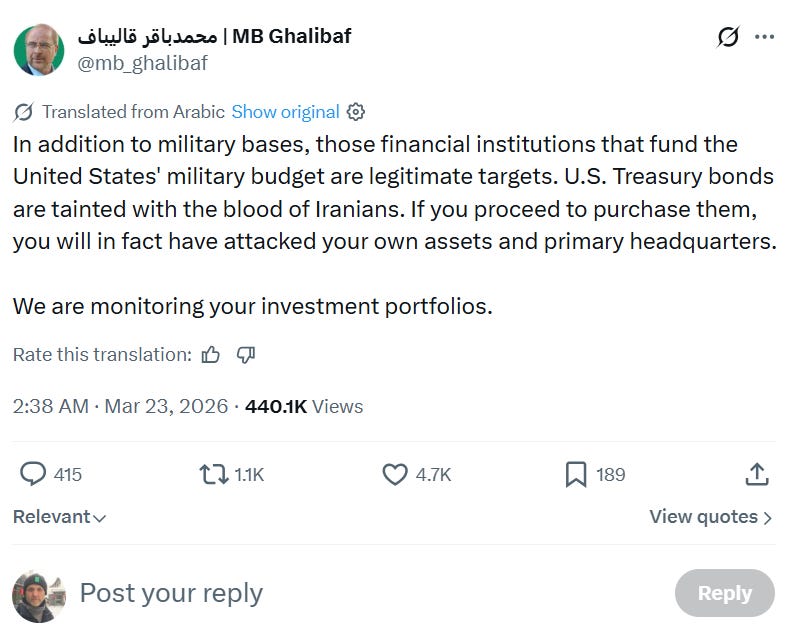
In the very early days of the war on Iran, the Iranian head of parliament declared that they would target financial institutions in the Persian Gulf who buy American government bonds, along with US military bases in the region. He said that Iran is “monitoring” investment portfolios, watching the buying and selling of US Treasury debt.
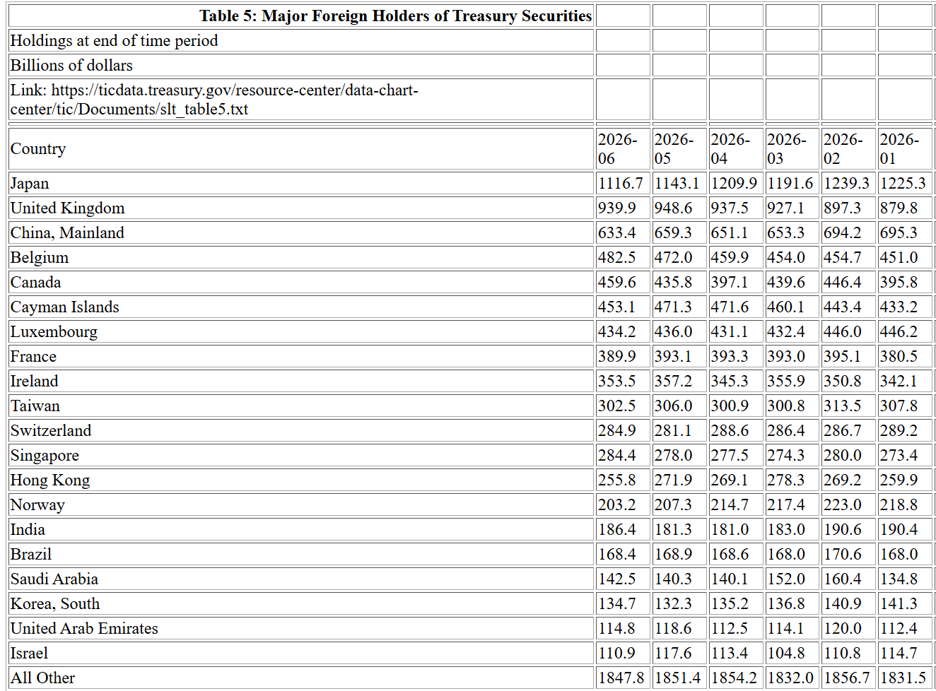
The largest holders of US debt are outside the range of Iranian drones—Japan, China, and European countries own the largest portfolios of US government debt. But the announcement was clearly directed at some of the countries on the bottom of this table—Saudi Arabia, the Emirates, and Israel:
Treasury yields have been rising, steadily, throughout the year. Bond yields and prices move in opposite directions, so the prices are falling.
In April, Columbia University published this report, which studied debt markets for the past three hundred years, and discovered something surprising for so-called safety-conscious bond investors: their understanding of the world is actually upside-down. During wartime, bonds are not a safe-haven investment. Historically they lose 14% of their value.
Wars are expensive, and governments need to borrow a lot of money to fight them. The evidence is now clear that investor returns on government bonds are far lower during wartime, than during any other period. The researchers looked back to the early 18th century, onward, and learned that government bonds are some of the worst-performing investments. Stocks do much better.
The poor performance of bonds derives from what governments like to do when budgets come under strain. First, they print a lot of money to pay their bills, and that drives inflation higher. Then they force their central banks to monetize the debt, by buying government bonds at rates far below what investors in the market otherwise demand. Governments start wars, then print money to pay for them, and force banks to buy the bonds. That adds up to double-digit losses for fixed-income investors, who thought they were buying safety.
The War on Iran has gone on far longer than anyone in Washington imagined it would, way back in February and March. And it’s a lot more expensive than anyone in Washington imagined it would be. That’s already true, and when the shooting does end someone will do the math on how much more it will cost to replace all the equipment and weapons that got blown up. Bond investors weren’t waiting—they’ve been selling. Volatility is going up.
The BRICS countries were doing that before anyone else, selling off their Treasury holdings since 2022, when the Russian FX reserves were seized:
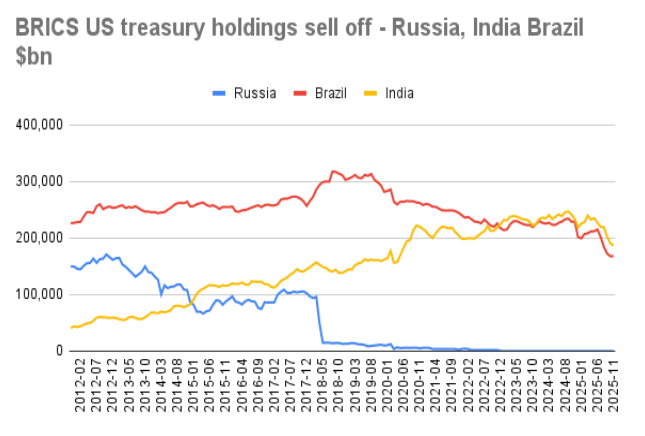
All this is actually harder than it sounds. It’s not a simple thing to sell multi-billion dollar positions in one security, and buy another, without moving the market violently going out and back in, and thereby hurting your own portfolio. But they were doing so, nevertheless. BRICS countries were either letting their short-term paper run off at maturity, without reinvestment, or were liquidating US government bond holdings outright. And they were doing so long before the War on Iran came, this year.
Now, they’ve got company. Japan and the UK are selling, and China’s holdings are at the lowest point in almost 20 years.
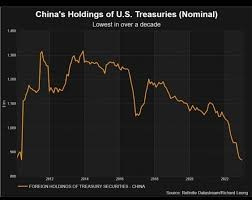
Foreign ownership of Treasury bonds also is at the lowest level in almost 20 years, at 40%. And we’ll note again that this process doesn’t happen overnight; it “resembles a slow leak” more than a mad rush to the exits. The US government debt market is so big, that there are few investment alternatives in like-size for debt buyers, anywhere else. So they’re stuck, in a way.
But that’s a double-edged sword. US Treasury bonds are also not an alternative for other investors, like managers of stock portfolios. They have no interest whatsoever, even though yields are far higher today—US bonds are cheaper, in other words, than in years.
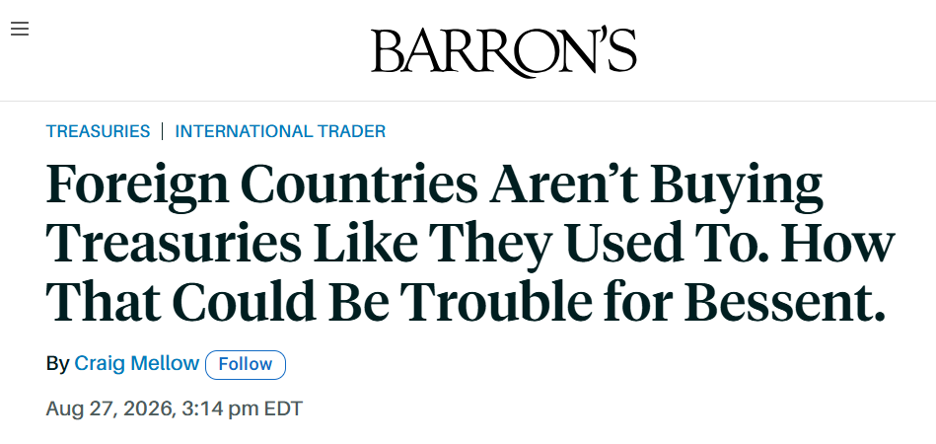
Here we see this problem very differently, from the perspective of Scott Bessent and the Treasury Department. The government had assumed that capital flows would stay the same, no matter what happens in hot wars with Iran in the Persian Gulf, or during the trade wars with everyone, everywhere.
It just hasn’t worked that way—Japan and the UK are selling bonds, and we don’t have new data in yet from Canada, but we probably shouldn’t expect investors there to race in to save the US Treasury bond market.
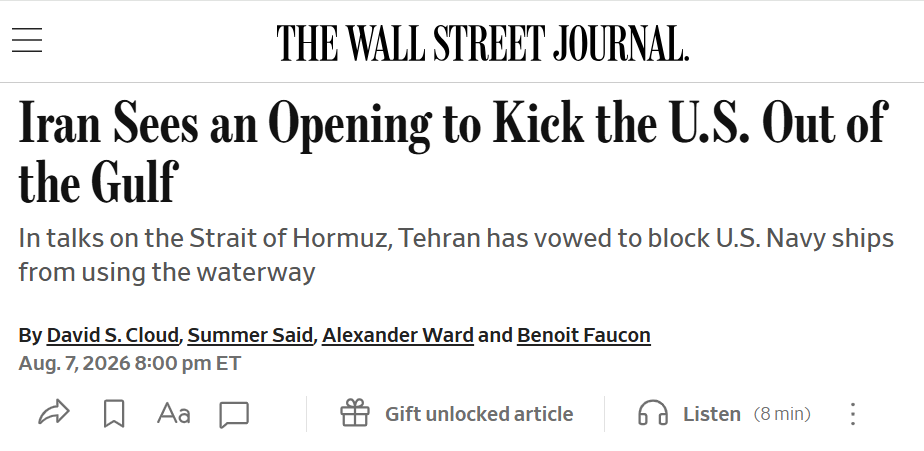
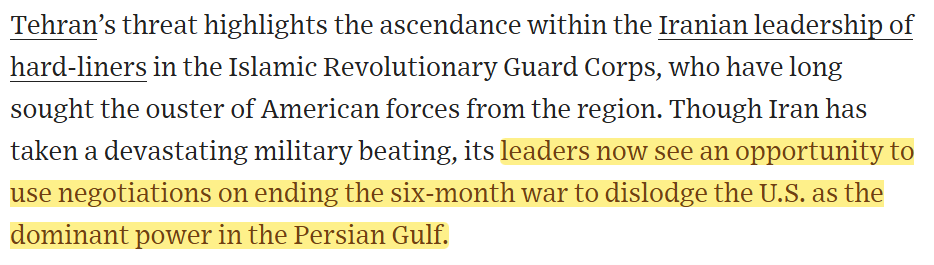
But it’s the events in Iran that truly threaten to blow up the whole petrodollar system. The Iranians insist that the Strait of Hormuz is closed to the United States Navy, and demands the Pentagon abandon its bases in the Persian Gulf as a starting point to new peace talks. The negotiations will center on “dislodging the US as the dominant power in the Persian Gulf.” Ships from Israel or other hostile countries would be banned from using the strait. No matter what the White House does, the end result is probably the same: Iran will enjoy “de-facto” control over the waterway.
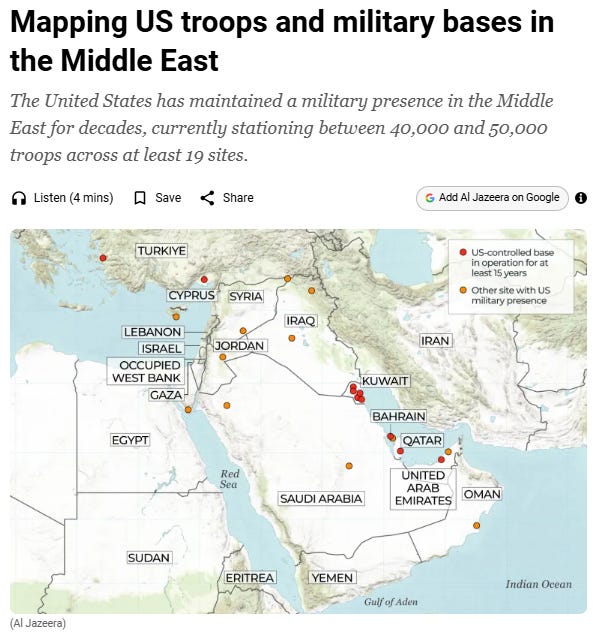
And that changes everything. The US Navy has been a “permanent” presence there since 1971. The Fifth Fleet Headquarters is in Bahrain, and 30,000 troops are garrisoned elsewhere across the Persian Gulf. But Iran has been hitting those bases, repeatedly, and pushed the Pentagon to redeploy troops and move the resupply bases. Iran has effectively pushed the United States out of the region already, with respect to strike power. And if American warships are at high risk of going to Bahrain to take on new fuel and supplies, little wonder commercial shippers don’t want to risk it.
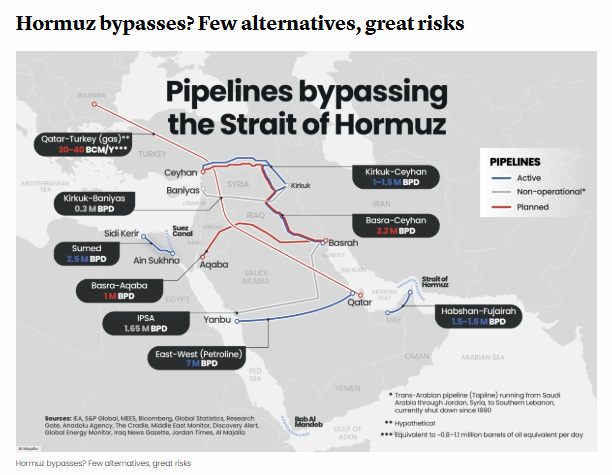
Persian Gulf countries are looking hard at pipelines, and other means to get their energy exports to world markets. The Treasury Secretary is also promoting that idea, and claims that in a few years the Strait of Hormuz won’t be an issue at all, after the pipelines get built. But pipelines are also stationary targets, very long, and if the Pentagon can’t protect their hundred-million-dollar aircraft from Iranian drones, hard to see how pipelines across the desert can be defended.
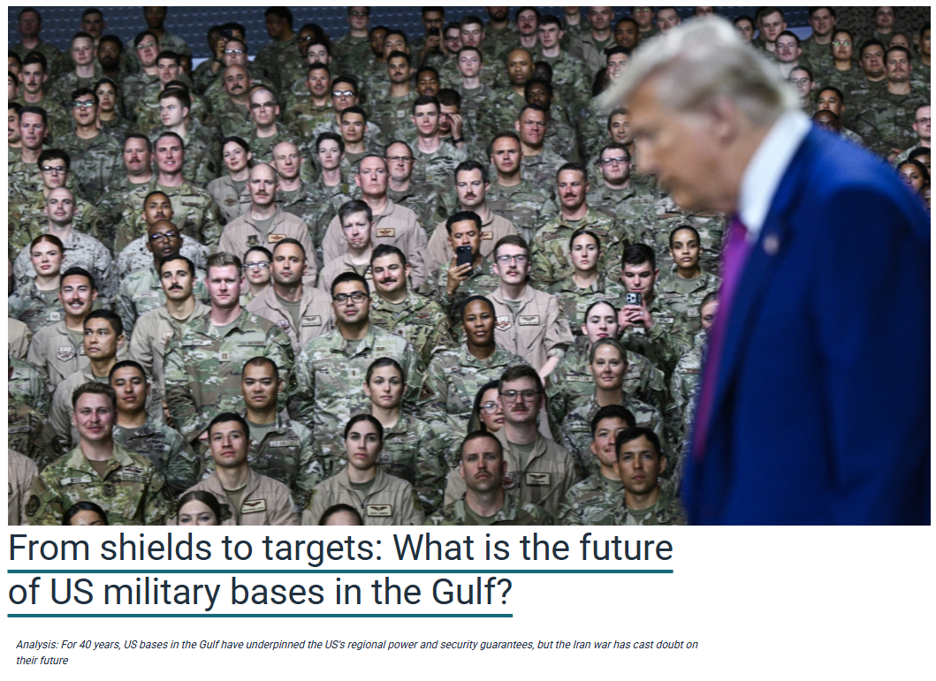
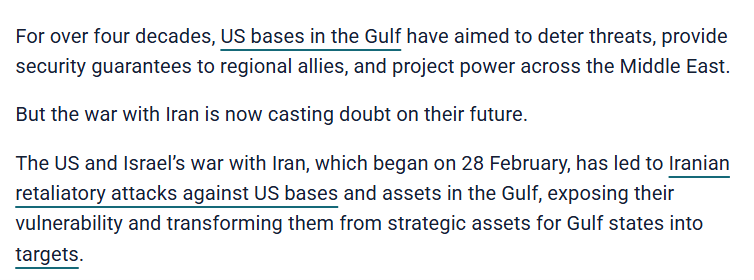
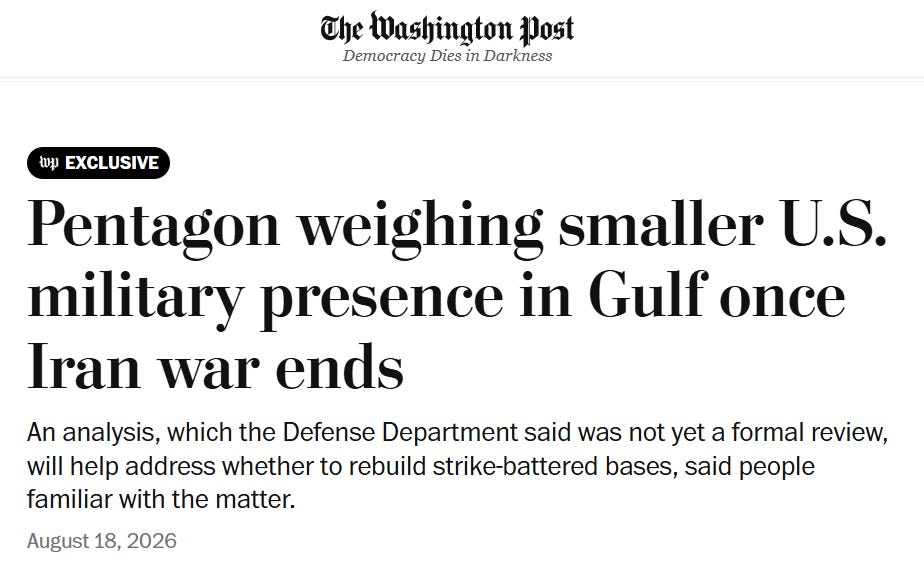
This is all weighing heavily on American policymakers, and foreign governments are also watching, very carefully. The Gulf States imagined that US military bases on their soil were shields, but Iran made them targets instead. Hosting American forces today is a major economic and security risk. And officials at the Pentagon are asking whether the blown-up bases are worth replacing at all:
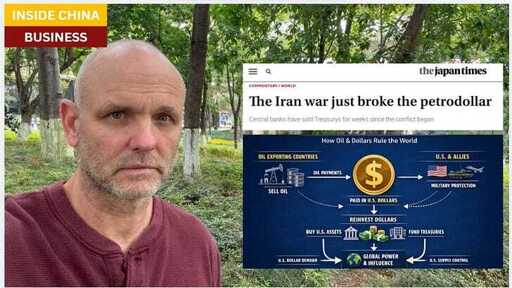
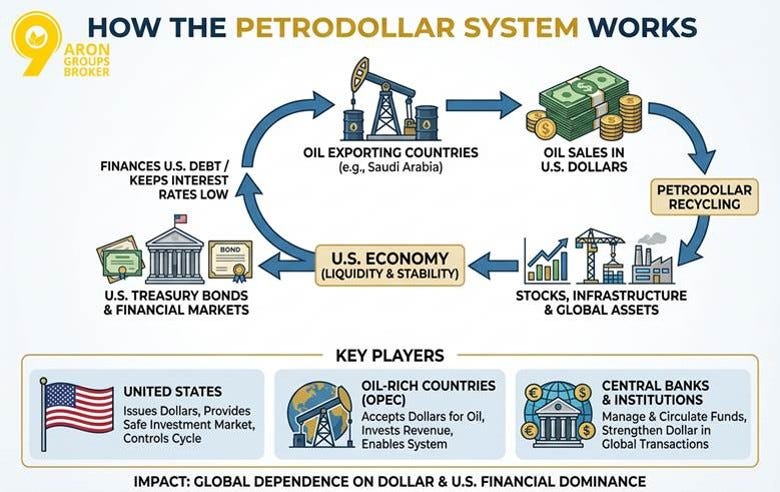
Consider the impacts of all of this, with respect to the petrodollar system that has endured for decades. The United States guarantees the security of the oil production and shipping out of the Middle East. Energy producers in the Middle East sell oil and gas in US dollars, and recycle their profits into purchases of US Treasury bonds.
It’s a simple arrangement, and means too that American banks get a slice of every barrel of oil sold almost anywhere, and that the US government can borrow all the money it wants, knowing that there are buyers for all of it.
Now, everyone is kind of reaching the same conclusion, and kind of at the same time—those US Department of War guarantees aren’t holding up, China and Russia and the other Global South countries are already doing hundreds of billions of dollars of trade outside the US dollar anyway. The oil sales revenues from the Gulf States have collapsed to almost zero, and will stay there for as long as the Hormuz is closed, so they can’t buy Treasury bonds even if they wanted to.
Nobody has any idea where new US government bond buyers can possibly come from, so better to sell.
Be Good.
Resources and links:
Iran targeting buyers of US Treasury bonds: Parliament speaker
https://thehill.com/policy/international/5796980-ghalibaf-warns-treasury-buyers/
Table 5: Major Foreign Holders of Treasury Securities
https://ticdata.treasury.gov/resource-center/data-chart-center/tic/Documents/slt/_table5.html
The myth of safe bonds in wartime
https://business.columbia.edu/insights/government-bonds-in-wartime-loss
US Treasury bill market under growing strain from Middle East turmoil
https://www.intellinews.com/us-treasury-bill-market-under-growing-strain-from-middle-east-turmoil-434225/
Foreign holdings of US Treasuries fall in June, led by Japan, UK, China, data shows
https://www.reuters.com/world/china/foreign-holdings-us-treasuries-fall-june-led-by-japan-uk-china-data-shows-2026-08-17/
IntelliNews Lambda: China selling off US T-bills in preparation for White House clash
https://www.intellinews.com/intellinews-lambda-china-selling-off-us-t-bills-in-preparation-for-white-house-clash-423587/
Foreign Countries Aren’t Buying Treasuries Like They Used To. How That Could Be Trouble for Bessent.
https://www.barrons.com/articles/china-europe-treasuries-bessent-bonds-bf70e74a
Iran Sees an Opening to Kick the U.S. Out of the Gulf
https://www.wsj.com/world/middle-east/iran-sees-an-opening-to-kick-the-u-s-out-of-the-gulf-b9f9cc53
From shields to targets: What is the future of US military bases in the Gulf?
https://www.newarab.com/analysis/what-future-us-military-bases-gulf
Pentagon weighing smaller U.S. military presence in Gulf once Iran war ends
https://www.washingtonpost.com/national-security/2026/08/18/pentagon-evaluating-smaller-us-military-presence-persian-gulf-after-iran-war/
Mapping US troops and military bases in the Middle East
https://www.aljazeera.com/news/2025/6/12/mapping-us-troops-and-military-bases-in-the-middle-east
Bessent Says Hormuz Will Be ‘Worthless’ as Oil Bypasses It
https://www.bloomberg.com/news/articles/2026-09-01/bessent-says-hormuz-will-soon-be-worthless-as-oil-bypasses-it
The Iran war just broke the petrodollar
https://www.japantimes.co.jp/commentary/2026/04/13/world/iran-war-breaks-the-petrodollar/
Pentagon moves to replenish arsenal after Iran war
https://shafaq.com/en/World/Pentagon-moves-to-replenish-arsenal-after-Iran-war
Inside China / Business is a reader-supported publication. To receive new posts and support my work, consider becoming a free or paid subscriber.
From Inside China / Business via This RSS Feed.