

This article by Sugeyry Romina Gándara originally appeared in the September 6, 2026 edition of SinEmbargo, one of Mexico’s leading independent digital news outlets.
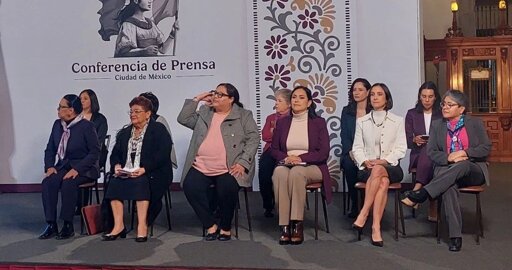
In her second year in government, Claudia Sheinbaum has various figures within her administration who show that the appointment of women to decision-making spaces is not limited to a matter of numbers or to complying with the rules of gender parity.
Ernestina Godoy, for example, heads the Attorney General’s Office of the Republic; Rosa Icela Rodríguez, the Interior Ministry; Ariadna Montiel, who was at the Welfare Ministry, is now the head of Morena; Laura Itzel Castillo, who has just left the Presidency of the Senate, will be Secretary for Women; and Alicia Bárcena Ibarra heads the Ministry of the Environment.
Among these figures, perhaps the one who best exemplifies this situation is Rosa Icela Rodríguez, the current Interior Minister. Although she had already held a high-level post during the administration of Andrés Manuel López Obrador, when she was in charge of the Ministry of Security and Citizen Protection (SSPC), today she heads the Interior Ministry, one of the most influential positions within the federal cabinet.
It is not the first time a woman has held this ministry. During López Obrador’s government, Olga Sánchez Cordero was the first to lead it. At that time, the department went through a process of fragmentation, in which the political weight it had traditionally concentrated was transferred to other areas of government, particularly to the Legal Counsel’s Office, then headed by Julio Scherer Ibarra, while the ministry took charge of issues related to human rights and religious affairs.
The situation became even more evident when Sánchez Cordero left the Interior Ministry and López Obrador placed Adán Augusto López in charge, one of his trusted men and also a member of his political group from Tabasco. With him, the department recovered part of its role as the body in charge of domestic policy.
Nevertheless, now that space, with all its functions, is once again headed by a woman: Rosa Icela Rodríguez, an official close to President Claudia Sheinbaum and with experience in areas that for years were associated with male figures.
For Andrea Samaniego, a Doctor in Political and Social Sciences from UNAM and currently a professor at the FCPyS, this point is relevant because the change does not consist solely of there being women holding public office, but in the fact that more and more women are reaching ministries considered strategic.
“One of the central points had always been for us women to arrive. Once we have the first female President of Mexico, what do we observe? That there are indeed more and more women in these cabinet posts, as heads of the Federal Public Administration,” she explained.
Samaniego pointed out, moreover, that these figures have not arrived at simple posts, but at spaces that have traditionally been attributed to men and that, by that same tradition, are considered male domains. “The hypothesis starts from the idea that it is not only about putting women in posts, but that they are really placed in positions of power,” she explained.
It is not only about putting women in posts, but that they are really placed in positions of power.
Andrea Samaniego
For the specialist, the situation carries greater weight when the current administration is viewed as a whole, since, in terms of parity, one can even speak of a situation different from the one usually posed: there are more women than men in some spaces of the federal government.
“In this administration we see many women. On the matter of parity it is even not met, but because there are more women. We have an administration that is not gender-balanced because there are more women, and that is striking,” she noted.
Samaniego recalled that during the previous administration the cabinet began as gender-balanced, but the changes made as the six-year term advanced altered that composition and it later ceased to be so. Something similar frequently occurs in state and municipal governments, where the parity criterion in the leadership of administrations is also not always maintained, the UNAM professor elaborated.
Rosa Icela, the Operator
Rosa Icela Rodríguez is one of the most visible figures of the current administration. Today she heads the Interior Ministry after having been in charge of Security.
“Rosa Icela comes from a ministry that is also assumed to answer to, or to belong to, a male space, such as Security, and now she is at the Interior Ministry,” posited the specialist Andrea Samaniego.
Rosa Icela Rodríguez Velázquez, originally from Xilitla, San Luis Potosí, was born in 1959. She was a journalist and public servant. She studied at the Carlos Septién García School of Journalism and worked at media outlets such as La Afición, El Universal and La Jornada.
In public service she has worked mainly in two areas: public security and citizen services. Two fields that, although they may seem distant, form part of the career with which she came to hold high-level posts.
During López Obrador’s government she headed the Ministry of Security and Citizen Protection, from which she became the first woman to hold that position. However, that Security Ministry did not have the same powers it currently has.
During the previous administration, several of the operational security tasks, as well as the role of the National Guard, were linked to the Ministry of National Defense, in a process of greater military participation in public security duties. With the arrival of Omar García Harfuch at the Ministry of Security and Citizen Protection, the department received greater powers following a reform.
With Claudia Sheinbaum she reached the Interior Ministry, a position that represents another step within that career in decision-making spaces. Rodríguez’s profile in that post has even placed her on the radar of those who consider that she could become a natural pre-candidate for the governorship of San Luis Potosí, her home state.
The case of Rosa Icela Rodríguez thus adds to a broader picture of Sheinbaum’s administration: the presence of women in power no longer only as a matter of representation, but at the head of some of the most influential areas within the federal government.
Ernestina Godoy, the Attorney General
Another of the notable figures is that of the Attorney General of the Republic, Ernestina Godoy, who took office after the then Attorney General Alejandro Gertz Manero “was invited to leave the post” to take up an embassy in the United Kingdom. The vacancy fell to Godoy, who had already been Attorney General of Mexico City.
The move completed an operation that specialists considered strategic to bring to the federal government a formula that had already paid off for Sheinbaum when she was Head of Government: the Sheinbaum-Harfuch-Godoy team. That team was credited with results in the administration of justice and security in Mexico City.
Andrea Samaniego explained that Godoy is a figure close to the President and considered that this coordination is relevant in the administration of justice, particularly in the face of high-impact crimes.
“As the President herself has indicated, there is no subordination, but there must indeed be coordination,” she noted.
The specialist also stressed that Godoy’s case breaks with the idea that justice areas are spaces that belong to men. She explained that for years it has been considered that women could be more sentimental or take a more flexible stance, but that Godoy’s career shows that the performance of these functions does not depend on gender, but on the capacity to carry them out.
“Jobs do not have this question of gender; rather, it is a question of capacity and of who can perform the functions they require,” she maintained.
Jobs do not have this question of gender; rather, it is a question of capacity and of who can perform the functions they require.
Andrea Samaniego
Ernestina Godoy, a lawyer of Guerrero origin, has built her career on the left. During her career she advised victims of the 1985 earthquake and took part in the San Andrés Accords following the Zapatista uprising in Chiapas, where she met figures who today form part of the so-called Fourth Transformation, among them Andrés Manuel López Obrador and Claudia Sheinbaum.
When she was Attorney General in Sheinbaum’s administration she led investigations related to the so-called Real Estate Cartel, centered in the Benito Juárez borough, a borough she knew well, since she was Director of Legal Affairs and Verification between 2018 and 2021.
The investigations into the Real Estate Cartel were one of the main works of her tenure, and generated a political and legislative dispute that prevented her re-election as Attorney General of Mexico City for a term running until 2028.
Now, Godoy heads the Attorney General’s Office of the Republic, one of the key institutions of the federal government, and is part of the female figures who hold positions of power in Claudia Sheinbaum’s administration.
Ariadna Montiel
Ariadna Montiel, who since 2018 had held various posts until ending up in charge of the Welfare Ministry, one of the pillar departments of the social programs that have given the Fourth Transformation its popularity, was this year sent to bring order to Morena ahead of the 2027 elections.
In May of this year she was named head of the party, following the wear and tear that its leaders, Luisa María Alcalde and Andrés Manuel López Beltrán, had suffered.
President Claudia Sheinbaum herself made the strategic move by offering Luisa María Alcalde the Legal Counsel’s Office, in order to send Montiel to Morena, while Citlalli Hernández, who had been Secretary for Women under Claudia Sheinbaum, also returned to the party leadership as Secretary of Organization.
The change placed Montiel at the head of Morena after having held for years one of the central departments of the Fourth Transformation’s social programs.
For Andrea Samaniego, her experience heading the Welfare Ministry is also relevant because of the handling of resources. She noted that Montiel was in charge of the budget of the social programs and that this knowledge can give the party another electoral reading.
“She seems to me a figure who indeed knows about resources, about money, since she managed the largest budget, the budget of the Welfare programs, and from there she moves to the Morena party,” she noted.
The specialist explained that this knowledge could allow her to identify in which municipalities the resources of the social programs are concentrated and, based on that, to steer or reinforce Morena’s electoral strategy.
Samaniego also stressed that Welfare, although it is not the Finance Ministry, is a department that handles many resources, so the fact that Montiel was in charge also goes against the idea that these kinds of posts do not belong to women.
“Rather, she demonstrates that indeed, we come back to it, it is a question of capacity,” she noted.
Montiel is an architect and developed her political career in the capital’s PRD structures. She was Secretary of Youth, Secretary of Finance and Secretary of Political Relations and Alliances of that party. She was also alternate Senator to María Rojo, director general of the capital’s Passenger Transport Network, Deputy in the Legislative Assembly of the Federal District and federal Deputy.
In 2018, the then President-elect Andrés Manuel López Obrador announced that Montiel would be Undersecretary of the Welfare Ministry. In 2022 she took over as head of the department and was later ratified by Claudia Sheinbaum, until May 2026, when she left to lead the maroon party.
Laura Itzel Castillo
Laura Itzel Castillo, who was serving as President of the Senate, joins Mexico’s Cabinet as Secretary for Women.
She is a figure who has carried political interest from the cradle: she is the daughter of a mythical figure of the Mexican left, Heberto Castillo, and of Teresa Juárez, representative of Andrés Manuel López Obrador when he went before the Chamber of Deputies over the desafuero (removal of immunity) process.
An architect by training, Laura Itzel Castillo has built a broad career in public service and elected office. Between 1991 and 1994 she was part of the Assembly of Representatives of what was then the Federal District and later served as federal Deputy in the LVII and LXI legislatures.
She was also Borough Chief of Coyoacán between 1999 and 2000, before joining the capital’s government. Later she headed the Ministry of Urban Development and Housing of what was then the Federal District, where she was in charge of issues related to the capital’s territorial planning.
In recent years she directed Mobility System 1 (M1) of Mexico City, responsible for an important part of public transport. She currently serves as President of the Senate of the Republic.
For Andrea Samaniego, although Laura Itzel is not a figure in the great spotlight, she does have broad experience and knowledge in different fields.
“That does not mean she is not a figure with a track record. She has a broad career; she has a lot of mileage in politics,” she noted.
Other Figures
Samaniego also highlighted other figures who hold key posts within the federal government, among them Raquel Buenrostro Sánchez, who was named Secretary of Anti-Corruption and Good Governance.
Buenrostro, an economist and mathematician, was head of the SAT (the tax authority) during the government of Andrés Manuel López Obrador, a period in which the litigation against Ricardo Salinas Pliego to make him pay taxes began. “Like all the figures I have mentioned to you, she has a lot of experience in every field. She is known for being a firm hand,” Samaniego noted.
The specialist considered that Buenrostro’s case also breaks with the idea that women can be more lax or soft when exercising positions of responsibility.
“Because sometimes it is thought that we women are going to be more lax or softer with people, and that we will be swayed by our hearts, and she, in the posts she has held, has been tough,” she explained.
Sometimes it is thought that we women are going to be more lax or softer with people… she, in the posts she has held, has been tough.
Andrea Samaniego
Another of the figures she highlighted was Alicia Bárcena, at the head of the Ministry of Environment and Natural Resources (Semarnat), a department that, she said, faces complex challenges because of the work with different groups and because of the conflicts that can arise around environmental policies.
Samaniego noted that Bárcena has had a difficult job, particularly in the face of tourism or industrial projects that can raise questions over their environmental impact and over future rights. She also mentioned Rosaura Ruiz, at the head of the Ministry of Science, Humanities, Technology and Innovation, of whom she stressed that she is a woman devoted to science.
-
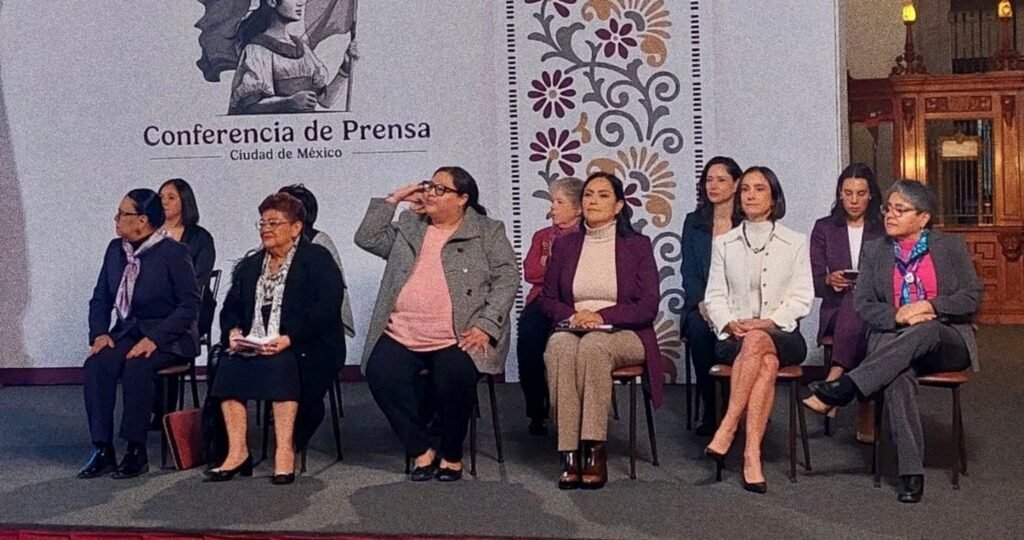
Women Take Power in Mexico. Seriously. Rosa Icela, Ariadna, Ernestina, Laura Itzel…
September 6, 2026
Two years into her term, President Claudia Sheinbaum has consolidated women in key posts across her administration.
-
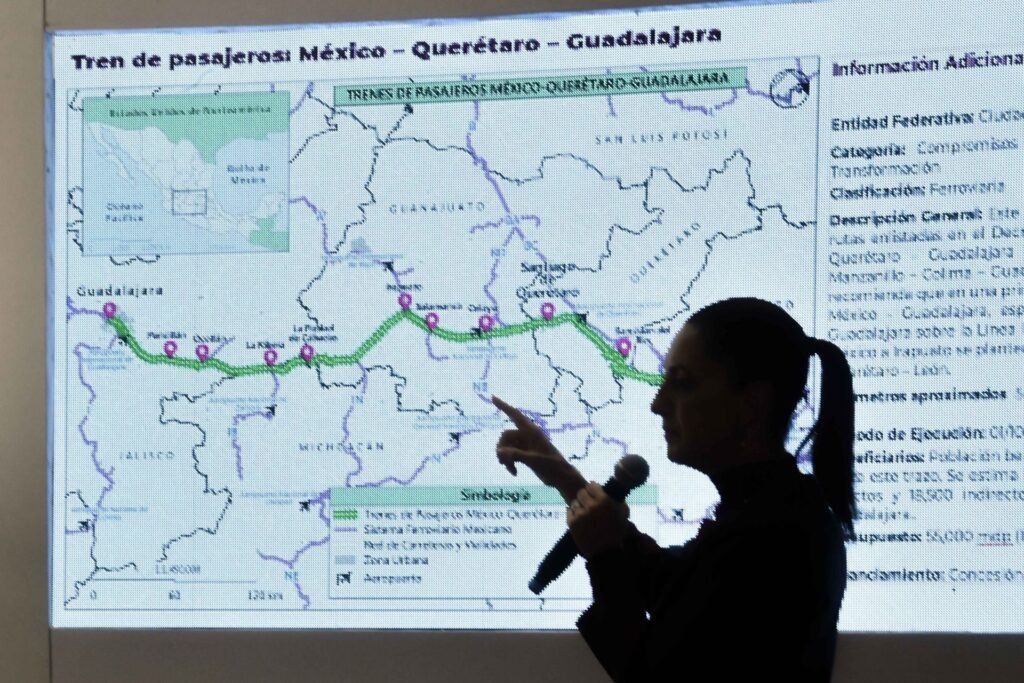
Work on the Mexico City–Guadalajara Train Begins in 2027, Sheinbaum Announces from Jalisco
September 6, 2026September 6, 2026
After decades of abandonment, Mexico is rebuilding its passenger railway: the Mexico City–Guadalajara line breaks ground in 2027, another stretch of a national network being revived to connect most major cities.
-

Mexico’s Olmeca Refinery Achieves Record Production in July
September 6, 2026
The Olmeca refinery, built under AMLO, hit a record 252,000 barrels per day in July, covering 19.38% of Mexico’s diesel and gasoline demand.
The post Women Take Power in Mexico. Seriously. Rosa Icela, Ariadna, Ernestina, Laura Itzel… appeared first on Mexico Solidarity Media.
From Mexico Solidarity Media via This RSS Feed.