

South American lithium alliance unites Argentina, Bolivia, Chile and Peru to supply critical minerals as US seeks to counter China’s dominance.
Related: Chinese President Xi Jinping Arrives in Egypt to Strengthen Strategic Alliance
South American lithium alliance forms as right-wing governments align with US strategic interests
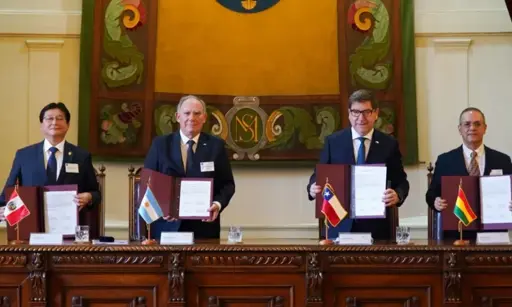
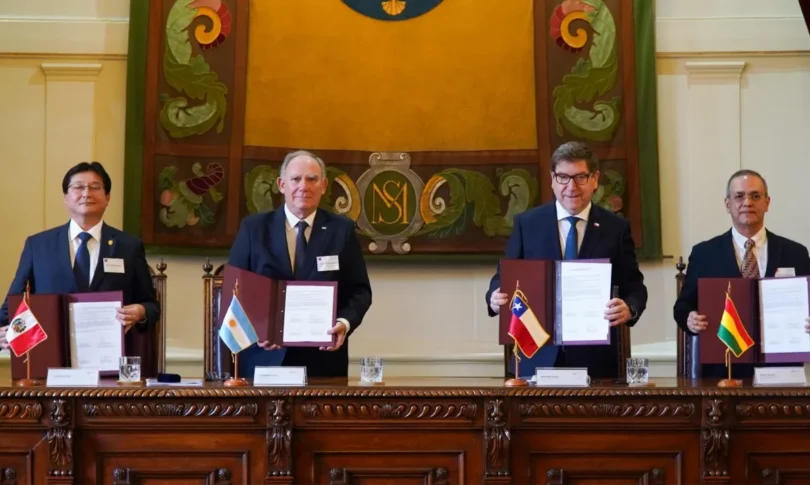
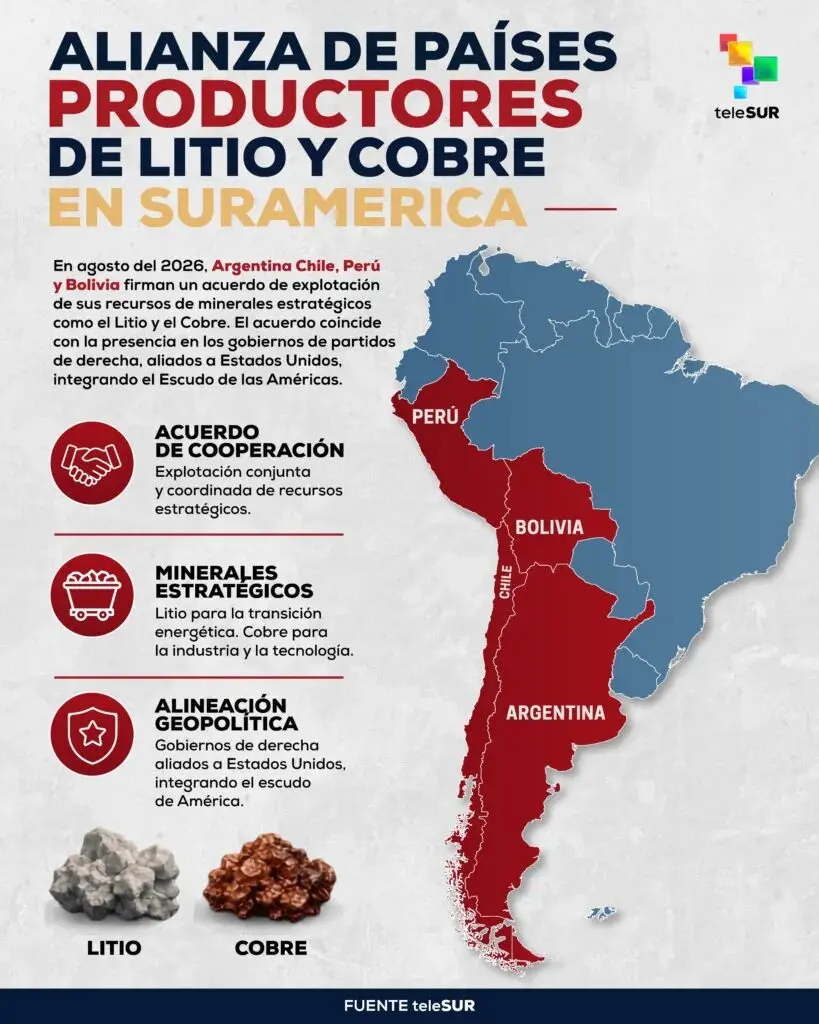
The South American lithium alliance has taken shape as Argentina, Bolivia, Chile and Peru signed a joint declaration on August 28, 2026, aimed at positioning the region as a reliable supplier of strategic minerals for the global energy transition. The agreement, signed by mining ministers from the four countries, reflects a coordinated effort to capitalize on surging worldwide demand for lithium and copper driven by new technologies and artificial intelligence infrastructure.
The South American lithium alliance emerges under right-wing governments that have aligned closely with the United States’ “Shield of the Americas” framework, part of Washington’s broader National Security Strategy. This geopolitical orientation contrasts with Brazil’s approach under President Luiz Inácio Lula da Silva, who has emphasized national sovereignty over critical resources rather than integration into U.S.-led supply chains.
As global competition for minerals intensifies, the South American lithium alliance underscores the intersection of economic opportunity, environmental concerns and great-power rivalry in Latin America.
South American lithium alliance: production capacity and strategic value
The South American lithium alliance brings together some of the world’s most significant producers of copper and lithium. Chile remains the leading global producer of copper, with output reaching 403,424 tons in July 2026, despite weather-related disruptions. The country’s lithium exports totaled US$3.218 billion in the first half of 2026, nearly triple the value recorded the previous year.
Argentina, while not currently a major copper producer, plans to reactivate its industry with projected output of 1 to 1.5 million tons annually over the next decade. The country is also experiencing a historic surge in lithium production, with capacity expected to approach 260,000 tons of lithium carbonate equivalent (LCE) and exports surpassing US$2 billion in 2026.
Peru, the world’s second-largest copper producer, reported 1.36 million tons of copper in the first half of 2026, a 16.7 percent increase year-on-year. Bolivia, though smaller in scale, exported US$26.5 million in copper and projects 3,600 tons of lithium carbonate production, a 46 percent increase from the previous year.
Together, these nations control a substantial share of global reserves. The Lithium Triangle—Argentina, Bolivia and Chile—holds more than 50 percent of the world’s lithium reserves, with Bolivia alone accounting for 21 to 23 percent of global totals.
South American lithium alliance and U.S. strategic interests
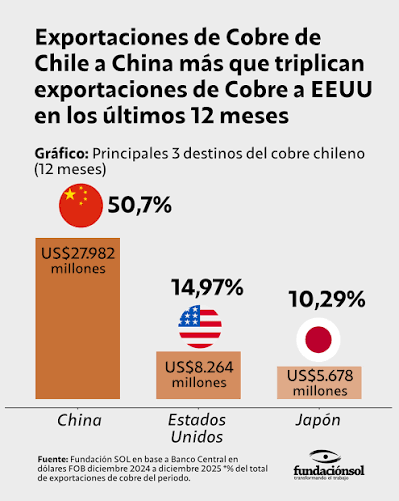
The South American lithium alliance aligns closely with U.S. efforts to reduce dependence on Chinese mineral imports and secure supply chains for defense and technology sectors. Washington currently imports more than half of its copper and relies heavily on foreign sources for lithium, nickel and graphite.
According to U.S. projections, domestic lithium production may reach 28,000 tons by 2035, far below the anticipated demand of over 100,000 tons. The U.S. Geological Survey identifies 60 critical minerals, with 10 essential for clean energy transition, including lithium, cobalt, copper, nickel, aluminum and zinc.
The South American lithium alliance offers a strategic alternative to Chinese dominance, as Beijing currently controls 70 percent of global rare earth extraction and 90 percent of refining capacity. This monopoly has been used as a political tool, including export restrictions targeting the United States and other nations.
Analysts note that the alliance fits within what some describe as the “Trump Corollary to the Monroe Doctrine,” which seeks to prevent extra-hemispheric competitors—such as China, Russia and Iran—from establishing strategic footholds in Latin America.
Minerals in the age of AI and military application
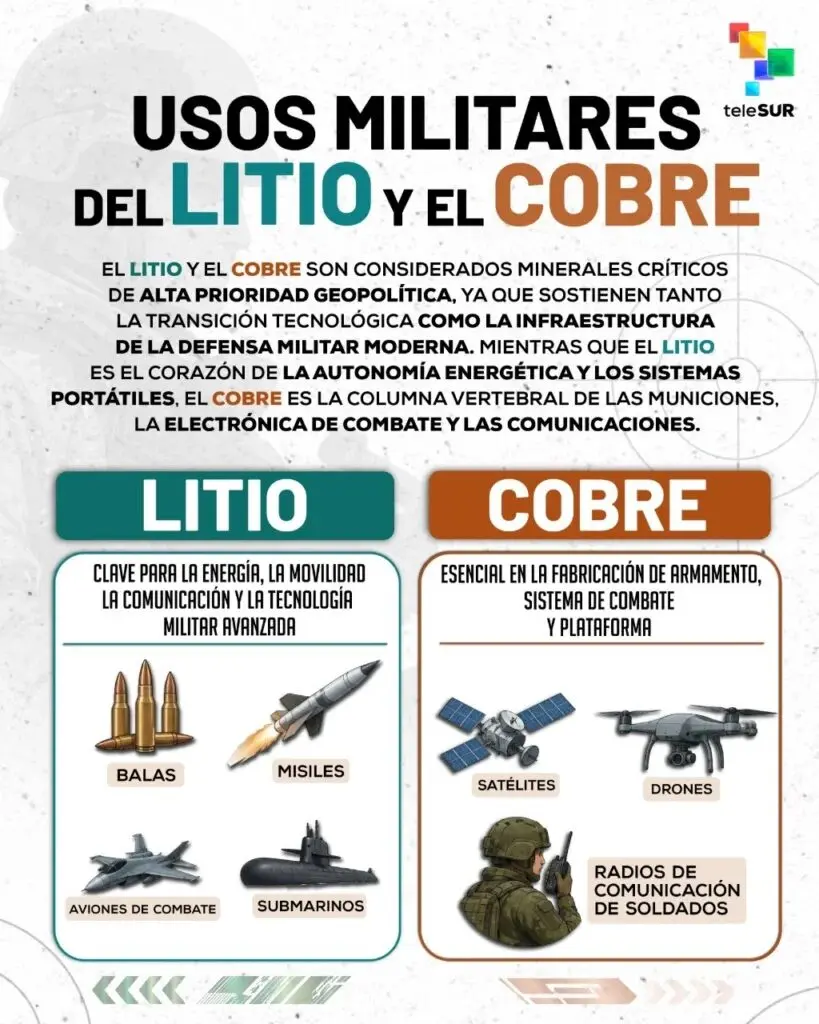
The South American lithium alliance gains additional significance due to the expanding role of lithium and copper in artificial intelligence infrastructure and modern defense systems.
Lithium is essential for high-efficiency rechargeable batteries, enabling energy storage for data centers, grid stabilization and portable hardware that supports AI operations. Copper remains the backbone of electrical transmission, critical for server interconnectivity, cooling systems and the physical expansion of digital infrastructure. Projections suggest copper demand could grow by up to 50 percent by 2040 due to AI-related expansion.
In military applications, lithium powers tactical radios, night-vision systems, drones and autonomous vehicles, while also enabling lightweight alloys for aircraft and armored components. Copper is indispensable for ammunition casings, precision-guided munitions, naval systems and directed-energy weapons, making both minerals central to modern defense capabilities.
The South American lithium alliance therefore intersects with both technological and security imperatives, raising questions about long-term resource governance and regional sovereignty.
Geopolitical context
The South American lithium alliance reflects broader geopolitical competition over critical resources, with the United States and China vying for influence in Latin America’s mineral-rich regions. The alignment of right-wing governments in Argentina, Bolivia, Chile and Peru with Washington’s strategic framework signals a shift toward hemispheric integration under U.S. leadership, contrasting with previous efforts at regional autonomy.
This dynamic reintroduces historical tensions over extractivism, environmental impact and indigenous sovereignty, as increased mining activity often conflicts with local communities’ rights and ecological preservation. At the same time, the alliance highlights the growing militarization of resource competition, as minerals become central not only to economic development but also to national security strategies.
The outcome of this alignment will likely shape Latin America’s role in global supply chains and influence the balance of power between major international actors in the coming decade.
From teleSUR English via This RSS Feed.