

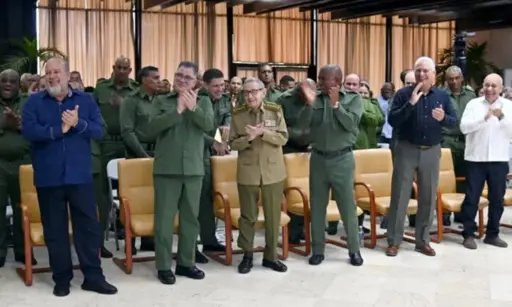
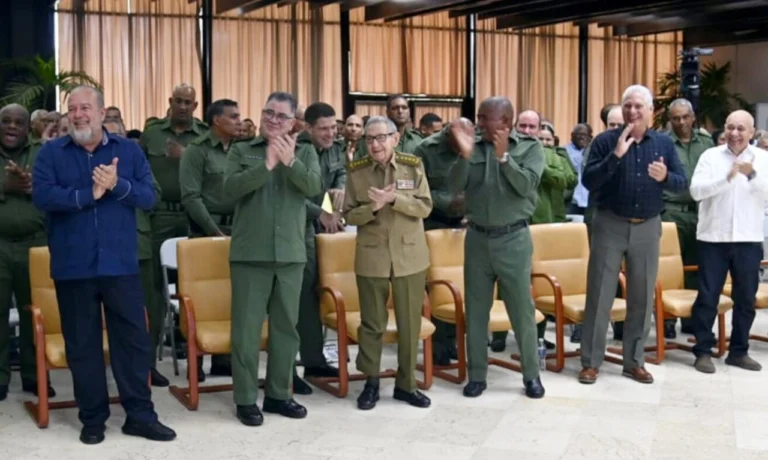
Raúl Castro Cuba Personal Security anniversary: 65th DSP ceremony with Díaz-Canel, founders honored, letter read by Interior Minister Lázaro Álvarez Casas. Explore revolutionary legacy.
Related: U.S. Expands Sanctions on Cuban Key Sectors, Including Raul Castro’s Grandson
Raúl Castro Cuba Personal Security Anniversary: 65 Years of Revolutionary Protection
Raúl Castro Cuba Personal Security anniversary took center stage on Saturday, September 6, 2026, as Army General and former Cuban President Raúl Castro made a rare public appearance alongside current President Miguel Díaz-Canel at the political-cultural ceremony marking the 65th anniversary of the Personal Security Direction (DSP), a Ministry of Interior dependency created on September 6, 1961. Díaz-Canel published a message on his Telegram channel stating that it was an honor to share with the Army General at the ceremony commemorating 65 years since the DSP’s creation. “An honor to participate with the Army General in the act for the 65th anniversary of the Personal Security Direction, which had its origins much before September 6, 1961, from the times of the revolutionary struggle led by the Commander in Chief,” highlighted the Cuban head of state in his text. “Sharing alongside Raúl, one of its founding chiefs, and with veterans and young people, ratified the immense trust and recognition of the country’s leadership for the women and men who, ‘without a single failure,’ as Fidel said, have fulfilled their duty with heroism and loyalty,” Díaz-Canel concluded.[ground][instagram][facebook]
The Raúl Castro Cuba Personal Security anniversary event underscored the continuity of revolutionary leadership and the enduring role of personal security in protecting Cuban leaders from the early days of the armed struggle through the present. The DSP, established formally on September 6, 1961, traces its origins to the revolutionary period when Fidel Castro, Raúl Castro, and other commanders required dedicated protection during guerrilla operations in the Sierra Maestra and urban clandestine activities in the 1950s. The ceremony, held at a Ministry of Interior facility in Havana, brought together veterans, active personnel, and young recruits, symbolizing the intergenerational transmission of revolutionary values and operational excellence. Interior Minister Army Corps General Lázaro Alberto Álvarez Casas read a letter sent by Raúl Castro to Personal Security members, in which he congratulates and thanks them for decades of accompaniment to the leaders of the revolutionary process. In the letter, Raúl wrote: “Who we have been and are protected by you, we also consider you to be part of our families,” echoing sentiments expressed on previous anniversaries.[ground][instagram][facebook]
Raúl Castro Cuba Personal Security Anniversary: Founders Honored, Legacy Ratified
Raúl Castro Cuba Personal Security anniversary recognition extended to five founders who dedicated their lives to protecting Cuban Revolution leaders, alongside Raúl Castro himself, who received acknowledgment as a founding chief of the Ministry of Interior organism alongside his brother Fidel Castro. The honors reflect the central role that personal security has played in ensuring the continuity of revolutionary leadership through decades of external threats, assassination attempts, and internal challenges. Díaz-Canel’s Telegram message emphasized that sharing the ceremony with Raúl, veterans, and young personnel reinforced the immense trust and recognition that the country’s leadership holds for DSP members who have served “without a single failure,” in the words of Fidel Castro. The phrase “sin un solo fallo” (without a single failure) has become a defining motto for the DSP, encapsulating the unit’s operational record of zero successful attacks against protected leaders over 65 years of continuous service.[ground][instagram][facebook]
For Ground News’s coverage of Raúl Castro’s appearance, see: Raúl Castro and Díaz-Canel Participate in the 65th Anniversary Ceremony of the Directorate of Personal Security in Cuba
The Interior Minister’s reading of Raúl’s letter highlighted the personal bond between protected leaders and their security details, with Raúl describing DSP members as “part of our families” due to their constant presence, sacrifice, and loyalty. This familial framing underscores the intimate nature of personal security work, where agents spend more time with leaders than their own relatives, sharing risks, travel, and daily routines that forge deep interpersonal ties. The recognition of five founders alongside Raúl Castro signals the institutional memory that the DSP cultivates, honoring those who established operational protocols, training methods, and ethical standards that continue to guide current personnel. The presence of both veterans and young recruits at the ceremony reflects the DSP’s commitment to intergenerational mentorship, ensuring that revolutionary values and technical expertise are transmitted to new cohorts entering the Ministry of Interior’s ranks.[ground][instagram][facebook]
For Telemundo Miami’s analysis of Raúl Castro’s public return, see: Raúl Castro Makes First Public Appearance Since Unofficial Retirement
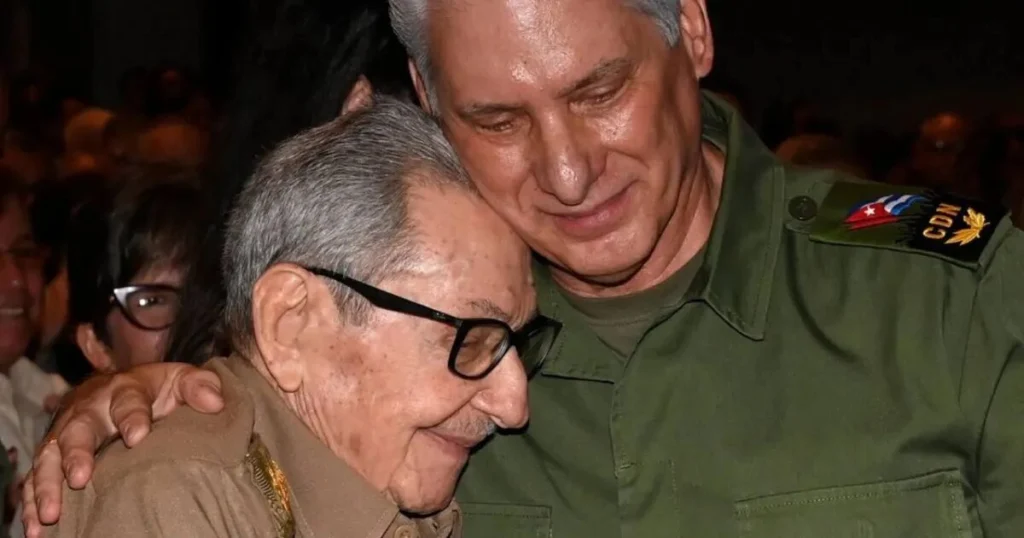
The Raúl Castro Cuba Personal Security anniversary also served as a platform for Díaz-Canel to reaffirm his alignment with historical revolutionary leadership, positioning himself as the legitimate successor to Fidel and Raúl in defending Cuban sovereignty against external aggression and internal subversion. The Telegram message, published on Saturday morning, reached thousands of followers and was amplified by state media, reinforcing the narrative of continuity that the Cuban government promotes amid ongoing U.S. sanctions, economic challenges, and regional political shifts. The ceremony’s timing, coinciding with Raúl’s 95th birthday (celebrated on June 3, 2026, but referenced in September coverage), added a personal dimension to the institutional commemoration, with state television reporting that Raúl appeared energetic and engaged, receiving applause from military personnel and embracing Díaz-Canel in a display of unity. The image of Raúl and Díaz-Canel together sends a powerful signal to both domestic and international audiences that the revolutionary generation remains active and supportive of current leadership, countering speculation about succession tensions or generational divides within the Cuban Communist Party.[ground][instagram][facebook]
Geopolitical Context: U.S. Sanctions, Regional Solidarity, and Revolutionary Continuity
The Raúl Castro Cuba Personal Security anniversary unfolds against a backdrop of intensified U.S. sanctions and regional political realignments that test Cuba’s revolutionary resilience and diplomatic networks. The Trump administration’s extrajudicial indictment of Raúl Castro in mid-2026, along with continued economic restrictions under the Helms-Burton Act and Title III lawsuits, has heightened security concerns for Cuban leaders, making the DSP’s role more critical than ever. The ceremony’s emphasis on “without a single failure” takes on added significance in this context, as U.S. intelligence operations, exile group activities, and internal dissent pose ongoing threats that require constant vigilance and adaptation. The DSP’s evolution from revolutionary-era protection to modern counterintelligence and cybersecurity reflects the changing nature of threats facing Cuban leadership, with digital surveillance, cyberattacks, and information warfare complementing traditional physical security challenges.[ground][facebook][facebook]
Regionally, the Raúl Castro Cuba Personal Security anniversary resonates with leftist governments and solidarity movements across Latin America and the Caribbean, where Cuba’s revolutionary model continues to inspire political projects despite economic hardships and external pressure. The presence of Díaz-Canel and Raúl together reinforces the narrative of revolutionary continuity that ALBA-TCP, CELAC, and other regional blocs invoke when defending Cuban sovereignty in international forums. The DSP’s 65-year record of protecting leaders parallels the Cuban state’s broader claim of resisting U.S. hegemony for over six decades, with personal security serving as a metaphor for national defense against external aggression. The letter from Raúl, describing DSP members as “part of our families,” echoes the broader revolutionary ethos of collective sacrifice and mutual commitment that has sustained Cuba through the Bay of Pigs, the Missile Crisis, the Special Period, and the current economic crisis.[ground][facebook][facebook]
Globally, the Raúl Castro Cuba Personal Security anniversary intersects with broader debates about leadership security, state sovereignty, and the role of intelligence services in post-colonial nations. The DSP’s founding in 1961 occurred during the Cold War, when Cuba aligned with the Soviet Union and faced direct U.S. hostility, including assassination plots against Fidel Castro documented by U.S. congressional investigations in the 1970s. The unit’s evolution over 65 years mirrors Cuba’s geopolitical journey from Soviet satellite to Non-Aligned Movement leader to 21st-century socialist model, with personal security adapting to changing threats and technologies. The recognition of founders alongside Raúl Castro highlights the institutionalization of revolutionary memory, ensuring that operational knowledge and ideological commitment are preserved across generations. The Díaz-Canel administration’s emphasis on continuity with Fidel and Raúl serves to legitimize current policies and mobilize popular support amid economic reforms, privatization debates, and generational turnover within the Communist Party.[ground][facebook][facebook]
The U.S. indictment of Raúl Castro, announced in 2026, represents a significant escalation in Washington’s pressure campaign against Cuban leadership, with charges related to alleged support for Venezuela and regional revolutionary movements. The DSP’s role in protecting Raúl and other leaders from potential extradition, arrest, or assassination has become increasingly critical, with security protocols enhanced in response to intelligence warnings about U.S. and exile group operations. The ceremony’s timing, just weeks after the indictment, sends a defiant message that Cuban leaders will not be intimidated and that revolutionary institutions remain strong despite external pressure. The Telegram message from Díaz-Canel, emphasizing “immense trust and recognition” for DSP members, reinforces the government’s commitment to rewarding loyalty and operational excellence, ensuring that security personnel remain motivated in the face of heightened threats and resource constraints.[ground][facebook][facebook]
Furthermore, the Raúl Castro Cuba Personal Security anniversary underscores the intersection of personal loyalty and institutional duty in revolutionary governance, where leaders and protectors develop bonds that transcend formal hierarchies and operational mandates. The familial language used by Raúl Castro—describing DSP members as “part of our families”—reflects the intimate nature of personal security work, where agents share risks, travel, and daily life with leaders, creating relationships of trust and mutual dependence. This personal dimension complements the institutional framework of the Ministry of Interior, ensuring that security operations are guided by both professional standards and revolutionary ethics. The recognition of five founders alongside Raúl signals the importance of institutional memory in maintaining operational continuity, with veterans mentoring young recruits to preserve lessons learned over decades of service. The ceremony’s intergenerational composition—veterans, active personnel, and young recruits—embodies the revolutionary ideal of passing the torch while honoring those who paved the way.[ground][instagram][facebook]
The DSP’s 65-year trajectory from revolutionary origins to modern security apparatus reflects Cuba’s broader historical arc, from armed struggle to state-building to contemporary challenges of economic reform and geopolitical realignment. The unit’s motto, “sin un solo fallo,” encapsulates the operational excellence that has protected Cuban leaders through assassination attempts, coups, and external interventions, while also serving as a symbol of revolutionary resilience in the face of adversity. The Raúl Castro Cuba Personal Security anniversary ceremony, with its honors, letters, and intergenerational gathering, reinforces the narrative of continuity that the Díaz-Canel administration promotes to legitimize current policies and mobilize popular support amid ongoing challenges. The image of Raúl and Díaz-Canel together, energetic and united, sends a powerful signal to domestic and international audiences that the revolutionary generation remains active and supportive of current leadership, countering speculation about succession tensions or generational divides within the Cuban Communist Party.[ground][instagram][facebook]
From teleSUR English via This RSS Feed.