

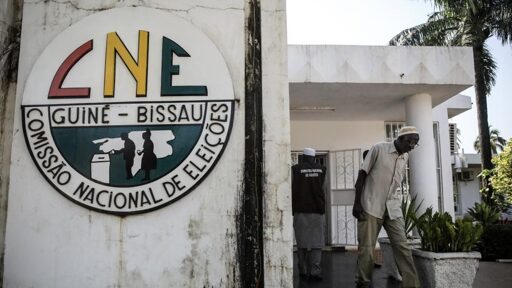

Guinea-Bissau has approved a new constitution that expands presidential powers, but the result has triggered a political dispute after opposition parties and groups rejected the referendum as illegitimate and accused the National Electoral Commission (CNE) of fabricating turnout figures.
The constitutional referendum was held on August 30, less than a year after the military seized power following disputed presidential and legislative elections. According to provisional results announced by the CNE on September 1, 70% of valid votes supported the new constitution, while 30% opposed it. Turnout was about 60%.
The opposition, however, has strongly disputed those figures. The PAI-Terra Ranka and API-Cabas Garandi coalitions said the referendum was widely boycotted, claiming participation was below 10% across the country. In a statement issued after the CNE announced the results, the two opposition platforms described the referendum as a “fraud” and accused the electoral commission of presenting figures that could not withstand scrutiny.
A referendum held under military rule
The military seized power on November 26, 2025, in what is considered by the PAIGC a fake coup to prevent the opposition coming to power, after the result of the presidential elections were being contested. The takeover interrupted the electoral process and subsequently established a transitional administration and pledged to oversee a return to civilian rule.
Opposition parties argued that the constitutional process was conducted without adequate political participation, amid restrictions on political activity and civil liberties. The PAI-Terra Ranka and API-Cabas Garandi said political parties and independent civil-society organizations were excluded from effective oversight and that independent monitoring of the vote was not possible.
International reporting before the vote similarly documented opposition claims that supporters of a “No” vote were unable to campaign freely, while the military-backed authorities promoted the new constitution.
Central to the referendum is a major redistribution of political power. Under Guinea-Bissau’s existing semi-presidential system, the prime minister is drawn from the parliamentary majority and plays a substantial role in running the government. The proposed constitution strengthens the president at the expense of the prime minister and parliament.
The new framework allows the president to appoint and dismiss the prime minister and cabinet ministers, chair the Council of Ministers and reorganize government ministries. It also provides circumstances under which the president can dissolve parliament.
Opposition sees the changes differently.
They argue that concentrating more authority in the presidency risks weakening parliament, political parties and other democratic checks and balances. The concern is particularly concerning given that the constitution is being changed by authorities who themselves came to power through a military intervention.
The constitutional changes also substantially alter the legislature. Parliament will be reduced from 102 seats to 65, while the number of electoral constituencies will fall from 29 to 12.
The proposed constitution also introduces stricter requirements for presidential candidates, including a five-year continuous residency requirement. Such provisions would have implications for political leaders living outside the country.
Opposition challenges the vote
For PAI-Terra Ranka and API-Cabas Garandi, they question whether the referendum itself had sufficient democratic legitimacy.
In their September 2 statement, the opposition compared the CNE’s referendum figures with those from the November 2025 elections. They noted that the CNE reported 611,583 voters in the 2025 election but claimed 572,714 people voted in the referendum, a difference of only 38,869 voters. The opposition argues that this is inconsistent with what it says was the visibly low participation at polling stations on August 30.
The opposition also alleges that the referendum law was altered after its initial publication to remove a requirement that more than half of registered voters participate for the constitution to be approved. According to their statement, the original version required both a majority of “Yes” votes and participation exceeding 50% of registered voters, while a subsequent version required only a simple majority of affirmative votes.
The referendum also comes only months before elections scheduled for December 6, 2026, which the transitional authorities say will mark a return to civilian rule.
That timetable gives the constitutional changes immediate political importance; the rules approved in the referendum could shape the institutions and balance of power under the government that emerges from those elections.
The disagreement over turnout and the credibility of the CNE’s figures is therefore likely to remain central to the political debate.
The opposition have called on the international community, including ECOWAS, the African Union, the Community of Portuguese Language Countries, and the United Nations, not to validate the referendum.
From BT News via This RSS Feed.