

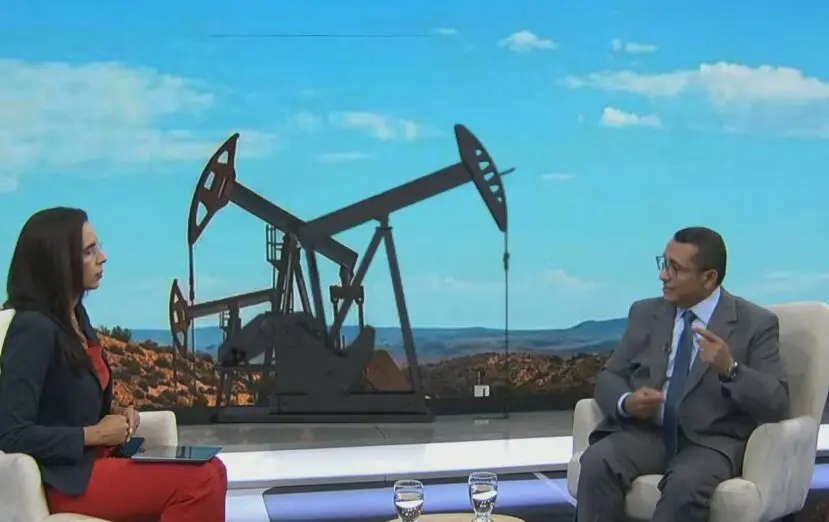
Petroleos de Venezuela S. A. vice-president Jovanny Martínez highlighted in a exlusive interview eith teleSUR recent agreements with foreign companies were made to be able to develop the Orinoco Belt, area where oil is the most commercial in the international markets.
[Strategic Pillars for PDVSA Oil Infrastructure Recovery Plan 2026: Agreements With Foreign Companies Will Allow a High Development in Orinoco Belt, PDVSA’s VP Says](https://www.telesurenglish.net/agreements-with-foreign-companies-will-allow-a-high-development-in-orinoco-belt-pdvsas-vp-says/)
Martinez said that Venezuela has 303 billion barrels of oil reserves nationwide, of which 270 billion are in the Orinoco Oil Strip. Eighty percent of these reserves in the Faja are concentrated in “green field” fields.
However, the development of these fields presents significant challenges due to the need to build infrastructure such as roads and bridges, electrify and mobilize equipment in difficult conditions. “And there is the complexity of what the green field means. But one of the benefits that our geography has is that these are flat lands. There are no storms here,” PDVSA’s VP said
Due to this ease of developing oil fields in the Orinoco Belt, where the largest reserves of new fields are located, the signed agreements seek to develop these areas to exploit the most marketable oil, known as Meredith crude.
According to Martinez, drilling activity alone will mobilize more than 50,000 workers, in addition to some 70 workover rigs for well intervention, and he projected that the development of the Belt will require at least 100,000 workers deployed in that area.
“To have that drill in operation 24 hours, we need 60 people working directly in the field. And to that, we have to add what is called transversal services or connections for the operation of the drill. All that adds up to a drill that must operate at least 200 people directly and individually,” Martinez said.
About the challenges to fully develop those fields, at least 250 boreholes are needed in each city. Before the sanctions, there were 200 drillings in each field, but the sanctions stopped activity and the companies left.
Martínez has unveiled an ambitious plan for PDVSA, aiming to reach a daily production of 1.3 million barrels this year, and to increase it to 1.5 million by 2027. This project aligns with a long-term recovery strategy driven by bilateral agreements between Venezuela and the United States, which will allow for the development of 17 oil fields with the help of private international operators.
The plan also includes the modernization of PDVSA through the incorporation of advanced technology such as automation systems, remote monitoring with artificial intelligence, smart drilling, and surface separation and water control technologies, seeking to optimize crude oil production and quality.
Executive Vice President of Venezuela’s state-owned oil company (PDVSA), Jovanny Martinez, emphasized in an interview with teleSUR that these agreements are necessary and establish a basic principle of profit for Venezuela. He said the other party also gains energy security and… pic.twitter.com/VVvorTB49f
— teleSUR English (@telesurenglish) September 5, 2026
From teleSUR English via This RSS Feed.