

PDVSA oil infrastructure recovery: 1.3M bpd 2026, 1.5M 2027 target. 250 rigs, 100K jobs, GE Vernova island mode. Explore US deal, OFAC licenses, Chevron-Eni expansion.
Related: Strategic Goals for Venezuela Oil Production Recovery Under Rodríguez 2026
PDVSA Oil Infrastructure Recovery: 1.3 Million Barrels Daily Target with 100,000 New Jobs
PDVSA oil infrastructure recovery took center stage on Saturday, September 5, 2026, as PDVSA Executive Vice President Jovanny Martínez revealed in a special teleSUR interview the operational and technological plans to reactivate the country’s oil and community infrastructure. The strategy includes alliances with international private operators and the incorporation of advanced technology to reach daily production of 1.3 million barrels this year and 1.5 million by 2027, framed within a 10-year comprehensive system recovery vision driven by recent bilateral agreements between Venezuela and the United States for the development of 17 strategic fields with international private operator participation.
Martínez admitted that PDVSA’s goal is to reach daily production of at least 1.3 million barrels this year, with a projection to raise this figure to 1.5 million barrels per day by 2027, emphasizing that the plan incorporates advanced technology and leverages technical capacity developed in the country.[infobae][riotimesonline][english.ahram.org][noticiasvenevision]
The PDVSA oil infrastructure recovery plan contemplates the incorporation of advanced technology, including automation systems, remote monitoring with artificial intelligence, and intelligent drilling and completions. Additionally, surface separation and water control technologies will be added to guarantee crude quality standards. Regarding the strengthening of the national industrial park, Martínez assured that the technical experience acquired during the operational restrictions period consolidated a national mechanical industrial park oriented toward construction and fabrication of spare parts and pieces. This local capacity will be fundamental for reactivation success. PDVSA also concretized an alliance with General Electric (GE Vernova) aimed at recovering operational capabilities and implementing schemes that reduce direct demand on the National Electrical System (SEN).
This “island mode” energy sovereignty scheme will allow more efficient and sustainable operation, Martínez asserted. The projected operational deployment will require massive personnel incorporation in drilling and services nationwide, with Martínez specifying that each drilling rig operates in three daily shifts and requires hiring 60 workers for direct tasks. With the projected reactivation of 250 drilling rigs nationwide, more than 50,000 workers will be required exclusively for rig operations and at least 70 rig workers per unit. The state company foresees incorporating at least 100,000 workers to cover all associated technical and logistical activities.[infobae][riotimesonline][noticiasvenevision][energynews]
PDVSA Oil Infrastructure Recovery: GE Vernova Alliance, Job Creation, and Operational Security
PDVSA oil infrastructure recovery emphasizes labor dynamics that will not only reactivate the oil industry but also boost the country’s economic and social development, especially at local levels. Martínez insisted that this employment dynamic will drive development beyond the oil sector, creating multiplier effects in communities where drilling operations, services, and infrastructure projects are deployed. Regarding operational security, Martínez highlighted the implementation of strict controls to guarantee operational continuity of fields and facilities.
He assured that sabotage acts within the industry will not be tolerated, highlighting that workers maintain continuous 24-hour monitoring schemes. Additionally, audits and investigations are being developed to determine responsibilities for past damages to oil infrastructure and establish corresponding sanctions. Martínez ratified PDVSA’s commitment to protecting its assets and operational security, signaling a zero-tolerance approach to internal threats while mobilizing worker vigilance as part of the broader security strategy.[infobae][riotimesonline][english.ahram.org][noticiasvenevision]
For Infobae’s coverage of GE Vernova’s energy plans, see: GE Vernova Prevé Sumar un Gigavatio de Energía en Venezuela en Dos Años
The GE Vernova alliance represents a critical component of the PDVSA oil infrastructure recovery strategy, with the U.S. company planning to add one gigawatt of energy to Venezuela’s electrical system in two years, according to a note disseminated by the U.S. Embassy in Caracas on September 4. The agreement, signed on September 2, 2026, at Miraflores Palace, covers two complementary components: rehabilitation of existing infrastructure, starting with the Guri dam, and addition of new generation capacity according to a multi-year phased schedule.
The project is designed to modernize and optimize the existing grid, contemplating the incorporation of 1 gigawatt of new reliable energy in the first 24 months and 5 additional gigawatts in the subsequent four years, ensuring long-term energy stability. US Energy Secretary Chris Wright traveled to Caracas to oversee the signing of deals worth “tens of billions of dollars of investment”, seen as a quid pro quo for Washington winning majority control of 65 billion barrels of Venezuelan oil reserves. Wright told CNBC that Venezuela’s oil production would top 2 million barrels per day by the end of the decade, double the level in January when US forces seized Trump arch-foe Maduro.[infobae][riotimesonline][english.ahram.org][energynews]
For EnergyNews.pro’s analysis of the GE Vernova deal, see: Venezuela and GE Vernova Sign Agreement on National Power Grid
The job creation projections underscore the scale of the reactivation effort, with 250 drilling rigs requiring 50,000+ direct workers and 100,000 total workers across technical and logistical activities. Martínez emphasized that each rig operates 24/7 in three shifts, requiring specialized personnel for drilling, maintenance, logistics, and support services. The massive hiring is expected to boost local economies, particularly in oil-producing regions like the Orinoco Belt, Maracaibo Basin, and eastern Venezuela, where unemployment and informality remain high despite recent economic improvements.
The PDVSA plan aligns with broader government goals of reducing poverty, expanding formal employment, and leveraging oil revenues for social programs, infrastructure, and industrial development. However, analysts warn that infrastructure constraints, particularly ports and the energy grid, could prevent fast output increases, with Rystad Energy forecasting output at about 1.4 million bpd by 2028, and 3 million bpd not reached until about 2040.[english.ahram.org][noticiasvenevision][csis][thenationalnews]
Geopolitical Context: US Energy Dominance, OFAC Licenses, and Regional Market Shifts
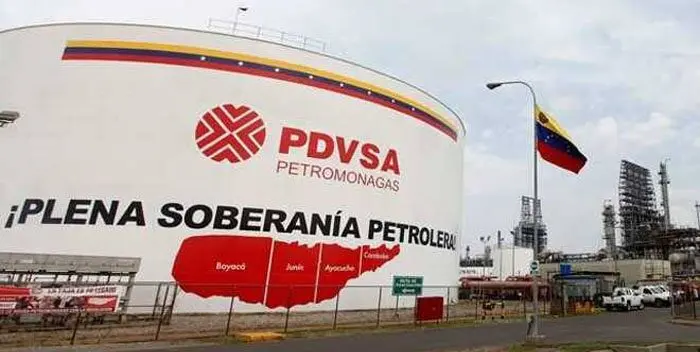
The PDVSA oil infrastructure recovery unfolds against a backdrop of intensifying US-Venezuela energy cooperation following the August 28, 2026, announcement of a historic oil agreement granting the U.S. majority control over 65 billion barrels of Venezuelan proven oil reserves across 17 strategic fields. The White House fact sheet described the deal as “the biggest oil deal in world history,” with President Donald Trump securing U.S. majority control through a partnership with North American Blue Energy Partners (NABEP), which received 100-year concessions for the 17 fields.
The Office of Foreign Assets Control (OFAC) of the U.S. Treasury Department issued eight new general licenses to flexibilize operations, financial transactions, and investments in the hydrocarbons, mining, and telecommunications sectors in Venezuela, enabling Chevron, Eni, GE Vernova, and other firms to expand operations without sanctions-related restrictions. The licenses represent a significant shift from the maximum pressure campaign that crippled Venezuela’s oil industry for over a decade, though critics argue that the new framework trades sovereignty for investment, with long-term concessions and revenue-sharing arrangements favoring foreign operators over national control.[infobae][english.ahram.org][peoplesworld][orinocotribune]
Regionally, the PDVSA oil infrastructure recovery carries significant implications for OPEC+ dynamics, as Venezuela’s return to higher production levels could alter quota allocations and pricing mechanisms within the cartel and its allies. The 1.5 million barrels per day target by 2027 represents a substantial increase from current output of approximately 1.25 million bpd, though still far below Venezuela’s historical peak of over 3 million bpd in the 1990s.
The involvement of U.S. companies like Chevron, Italy’s Eni, and GE Vernova, plus potential partnerships with Indian (ONGC) and Colombian (GeoPark) firms, signals a diversification of Venezuela’s energy partnerships beyond traditional Chinese and Russian investors, though China has demanded respect for its existing investments amid reports that joint ventures involving Chinese firms are set to be transferred to U.S.-controlled operators. The 25-year duration of the U.S. agreement, as confirmed by Acting President Delcy Rodríguez, aligns with Venezuela’s Hydrocarbons Law, though the 100-year concessions granted to NABEP have raised legal and sovereignty concerns among experts, lawyers, and opposition figures who question the long-term implications for Venezuelan control over its natural resources.[english.ahram.org][csis][orinocotribune][english.ahram.org]
The GE Vernova power grid agreement addresses one of the most critical bottlenecks for oil production recovery: Venezuela’s battered electrical system, which has suffered years of underinvestment, mismanagement, and sabotage. The deal to rehabilitate the Guri dam and add 6 gigawatts of new capacity over six years is essential for sustaining higher oil output, as PDVSA facilities require reliable power for drilling, pumping, refining, and transportation.
US Energy Secretary Chris Wright stated that the GE Vernova deal can stabilize the Venezuela power grid in six to twelve months, though nobody has said who pays for it, with estimates ranging from tens to hundreds of billions of dollars over the project lifespan. The “island mode” energy sovereignty scheme announced by Martínez allows PDVSA facilities to generate their own power, reducing direct demand on the National Electrical System (SEN) and improving operational efficiency, but also raises questions about long-term grid integration, cost recovery, and regulatory oversight.[infobae][riotimesonline][energynews][energynews]
Globally, the PDVSA oil infrastructure recovery reflects broader debates about energy security, resource nationalism, and the role of foreign investment in developing countries with vast reserves but deteriorated infrastructure. The U.S. Energy Secretary’s forecast of 2 million bpd by 2030 underscores the strategic importance of Venezuelan oil for U.S. energy dominance, particularly as the Trump administration seeks to replenish Strategic Petroleum Reserves and reduce dependency on Middle Eastern imports ahead of the November 2026 midterm elections. However, analysts warn that legal, political, and infrastructure risks cloud the deal’s future, with full development expected to take more than 25 years and requiring sustained investment, stability, and technical expertise that may be challenged by future political changes in either the U.S. or Venezuela.
The BBC described the deal as a colonialist “fever dream”, while Yahoo Finance noted that the U.S. now controls 7.1% of proven global reserves through the agreement, reshaping the global energy map overnight. The Anti-Blockade Law’s Production Participation Contracts (CPP) model, where the operating company assumes integral management at its own cost and risk, with State compensation consisting of a percentage share of metered volumes, represents a shift from traditional joint ventures toward service contracts with production sharing, raising questions about long-term fiscal revenues, technology transfer, and local content requirements.[csis][thenationalnews][peoplesworld][veneeconomist]
Furthermore, the PDVSA oil infrastructure recovery emphasizes operational security and sabotage prevention as critical enablers of production targets, with Martínez warning that sabotage acts will not be tolerated and audits are underway to determine responsibilities for past damages. The call for worker vigilance reflects a broader strategy of mobilizing labor support for the energy recovery plan, framing oil workers as defenders of national sovereignty against external and internal threats. The intersection of energy security and political stability underscores the high stakes of the recovery effort, with millions of jobs, social programs, and fiscal revenues dependent on sustained production increases and infrastructure rehabilitation.
The GE Vernova alliance, Chevron’s $7 billion Orinoco Belt expansion, Eni’s exclusive Junín 5 rights, and OFAC’s eight new general licenses collectively signal a new era of U.S.-Venezuela energy cooperation, but also raise sovereignty, transparency, and accountability questions that will shape Venezuela’s energy future and regional power dynamics for decades to come.[infobae][riotimesonline][english.ahram.org][english.ahram.org]
TeleSUR transmite en vivo entrevista especial con Jovanny Martínez, Vicepresidente Ejecutivo de PDVSA, sobre los avances estratégicos y el panorama actual de la industria petrolera en Venezuela. https://t.co/5mTISoJLU6
— teleSUR TV (@teleSURtv) September 5, 2026
From teleSUR English via This RSS Feed.