

Nepal floods rescue Chinese citizen: Lu Haitao pulled alive from tunnel 10 days after disaster. Death toll 1,344, 4,886 missing. Explore Trishuli tunnel operations.
Related: Catastrophic Nepal Floods Leave 1.290 Dead, Rescue Efforts Continue
Nepal Floods Rescue Chinese Citizen: Lu Haitao Pulled Alive from Tunnel After 10 Days
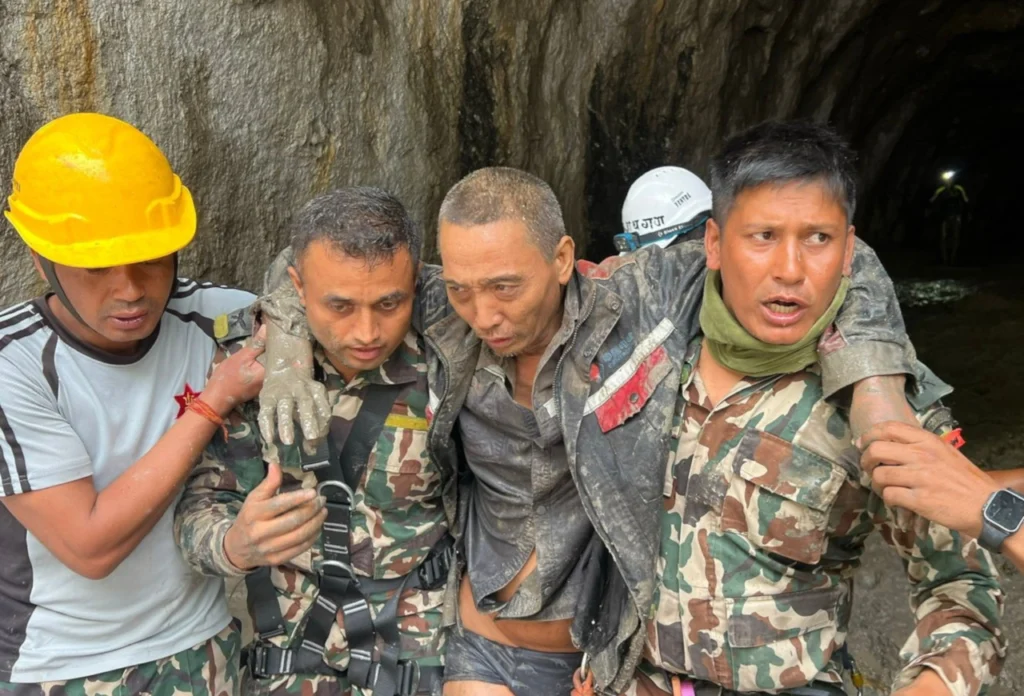
The Nepal floods rescue Chinese citizen operation achieved a miraculous breakthrough on Saturday, September 5, 2026, when the Nepali Army announced that a Chinese national was rescued alive from the Upper Trishuli-1 hydropower tunnel in Rasuwa district, ten days after catastrophic flash floods triggered by an ice-rock avalanche near the Nepal-Tibet border devastated the region. The rescue, conducted by a joint team including Nepali Army personnel and foreign experts, extracted the survivor—identified by Reuters as Lu Haitao (also spelled Luhaitao)—from approximately 225 meters (738 feet) inside the tunnel, with army spokesperson Brigadier General Raja Ram Basnet confirming that “his health is currently being assessed, and further search and rescue operations are continuing.” The operation came just one day after two Nepali workers, Sanjay Sah and Kabir Maharjan, were rescued alive from the nearby Trishuli 3A hydropower tunnel on Friday, September 4, raising hopes that more survivors could still be found despite the enormous scale of destruction.[newscord][reuters][telanganatoday]
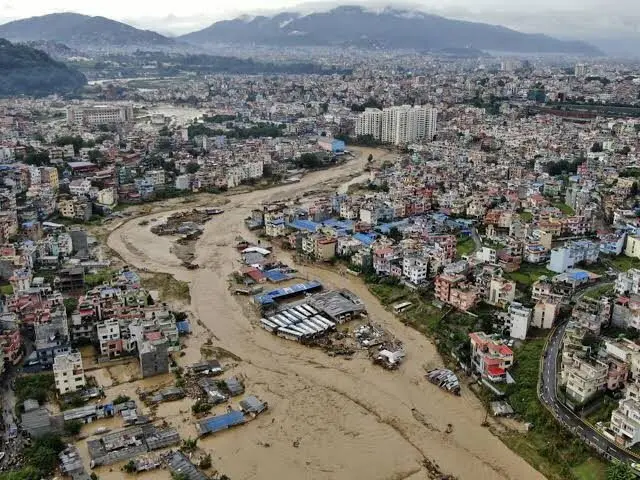
The Nepal Police announced on Saturday that the death toll from the devastating floods, which struck on August 26, 2026, had risen to 1,344, with 4,886 people still missing, including approximately 600 foreign nationals. Chinese authorities reported that the natural disaster caused 31 deaths and 531 missing persons in the Tibet region, bringing the combined death toll to at least 1,375 and total missing to over 5,400 across both sides of the border. The flash floods, triggered by an ice-rock avalanche near the Nepal-Tibet border, devastated towns and villages in northern and central Nepal, with over 13,000 people rescued to date, though rescue teams continue searching for around 5,000 missing, including at least 589 foreign nationals, across eight affected districts.[reuters][en.wikipedia][telanganatoday][newscord]
Nepal Floods Rescue Chinese Citizen: Tunnel Operations, Survivors, and Ongoing Search
The Nepal floods rescue Chinese citizen breakthrough followed the dramatic rescue of two Nepali workers from the Trishuli 3A hydropower tunnel on Friday, September 4, nine days after the disaster. Army spokesperson Brigadier General Raja Ram Basnet confirmed that one of the survivors told rescuers that more people were still alive inside the tunnel, prompting intensified operations at both the Trishuli 3A and Upper Trishuli-1 sites. The two Nepali men, identified as mechanical foreman Sanjay Sah (30) and mechanical supervisor Kabir Maharjan (45), were rescued from a depth of 170 meters inside the tunnel, with Sah in stable condition and Maharjan in critical condition, both flown to Birendra Army Hospital in Kathmandua for treatment.[telanganatoday]
External link (dofollow): For Reuters’ coverage of the Chinese national’s rescue, see: Chinese National Rescued from Nepal Tunnel 10 Days After Floods
The Nepali Army indicated that operations continue in the tunnels of the complex, with hope of finding more survivors underground. Nepalese lawmaker Shri Ram Neupane posted about the second rescue on his Facebook page shortly after Basnet confirmed the first trapped worker’s rescue, with images showing rescuers carrying the workers, covered in mud, on their backs, while soldiers on either side helped. Amir Maharjan, the brother of one of those rescued, told The Associated Press: “I can’t explain what we are feeling at the moment. We are just grateful to god,” as his family made their way to the hospital in Kathmandu. The rescue operations have been described as “miraculous” by officials, with experts believing that deep underground sections of the massive 4.5-kilometer-long tunnel structures contained stable air pockets with breathable oxygen and trapped water, enabling survival despite the catastrophic flooding and mudslides that engulfed the tunnel entrances.[ndtv]
For NPR’s detailed account of the tunnel rescues, see: Rescuers Pull 2 Trapped Workers from Hydropower Tunnel 9 Days After Nepal Floods
The Chinese national rescued on Saturday was pulled from the Upper Trishuli-1 Hydropower Project tunnel, which was severely affected by floods and mudslides, with the Nepali Army’s search and rescue unit transporting him after extraction. A picture of the rescue published on the army’s Facebook page shows the man, identified only as Luhaitao, with his arms around the shoulders of two camouflage-clad rescuers, while following his rescue, the Chinese national was seen drinking water as he was airlifted to safety in Rasuwa. The Nepalese military, in collaboration with South Korean disaster response experts, reported that the man was freed from a tunnel measuring 738 feet in length and was currently receiving a health evaluation, with no visible injuries but signs of mild hypothermia, according to Reuters. The rescue marks the third successful extraction of workers from the Trishuli hydropower projects since the August 26 disaster, renewing hopes that dozens of others believed to be trapped could still be reached despite the enormous challenges posed by debris, mud, and unstable terrain.[newscord][reuters]
The scale of the disaster continues to unfold, with the National Disaster Risk Reduction and Management Authority (NDRRMA) reporting that 1,294 bodies have been recovered in Nepal, with 5,053 people still missing as of September 5. The flash floods affected eight districts in northern and central Nepal, including Rasuwa, Nuwakot, Sindhupalchok, Dolakha, Kathmandu, Lalitpur, Bhaktapur, and Kavre, with over 13,000 people rescued but thousands still unaccounted for, including hundreds of foreign nationals working on hydropower projects, tourism, and other sectors. The disaster also killed at least 21 people on the Chinese side, with more than 500 people remaining missing in Tibet, according to Chinese media reports, though official Chinese figures cite 31 deaths and 531 missing in the Tibet Autonomous Region, where information remains under strict control by authorities.[en.wikipedia][telanganatoday]
Geopolitical Context: Cross-Border Disaster, Hydropower Investment, and Regional Cooperation
The Nepal floods rescue Chinese citizen operation unfolds against a backdrop of intense Sino-Nepali cooperation on hydropower development, with Chinese companies heavily invested in Nepal’s hydropower sector, which represents a cornerstone of Nepal’s economic development strategy and a key component of China’s Belt and Road Initiative (BRI) in South Asia. The Upper Trishuli-1 and Trishuli 3A projects are both Chinese-funded and constructed, with hundreds of Chinese workers employed alongside Nepali laborers, making the disaster a bilateral concern requiring coordinated rescue, recovery, and diplomatic response. The rescue of Chinese nationals has been widely covered in Chinese state media, with Xinhua News Agency and Global Times highlighting the “miraculous survival” and Nepali Army’s professionalism, while Nepali officials have emphasized the importance of international cooperation in disaster response and hydropower safety.[reuters][telanganatoday][newscord]
Regionally, the Nepal floods rescue Chinese citizen incident highlights the vulnerability of hydropower infrastructure in the Himalayan region, where climate change-induced glacial lake outburst floods (GLOFs) and ice-rock avalanches pose increasing risks to dams, tunnels, and downstream communities. The August 26 ice-rock avalanche that triggered the catastrophic flooding originated near the Nepal-Tibet border, with glacial melt and permafrost thaw linked to rising temperatures in the Himalayas, which are warming faster than the global average. The disaster has prompted calls for enhanced early warning systems, cross-border data sharing, and joint risk assessments between Nepal, China, and India, whose shared river basins make them mutually vulnerable to upstream disasters. The International Centre for Integrated Mountain Development (ICIMOD), based in Kathmandu, has long warned about the growing risk of GLOFs in the Himalayas, with over 200 potentially dangerous glacial lakes identified across Nepal, Bhutan, and Tibet, but implementation of mitigation measures has been slow due to funding constraints and political complexities.[en.wikipedia][ndtv][telanganatoday]
The presence of nearly 600 foreign nationals among the missing underscores the international dimensions of the disaster, with workers from China, India, South Korea, Europe, and other regions employed on hydropower, infrastructure, and tourism projects in the affected areas. The rescue of Chinese nationals has been prioritized by both Nepali and Chinese authorities, with Beijing dispatching disaster response experts and medical teams to assist in the search and recovery efforts, while India has offered humanitarian assistance including helicopters, relief supplies, and medical support. The disaster has also raised questions about safety standards on hydropower projects in geologically fragile zones, with critics arguing that rapid dam construction without adequate environmental impact assessments or disaster preparedness has increased vulnerability to climate-induced hazards. The Nepali government has faced pressure to review hydropower licensing and safety protocols, particularly for Chinese-funded projects that have expanded rapidly under the BRI framework but may lack sufficient oversight and emergency response capacity.[telanganatoday][newscord][reuters]
Globally, the Nepal floods rescue Chinese citizen story has drawn international attention to the human cost of climate change in mountain regions, where glacial melt, extreme precipitation, and cascading hazards are increasing in frequency and intensity. The UN Office for Disaster Risk Reduction (UNDRR) has called for enhanced international cooperation on mountain disaster risk reduction, with Secretary-General António Guterres stating that “mountain communities are on the frontlines of the climate crisis” and require urgent support for adaptation and resilience. The rescue operations in Nepal, while celebrated as miraculous, also highlight the limits of current disaster response capacity, with thousands still missing and recovery efforts expected to take months or years. The long-term implications for hydropower development, tourism, and regional stability remain uncertain, as Nepal grapples with the dual challenges of economic development and climate adaptation in an increasingly volatile environment.[telanganatoday][en.wikipedia]
From teleSUR English via This RSS Feed.