

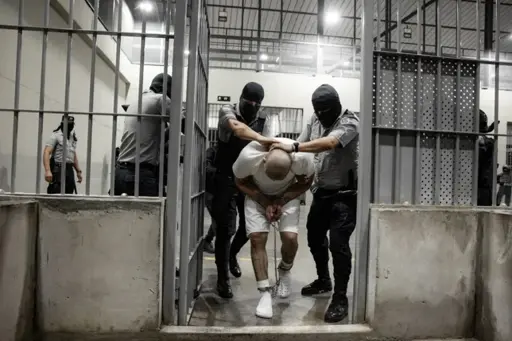
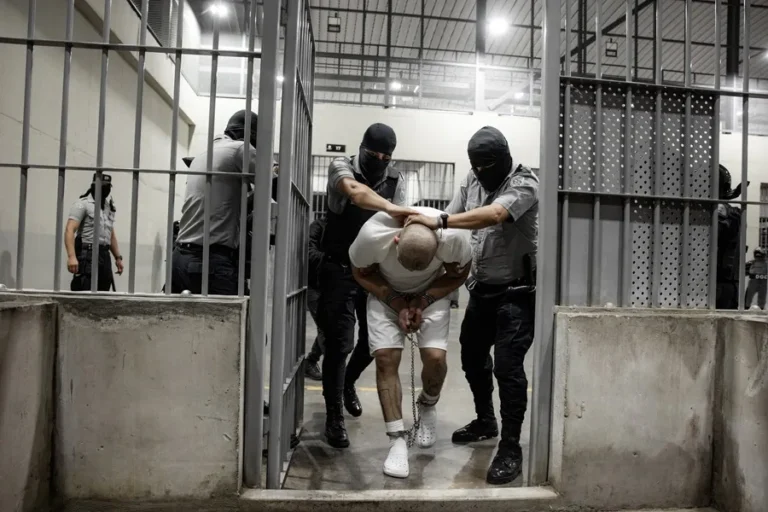
Bukele prison model El Salvador: 118K inmates, arbitrary detentions, poverty rises. Explore human rights abuses, economic crisis, and democratic erosion under Exception Regime
Related: Bukele Secures His Party’s Nomination for the 2027 Presidential Elections
Bukele Prison Model El Salvador: 118,000 Inmates and Rising Economic Crisis
The Bukele prison model El Salvador has produced the world’s highest incarceration rate, with an estimated 110,000 to 115,000 people currently imprisoned in a system designed to hold a maximum of 30,000, according to data from August 2026. This unprecedented prison population is the result of a security policy centered on mass detention and the application of the Exception Regime in force since March 2022, rather than social programs aimed at prevention and rehabilitation. The Exception Regime, which has been renewed 53 consecutive times over more than four years, has enabled detentions without judicial warrants, sealed court proceedings, and prolonged pretrial detention without individual hearings before judges, with between 7,000 and 8,000 detainees released in many cases after months or even years in preventive detention without having appeared individually before a judge.[independent.co][abc][elnacional][diario-red]
The “security policy” determines budget priorities, with National Defense spending accumulating an increase of over 145% and Public Security growing by approximately 65%, while areas linked to social development, responsible for prevention and inclusion, have lost relative weight. Education has remained around 3.5% to 3.6% of GDP, while Health has seen operational adjustments aimed at containing current expenditure. Part of this reorganization also occurred through the centralization of municipal resources, including an 85% reduction in transfers from the Fund for Economic and Social Development of Municipalities (FODES) and the transfer of public works execution to the Directorate of Municipal Works, in addition to cuts to the Judicial Branch and decentralized agencies.[abc][elnacional][diario-red][elsalvadornow]
Bukele Prison Model El Salvador: Arbitrary Detentions, Deaths in Custody, and Family Costs
The Bukele prison model El Salvador has generated extensive documentation of human rights violations, with Amnesty International documenting at least 470 deaths of detained persons in prison, while more than 140 investigations into deaths under custody have been archived by the Attorney General’s Office under arguments such as non-existence of a crime or attribution of deaths to natural causes. The lack of public access to case files further complicates knowing the circumstances under which these deaths occurred and determining whether there was an adequate investigation of each case. Cristosal, El Salvador’s leading human rights organization, has documented that more than 500 people have died inside penitentiary centers since the Exception Regime began, with over 10,000 cases of arbitrary detentions reported by civil society organizations, including arrests based on anonymous accusations, daily detention targets assigned to police forces, and criteria that should not determine criminal responsibility, such as having tattoos or living in communities previously under gang control.[independent.co][abc][elsalvadornow][hrf]
For Amnesty International’s documentation, see: El Salvador: Mass Arbitrary Detention and Deaths in Custody
Reports from Socorro Jurídico Humanitario indicate that part of the expenses related to maintaining incarcerated persons has ended up being transferred to their families, with the purchase of food and other basic supplies for inmates representing a particularly significant burden for low-income households and falling, to a large extent, on women. According to this organization, these expenditures can reach up to 70% of a rural minimum wage, adding to the complaint that between 12% and 15% of persons detained under the Exception Regime have no demonstrable links to organized crime structures. The extreme overcrowding in detention centers has reached levels where some facilities have exceeded 300% overpopulation, with CECOT (Terrorism Confinement Center) branded a “black hole of human rights” amid reports of overcrowding, arbitrary beatings, and denial of any contact with the outside world.[independent.co][abc][diario-red][elsalvadornow]
For El País’s investigation into mass trials, see: Mass Trials Without Due Process in El Salvador
The subsequent release of thousands of people reveals another dimension of the problem, as between 7,000 and 8,000 detainees have regained their freedom, in many cases after remaining months or even years in preventive detention without having appeared individually before a judge. The fact that thousands of people have been released after their links to gangs were ruled out raises questions about the criteria used to make the arrests and the judicial guarantees with which they were processed. In this way, the Exception Regime has not only extraordinarily expanded the State’s capacity to detain, but has also left behind a high number of complaints about deaths under custody, deprivations of liberty without basis, and people incarcerated for long periods without effective judicial review. The Human Rights Foundation (HRF) and Perseus Strategies submitted a complaint to the UN Working Group on Arbitrary Detention in August 2026 on behalf of Salvadoran lawyers Ruth López and Enrique Anaya, urging the body to declare their detention arbitrary and in violation of international law, with Cristosal Foundation Director Noah Bullock stating: “We have documented 245 political prisoner cases, 86 of whom remain in prison.”[abc][diario-red][elsalvadornow][hrf]
Economic Crisis, Poverty, and Shifting Public Concerns
The Bukele prison model El Salvador unfolds against a backdrop of economic deterioration reflected in poverty indicators, with data from the Household Survey for Multiple Purposes (EHPM 2019–2023/2024) and World Bank analyses showing that the accumulated increase of more than 25% in the price of the basic food basket, combined with stagnation in formal employment and informality close to 70%, coincided with an increase in extreme poverty, which rose from 4.5% in 2019 to 8.6% by 2024. The expanded basic basket reached $519.90 in June 2026, while the basic food basket reached $259.95, according to the National Office of Statistics and Census (ONEC), with 22.5% of Salvadoran households (equivalent to 459,111 homes) unable to afford the expanded basic basket, of which 156,715 households are in extreme poverty and 302,396 in relative poverty.[diario-red][elsalvador][eleconomista][worldfactbooks]
The economic argument in favor of this transformation stems from the high cost that violence represented before the current security policy, with IDB estimates placing that impact between 15% and 19% of GDP, considering private security expenses, extortions, healthcare derived from injuries and homicides, and productivity losses. However, surveys by Iudop-UCA and LPG Datos conducted in June 2026 place these economic factors as the main concern for 70.7% of citizens, with cost of living, unemployment, inflation, and poverty displacing crime as the primary worry for Salvadorans, even though combating crime continues to be identified as one of the main achievements of government management, in a context where President Nayib Bukele maintains approval levels above 85%. The World Bank reported that poverty measured by the international threshold decreased by 3 percentage points between 2022 and 2023, estimated to have fallen to 29.6% in 2024 and again to 28.4% in 2025, thanks to high remittance inflows, but multidimensional poverty affected 20.1% of households, with extreme poverty falling 17.36% from 610,272 people in 2024 to 504,320 in 2025, while relative poverty decreased 13.05%, from 1,198,934 people in 2024 to 1,042,481 in 2025.[diario-red][elsalvador][eleconomista][worldfactbooks]
Geopolitical Context: Democratic Erosion, Regional Influence, and International Scrutiny
The Bukele prison model El Salvador has attracted international attention and criticism, with Freedom House, Amnesty International, and Human Rights Watch warning that Bukele’s policies have resulted in thousands of arbitrary detentions, the use of torture in detention centers, and hundreds of deaths under state custody, with a third of those detained under the State of Exception estimated to be innocent, according to the Socorro Jurídico Humanitario rights group. The UK’s Reform Party, led by Nigel Farage, proposed sending foreign prisoners to serve sentences in El Salvador, prompting Amnesty International UK to condemn the proposal as an example of politicians choosing to put “hate, violence and inhumanity” ahead of leadership, with the organization stating that Reform is proposing to contract into serious human rights abuses in El Salvador to enable the transfer of people convicted in the UK into an extremely overcrowded and abusive prison system overseas.[independent.co][abc][elsalvadornow][theguardian]
Regionally, the Bukele prison model El Salvador has influenced political candidates across Latin America, with presidential candidates in several nations promising to adopt similar measures in the fight against crime, despite widespread documentation of human rights abuses. The Exception Regime, which suspended constitutional guarantees and has been renewed monthly for over four years, has enabled mass trials without due process, with court records and testimony from defense attorneys showing how prosecutors and courts are securing convictions based on opaque police files, anonymous allegations, and trials conducted behind closed doors, intended to convict more than 92,000 people arrested during the four years the measure has been in force. Cristosal believes that both defendants and their lawyers have few tools with which to defend themselves in the mass trials, a situation likely to result in thousands of unjustified convictions, with judges operating under fear and sealed proceedings preventing public scrutiny.[abc][elsalvadornow][elpais][english.elpais]
The weakening of political parties as spaces of representation and institutional control has left much of the government oversight in the hands of independent media and civil society organizations, with digital publications like El Faro, Revista Factum, and GatoEncerrado assuming a central role in investigating financial irregularities, secret agreements, and human rights violations. The pressure exerted against these media outlets has also highlighted the limits of space for critical journalism, with El Faro relocating its newsroom to Costa Rica in 2023 after denouncing threats, while organizations like Cristosal, the Foundation for Studies on the Application of Law (FESPAD), and the Salvadoran Network of Women Human Rights Defenders have documented complaints of arbitrary detentions, deaths under state custody, and other alleged abuses of power. Their activity has gained greater relevance in a context where citizens find fewer and fewer institutional channels to file complaints and demand accountability, with the Victims of the Regime Movement (MOVIR), comprised mainly of relatives of incarcerated persons, emerging as one of the few spaces of public protest still able to convene marches and rallies in San Salvador.[abc][diario-red][elsalvadornow][hrf]
Furthermore, the Bukele prison model El Salvador reflects broader debates about security versus liberty, populism versus democracy, and effectiveness versus human rights in 21st-century governance. The deterioration of democratic institutions, including the independence of the Judicial Branch and the Constitutional Chamber, has led dozens of political leaders, former legislators, and ex-candidates to abandon the country and seek refuge in the U.S., Costa Rica, and various European countries, fearing arbitrary arrests and lacking guarantees to face impartial judicial processes. The prolongation of the Exception Regime has had consequences that transcend the fight against criminal structures and directly affect the exercise of opposition and citizen participation, with the sustained suspension of constitutional guarantees enabling detentions without prior judicial warrants, while the sealing of certain judicial actions hinders access to information about processes. In this scenario, fear of being detained has also reduced the capacity of community leaders and grassroots organizations to develop territorial work and exercise active opposition, with the fear now being different: that people cannot raise their voice, their right to protest, because there is a regime in place, as artist Melvin Gómez described from a poor community on the outskirts of San Salvador.[abc][elsalvadornow][hrf][en.cibercuba]
From teleSUR English via This RSS Feed.