

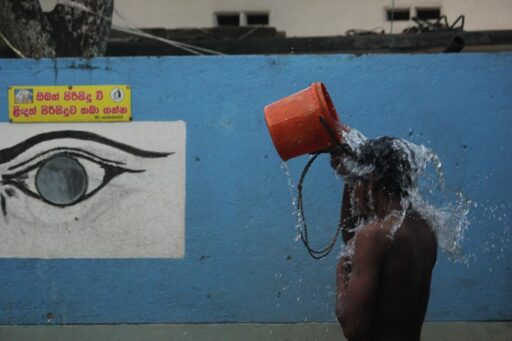
COLOMBO — As part of his morning routine, Nalin Kaluwitharana from “Ranjan Wijerathnapura,” a low-income settlement in the heart of Colombo, waters his home garden before setting off to work. Like many others in his neighborhood, he works as a three-wheeler driver. “We obtain pipe-borne water provided by the National Water Supply and Drainage Board (NWSDB). In the wake of drought conditions, NWSDB has requested people to use water sparingly. But we need water for our daily needs and have no alternatives but to rely on tap water,” he told Mongabay. Despite increasing utility tariffs, he continues to water the plants to keep them green and his surroundings alive. Kaluwitharana and a majority of houses in this settlement do not have water storage facilities and are dependent on the state utility to obtain water directly from the water line. The routine water cuts and maintenance work disrupt the regular water supply, inconveniencing them. Linda Arulanantham is from the same neighborhood. “Immediately after a water cut, the water turns muddy. We use a water filter to make sure that the water we drink is clean,” she said. But every household doesn’t have a water filter system, and water safety in urban low-income settlements is often neglected. Community water supply schemes In Sri Lanka, community water supply schemes were established around the 1990s to provide safe drinking water to rural communities. Ananda Vijitha Kumara Mapa, director general at the Department of National Community Water Supply (DNCWS) told Mongabay that community water supply…This article was originally published on Mongabay
From Conservation news via This RSS Feed.