

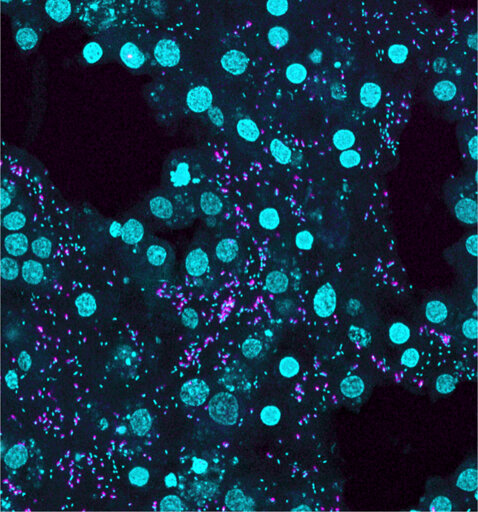
Symbiotic ammonia-oxidizing archaea in marine sponges are not strict specialists but true “flexitarians.” A team led by microbiologists Bettina Glasl and Katharina Kitzinger from the University of Vienna, in collaboration with partners from Australia, has shown that, unlike their free-living relatives studied thus far, these microbes dine not only on ammonia but also on amino acids such as valine, leucine and isoleucine—and presumably do so to communicate with their animal host. The findings, published in the journal Science Advances , shed new light on one of the oldest animal-microbe symbiotic relationships on Earth and point to a previously underestimated role played by archaea.
From Biology News - Evolution, Cell theory, Gene theory, Microbiology, Biotechnology via This RSS Feed.