

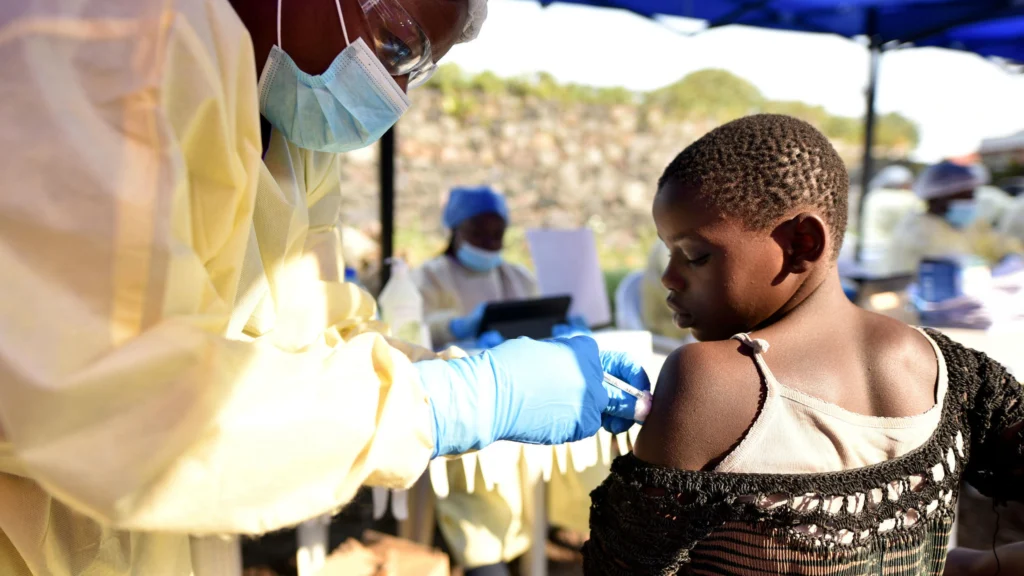
On Friday, Cuban Health Minister Jose Portal reaffirmed his country’s willingness to support the Democratic Republic of Congo (DRC) in combating the current Ebola epidemic.
The confirmation comes at a critical moment for the African nation, where the outbreak, declared on May 15, has surpassed 3,000 deaths, making it the second deadliest in history.
RELATED:
DR Congo Ebola Outbreak Nears 3,000 Deaths Amid School Safety Alarms
During a video call held this Thursday with officials from the DRC Ministry of Health, Portal Miranda expressed his commitment. “We are very committed to helping the Democratic Republic of Congo with our modest knowledge and lessons learned previously in confronting Ebola,” stated the Cuban minister.
The Cuban side highlighted its experience in previous outbreaks, specifically the 2014 outbreak in West Africa, where they deployed 256 doctors from the Henry Reeve Contingent to Sierra Leone, Liberia, and Guinea Conakry.
For his part, the Congolese Minister of Health, Samuel Roger Kamba, expressed his gratitude for Havana’s willingness to help. Officials from the DRC raised the need for support to contain the spread of the virus, care for the sick, support doctors in the field, and improve monitoring.
Doce años de que la primera Brigada del Contingente Internacional Henry Reeve partiera a combatir el Ébola en Sierra Leona.
Ciento 65desafiaron la muerte y salvaron la vida de millones de seres humanos en el planeta. #CubaCoopera pic.twitter.com/I11U7mr6KR
— Iliana Gonzalez Pino (@IPino88415) September 2, 2026
The text reads, “Twelve years since the first Henry Reeve International Contingent Brigade departed to fight Ebola in Sierra Leone. One hundred and sixty-five Colombians defied death and saved the lives of millions of people around the world.”
Portal explained that Cuba has already activated its National Plan for the Prevention and Control of Ebola, preparing the 24 points of entry into the country and monitoring international travelers.
According to data from the National Institute of Public Health (INSP) collected up to August 31, the epidemic has resulted in 3,007 deaths and 6,186 confirmed cases, with a case fatality rate of 48.6%.
Active transmission continues in 60 health zones spread across six provinces: Ituri (the epicenter), Tshopo, Bas-Uélé, Haut-Uélé, North Kivu, and South Kivu. Currently, 1,409 patients have recovered, and 830 remain hospitalized or in isolation.
This outbreak surpasses the 2018-2020 outbreak in the same region, ranking only behind the one in West Africa between 2014 and 2016, which left more than 11,000 victims.
The current outbreak is caused by the Bundibugyo strain, for which there are no specific therapeutic treatments. The World Health Organization (WHO) is advancing Phase 1 trials for two vaccine candidates.
In parallel, the DRC has launched a campaign with the Ervebo vaccine due to its indications of cross-protection. However, the response faces obstacles such as insecurity caused by armed groups, strikes by healthcare workers due to unpaid wages, and community reluctance to undergo post-mortem testing. Ebola Treatment Centers (ETCs) are operating at near capacity.
The WHO, the Africa Centres for Disease Control and Prevention, and the DRC government have appealed for urgent assistance.
Many more lives will be lost unless we get ahead of this Ebola outbreak.
The humanitarian community has the tools, courage and expertise. We need access and resources. pic.twitter.com/h1Fb2kzz7r
— Tom Fletcher (@UNReliefChief) September 2, 2026
OCHA chief Tom Fletcher emphasized that armed conflict, precarious health systems, and community mistrust hinder early detection. Regionally, Uganda managed to contain the virus, declaring the end of its epidemic on August 26 after 20 infections.
The exchange with Cuba is taking place under pressure from the United States against Cuban medical missions, which Washington has labeled as “forced labor.” However, these missions are a tangible example of international solidarity. Their results have been corroborated by international organizations and are a clear demonstration of the humanist spirit of the Cuban Revolution.
Nevertheless, these defamatory attacks by the imperialist right have led countries such as Honduras, Guatemala, Jamaica, Guyana, the Bahamas, and Paraguay to cancel or modify agreements with Cuban medical teams in recent months.
The Democratic Republic of the Congo is facing one of the fastest-growing Ebola outbreaks on record, with more than 3,800 cases and approximately 1,700 deaths reported.
As infections continue to rise, health authorities warn that limited international funding is straining… pic.twitter.com/bwup5QuQG0
— teleSUR English (@telesurenglish) August 6, 2026
From teleSUR English via This RSS Feed.