

Caracas (OrinocoTribune.com)—The US Treasury Department’s Office of Foreign Assets Control (OFAC) has issued three amended licenses that add coal to existing authorizations covering Venezuelan mineral trade, mining supplies, and prospective investment.
The new measures, issued this Wednesday, September 2, are purported to expand the commercial openings created under Washington’s unilateral sanctions regime while preserving US colonial control over payments, participating companies, commercial partners, and the execution of future projects.
General License 51D authorizes established companies based in the US empire to export, re-export, sell, resell, supply, store, purchase, deliver, or transport Venezuelan-origin coal and other minerals, including gold, allowing them to take greater control over Venezuelan sovereign resources. It covers transactions involving Venezuela, state-owned Carbones del Zulia (Carbozulia), CVG Compañía General de Minería de Venezuela (Minerven), and subsidiary companies in which Minerven owns at least 50%.
The imperial license also covers commercial, legal, technical, safety, and environmental assessments, as well as shipping, security, maritime insurance, port services, and the processing or refining of Venezuelan minerals outside the countries excluded by Washington. However, it does not authorize exploration, extraction, production, or the creation of new mining joint ventures inside Venezuela.
Coal added to existing mineral authorizations
General License 54C separately authorizes the supply from the US empire—or by a US person—of goods, technology, software, and services for Venezuelan coal and mineral operations. This includes exploration, development, extraction, processing, refining, production, equipment repairs, refurbishment, maintenance, payment processing, transportation, insurance, and port services.
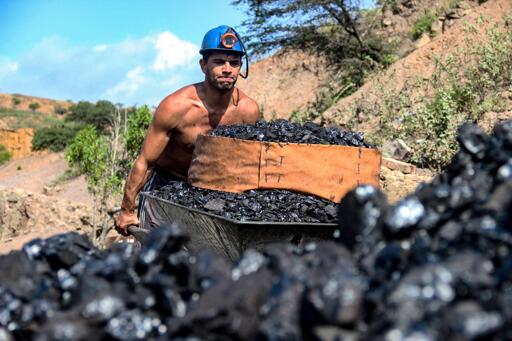
The principal substantive change from the licenses published last week is the explicit addition of coal and Carbozulia. License 51D replaces License 51C, which covered Venezuelan minerals and gold but did not mention coal, while License 54C replaces License 54B, whose authorizations were similarly limited to mineral operations. As a result, the September 2 package expands Washington’s licensing framework into Venezuela’s coal industry rather than creating an entirely new authorization for gold or other minerals.
General License 55A also adds coal to the investment-negotiation framework previously established for Venezuela’s mineral sector. It allows for negotiations, bids, proposals submitted in response to public tenders, memoranda of understanding, agreements in principle, and other contingent contracts for new mining investment, expanded operations, or future joint ventures.
Nevertheless, companies cannot execute these projects solely under License 55A. Every contract must expressly state that its performance depends on separate OFAC authorization, allowing Washington to retain the power to approve or reject any resulting investment agreement.
Payments and reporting remain under US supervision
Licenses 51D and 54C require most monetary payments owed to blocked Venezuelan entities to be deposited into the US-controlled Foreign Government Deposit Funds created under a January 2026 executive order, or into another account selected by the US Treasury. Payments for local taxes, permits, and fees are excluded from this requirement.
Companies operating under License 51D must report the parties, quantities, prices, supply-chain documentation, transaction dates, and payments made to Venezuela. The first report is due ten days after the initial transaction, followed by additional reports every 30 days. Under License 54C, suppliers must report the goods, technology, software, or services provided, together with their quantities and value, ten days after the first transaction and every 90 days thereafter.
OFAC also amended Frequently Asked Question 1247, stating that certain non-US companies may participate in authorized oil, petrochemical, mineral, gold, or coal transactions without facing sanctions, provided that they comply with the licenses’ conditions. Among other requirements, the third-country company must have been legally established by January 29, 2025, respect Washington’s payment restrictions, and avoid prohibited partners. OFAC warned that companies operating outside these conditions could themselves be sanctioned.
Washington restricts Venezuela’s commercial partners
Licenses 54C and 55A exclude transactions involving persons or companies located in or organized under the laws of China, Russia, Iran, Cuba, or the Democratic People’s Republic of Korea, as well as entities controlled by or participating in joint ventures with them.
License 51D applies a narrower restriction regarding China: it excludes Venezuelan or US entities from being owned by, controlled, or operating in a joint venture with a Chinese person, and prohibits processing or refining Venezuelan coal and minerals in China. It also excludes transactions involving persons from Russia, Iran, Cuba, or the DPRK, and prohibits processing or refining in those countries. All three licenses prohibit transactions involving illegally sanctioned vessels and the unblocking of sanctioned property.
Contracts signed with Venezuela, Carbozulia, Minerven, or related state entities under licenses 51D and 54C must additionally require that dispute-resolution proceedings take place in the US empire or its colonial allies, namely the UK, France, or Singapore.
Chavista analysts explain that Washington’s insistence on deciding which companies may participate, where Venezuela’s income must be deposited, and which of the country’s strategic allies must be excluded, represents an expansion of the mechanisms of imperial tutelage established after the US empire’s January 3 bombing of Venezuela and the abduction of President Nicolás Maduro and First Lady and National Assembly Deputy Cilia Flores.
At the same time, some figures claim that the authorizations could provide Venezuela with access to machinery, software, spare parts, insurance, financing, transportation, and technical services denied or severely restricted by years of illegal US sanctions. This operational relief has generated a complex debate within Chavismo over whether the licenses can be used to improve living conditions without consolidating a relationship of neocolonial dependency, especially after January 3.
Licenses follow controversial oil agreement
These latest measures come just days after Venezuela and the US settler colony announced a far-reaching and contentious oil agreement. Acting President Delcy Rodríguez described it as a historic, 25-year binational project intended to reactivate 17 strategic fields, attract more than $100 billion in investment, and eventually produce over 1.5 million barrels of oil per day.
Rodríguez stated that eight new builds in the Orinoco Oil Belt would pay royalties of at least 16% and income tax of 34%. She projected approximately $209.3 billion in revenue for Venezuela at an assumed oil price of $65 per barrel and claimed that Venezuela would be able retain ownership and sovereignty over its resources while obtaining investment, technology, employment, and infrastructure, despite popular concerns that these measures would serve to deepen the colonial control the US empire is leveraging over Venezuelan resources.
US ruler Donald Trump presented a markedly different interpretation to Rodríguez, claiming “majority US control” over the reserves and emphasizing the benefits for US oil supplies and gasoline prices. The governments of Venezuela and the US empire have yet to publish the complete contractual documents, the identity of all participants, the precise ownership structure, or the mechanism through which Washington would exercise the control claimed by Trump.
The agreement has consequently divided Chavista opinion. Venezuela’s current leadership has defended it as a pragmatic instrument for recovering production and improving the material conditions of Venezuelans over the coming decades. However, Chavista activists and analysts explain that it is in fact further evidence of the profoundly unequal—and potentially neocolonial—relationship imposed after the January 3 US military attack and a further degradation of the nation’s sovereignty.
Previous OFAC amendments
Last week, OFAC amended eight licenses governing oil, gas, petrochemicals, diluents, electricity, minerals, gold, telecommunications, and transactions involving the state oil company PDVSA, as reported by the Orinoco Tribune.
Those changes removed a requirement that contracts with Venezuelan state entities be interpreted under US imperial law, permitting Venezuelan law or another legal framework agreed upon by the parties. However, they retained Washington’s restrictions on payments, commercial partners, reporting, blocked property, and dispute-resolution venues.
The September 2 package provides an additional operational opening by explicitly incorporating coal and Carbozulia. Nevertheless, Chavistas who have noted the colonial architecture of the sanctions explain that it simultaneously reinforces Washington’s self-appointed authority to decide who may invest in Venezuela, which countries may cooperate with it, where the country’s revenues must be held, and whether negotiated projects can ultimately proceed, demonstrating a clear imperial relationship between the US and Venezuela.
Special for Orinoco Tribune by staff
OT/JRE/AU
From Orinoco Tribune via This RSS Feed.