

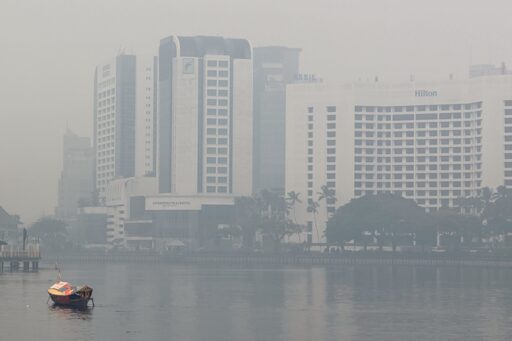
Haze from wildfires in Indonesia has spread even farther this week, reaching beyond Malaysia and Brunei to Singapore and the Philippines. On Sept. 4, Singaporean residents woke to a smoggy sky as air quality reached unhealthy levels. By late afternoon, the city had the third-worst air quality globally, according to IQAir. Earlier this week, Philippine authorities declared air quality in parts of Luzon island, including Manila’s metropolitan areas, Visayas island group and Mindanao island as “acutely unhealthy”, blaming it on the transboundary haze from Indonesia. In the Malaysian state of Sarawak, which has been hit by transboundary haze for weeks, the capital Kuching has topped the rankings as the world’s most polluted city since early this week. Authorities declared a state of emergency in Serawak’s Serian district on Sept. 4. Malaysia’s health ministry warned in late August that cases of asthma rose by 259% and those of upper respiratory tract infections increased by 124% in a week. Oil-rich Brunei has also been experiencing hazy conditions since mid-August. Wildfires across Indonesia show no signs of abating amid a “super” El Niño, which brings extremely dry conditions. As of Sept. 3, Firewatch, a satellite monitoring platform, had detected more than 444,200 fire hotspots, which indicate potential fire sites, across the archipelago. This is 4.5 times the number detected on July 27. Indonesian officials said the fires were deliberately caused, either by individuals or corporations. A Kompas newspaper report found that wildfires are detected on the same sites year after year, with 50%…This article was originally published on Mongabay
From Conservation news via This RSS Feed.